A quick wash removes the dust you can see. Professional detailing goes much deeper. It cleans, corrects, and protects every surface of the vehicle, from the clear coat to the seat seams. Drivers who choose Del Mar Detailing want this deeper level of care, not just a shinier car. A skilled mobile detailer handles each layer by hand, with premium products and trained attention.
What Does a Standard Car Wash Actually Cover?
A standard wash removes loose dirt, road film, and light dust from exterior panels and glass. It ends with a rinse and a quick dry. The process is fast and affordable, yet it stays on the surface.
- Automatic tunnel wash: Spinning brushes clean quickly, but trapped grit in the bristles can leave fine swirl marks across the clear coat over time.
- Touchless wash: High-pressure jets and strong detergents avoid contact, yet they cannot lift bonded tar, sap, or baked-on insect residue from the paint.
- Basic hand wash: A careful hand wash is gentler, but it still skips door jambs, vents, seat seams, wheel wells, and every protective step.
Which Hidden Areas Does Professional Detailing Reach?
Dirt collects where a wash never goes. A detailer works through each hidden zone with brushes, steam, and microfiber, so the whole vehicle feels clean and not just the visible panels.
- Door jambs: Grease, dust, and dried water spots build up in these frames. Detailers wipe and degrease them, which keeps clothing clean when passengers enter or exit.
- Wheel wells and barrels: Brake dust and road tar cling here. Careful scrubbing and degreasing remove buildup before it stains the trim and the wheel finish.
- Engine bay: A light, safe cleaning removes dust and oil film from plastic covers and hoses, which makes leaks easier to spot.
- Vents, seat tracks, and cup holders: Compressed air, small brushes, and steam reach crumbs and bacteria hiding in tight seams, where a vacuum alone cannot clean.
How Does Detailing Restore and Protect Paint Beyond Washing?
Paint needs more than soap. Professional detailing treats the surface in three stages: removing embedded contamination, refining the finish, and sealing it for the weeks ahead. Each stage solves a different problem.
DecontaminationA clay bar lifts rail dust, sap, and overspray from the clear coat. The paint feels smooth as glass, and polish works more evenly.
PolishingMeticulous hand and machine polishing removes light swirls and dull spots. Color looks deeper, and reflections turn sharper under sunlight.
ProtectionWax, sealant, or ceramic coating then shields the paint. Owners who choose La Jolla detailing enjoy a smoother, glossier finish, and the shield resists salt, dust, and sun.
What Happens Inside the Cabin During a Full Detail?
The cabin gets the same level of attention as the paint. A thorough interior detail cleans, conditions, and sanitizes each surface, so the space looks fresh and feels healthier for every trip.
- Deep vacuuming: Crevices, under seats, and trunk corners get full attention, so crumbs and sand leave the vehicle rather than moving around.
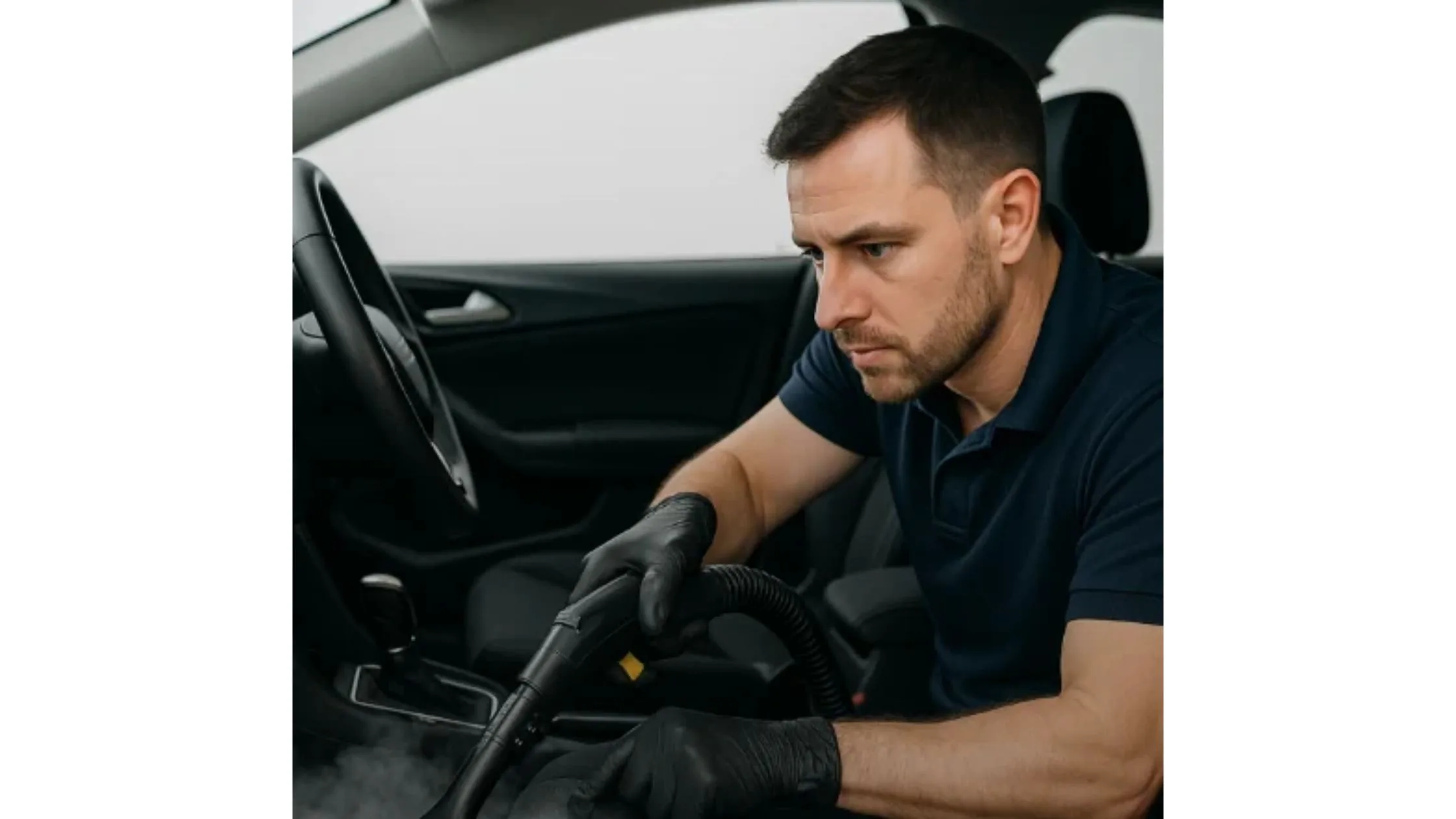
- Premium steam cleaning: Hot steam loosens grime and neutralizes bacteria and odors without harsh chemicals or soaked fabric. It suits families and rideshare drivers.
- Leather and trim care: Gentle cleaners lift body oils and dirt, and conditioner keeps leather soft and resistant to cracking. Plastic and vinyl trim then receives a fresh, non-greasy finish.
- Glass and screens: Streak-free glass cleaning improves visibility. Clear glass also reduces glare during evening drives, and careful screen wiping removes fingerprints without scratching.
How Do Coastal Neighborhoods Change Detailing Needs?
Seaside air, bright sun, and morning marine layer put steady stress on vehicles. Salt and moisture settle on paint, metal, and rubber, so protection and cleaning must match local conditions.
Salt and MoistureSalt residue speeds up corrosion on exposed metal and dulls trim. Detailers rinse, degrease, and seal vulnerable areas such as wheel wells and door edges.
Sun ExposureStrong sunlight fades paint and cracks dashboards over time. Residents who book Del Mar detailing can add UV-resistant protection and treatment for interior surfaces.
How Long Does a Professional Detail Take, and What Affects the Price?
A full detail takes several hours, not minutes, since each stage needs careful hand work. Time and price depend on vehicle size, paint condition, interior wear, and the services selected.
- Vehicle size: SUVs, trucks, and RVs have more surface area, so each stage takes longer. Larger panels also need more product and more polishing passes.
- Paint condition: Heavy swirls, water spots, or oxidation call for extra polishing before protection goes on. Smooth, well-kept paint needs far less correction work.
- Interior wear: Pet hair, stains, and spills need extra cleaning and steam time, while a lightly used cabin finishes faster. Odor treatment may add a final step.
- Added protection: Ceramic coating or paint sealant adds drying and curing time, yet it extends the life of the finish and cuts future washing effort.
Why Does Mobile Detailing Fit a Busy Schedule?
A mobile detailer brings the equipment, water, and power to the home or workplace. The owner keeps the day on schedule while skilled technicians restore the vehicle on site with exceptional care.
There is no drive to a shop, no waiting room, and no risk of a rushed handoff. Many owners inspect the finished result in daylight, which makes quality simple to judge.
Final Thought
A wash makes a car look clean for a few days. Professional detailing cleans deeper, restores paint, refreshes the cabin, and builds protection for months. Owners who choose La Jolla Detailing receive a premium, thorough service from a trusted expert. Reserve a mobile appointment and give the vehicle the complete care it deserves.