A handheld RFID writer writes, updates, and manages data stored on RFID tags through wireless communication. It allows operators to encode tag information, verify stored data, and perform mobile RFID management tasks without connecting tags to fixed equipment.
Understanding What a Handheld RFID Writer Does in Real Applications
When companies ask what does a handheld rfid writer do, they are usually looking for its practical role in daily operations rather than only a technical definition. A handheld RFID writer is a portable device that combines RFID reading and writing functions, allowing users to identify tags, encode information, modify stored data, and verify tag status directly at the working location.
Unlike a standard RFID reader that mainly collects tag information, a handheld RFID writer can communicate with writable RFID tags and change their stored data when required. This makes it valuable in environments where tags are applied to moving assets, inventory items, tools, production materials, or reusable containers.
In my experience working with RFID deployment projects, one common misunderstanding is assuming tag writing only happens during initial labeling. In actual factories and warehouses, tag information often changes. Products move between locations, assets are reassigned, and inventory records need updates. A handheld RFID writer reduces the need to bring every tagged item back to a workstation.
For example, during a warehouse setup, operators may need to attach RFID tags to hundreds of storage items. Carrying products back to a desktop encoding station creates unnecessary movement. A handheld RFID writer allows workers to stay near the inventory area, write required information, immediately verify the tag response, and continue the process.
This practical workflow is why handheld RFID writers are widely used in asset management, logistics, manufacturing, and field service applications.
How a Handheld RFID Writer Works
RFID Reading and Writing Communication Process
A handheld RFID writer communicates with tags through radio frequency signals. The device contains an RFID module, antenna system, processor, and communication interface that work together to exchange information with RFID tags.
The basic process includes:
- The operator selects or scans the target RFID tag.
- The handheld writer sends radio signals to establish communication.
- The device writes new information into the available tag memory area.
- The system reads back the stored data for verification.
- The updated information is transferred to business software if required.
The writing process depends on the RFID frequency and tag standard. For industrial applications, UHF RFID handheld writers commonly support EPC Class 1 Gen 2 / ISO 18000-63 compatible tags, which are widely used for supply chain identification.
According to GS1, EPC-based RFID technology provides standardized identification methods for products and assets across global supply chains. This standardization helps companies connect RFID data between different operational systems.
What Information Can a Handheld RFID Writer Store?
Writing Data Into RFID Tag Memory
A handheld RFID writer does not simply “activate” a tag. It interacts with specific memory areas inside the RFID chip.
Depending on the tag type, information may include:
RFID Memory AreaPurposeEPC MemoryStores electronic product identification informationUser MemoryStores additional customized business dataTID MemoryContains unique chip identification informationReserved MemoryUsed for security-related functions such as passwordsIn industrial environments, companies usually avoid writing unnecessary information into tags. A common approach is storing a unique identifier on the tag and linking detailed product information through enterprise software.
This method keeps tag memory management simple while allowing businesses to update product records through databases.
Why Businesses Use Handheld RFID Writers
A handheld RFID writer provides flexibility that fixed RFID equipment cannot always offer.
Key advantages include:
1. Mobile RFID Tag Programming
Workers can write tags directly where products, tools, or assets are located.
Typical examples:
- Manufacturing floor labeling
- Warehouse inventory preparation
- Equipment identification
- Returnable container management
2. Faster Field Operations
A portable RFID writer reduces repeated transportation between operating areas and desktop stations.
In practical deployments, saving several seconds per tag can create noticeable improvements when thousands of tags require programming.
3. Immediate Tag Verification
Writing data without verification creates risks. A handheld RFID writer allows operators to confirm whether the tag received the correct information before the item enters the next workflow.
Handheld RFID Writer Applications in Different Industries
Warehouse and Logistics
Warehouses use handheld RFID writers when inventory labels need to be created or updated on-site.
Common examples include:
- Pallet identification
- Carton labeling
- Storage location management
- Shipment preparation
Instead of moving products to a fixed encoding station, workers can complete RFID programming directly in the warehouse area.
Manufacturing and Industrial Asset Tracking
Manufacturing environments often require RFID tags on tools, components, and equipment.
A handheld RFID writer helps engineers:
- Assign new asset IDs
- Update maintenance information
- Replace damaged tags
- Verify existing tag data
During industrial RFID testing, I have found that the writing process itself is rarely the difficult part. The challenge is making sure the written information matches the company’s actual workflow. A tag with incorrect data can create confusion throughout an entire tracking system.

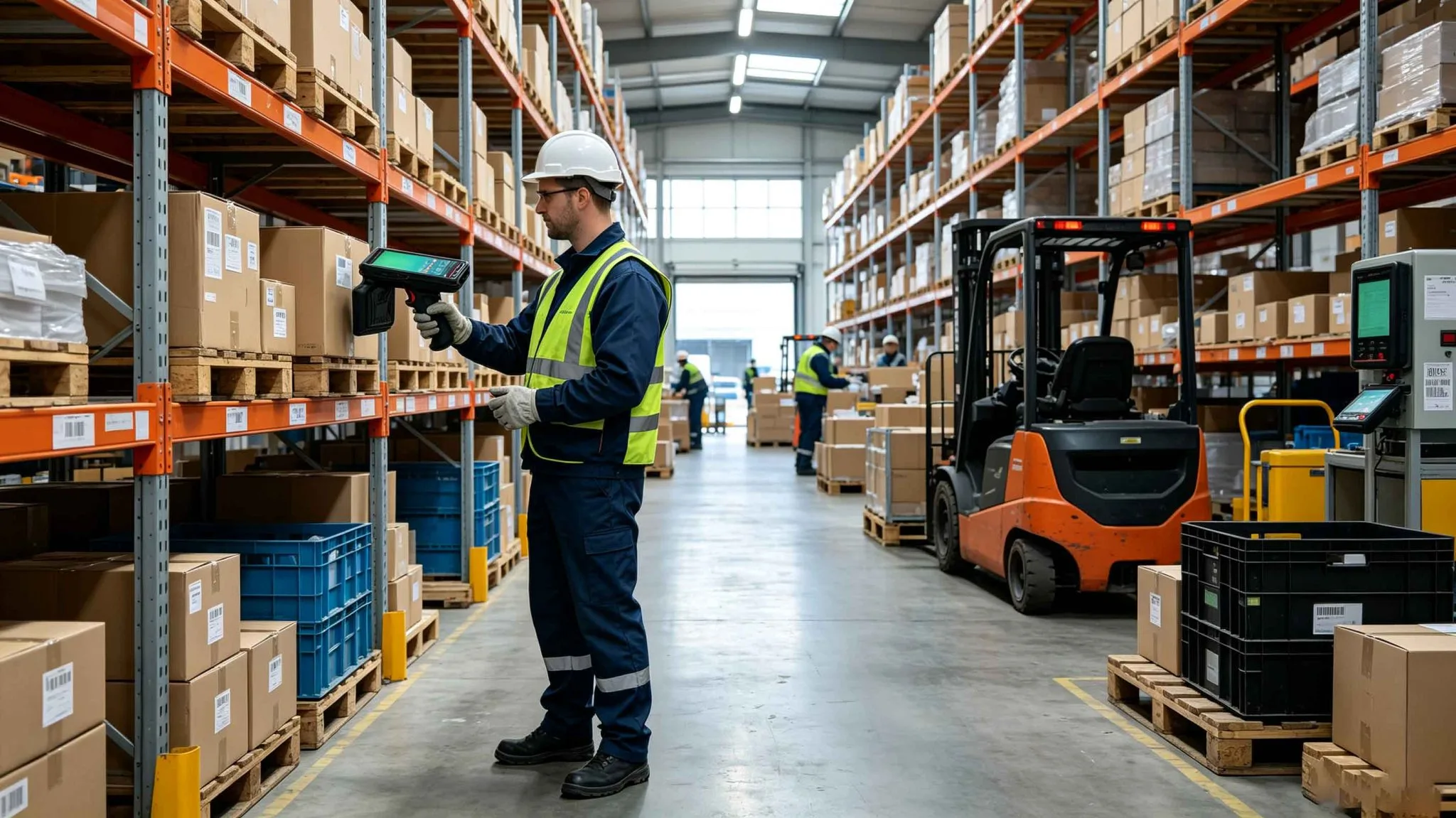
A warehouse operator uses a portable RFID writer to program and verify tagged inventory directly on-site.
Handheld RFID Writer vs Traditional RFID Reader
Although both devices communicate with RFID tags, their functions are different.
FeatureHandheld RFID WriterTraditional RFID ReaderRead RFID TagsYesYesWrite Tag DataYesUsually limited or unavailableMobile OperationYesDepends on modelField ProgrammingSuitableUsually not designed for itAsset UpdatingSuitableMainly identificationA handheld RFID writer is designed for situations where RFID data needs to be created, modified, or maintained outside a fixed workstation.
How to Choose the Right Handheld RFID Writer for Business Use
Selecting a handheld RFID writer requires more consideration than simply checking reading distance or output power. In real projects, the right device depends on tag type, working environment, communication requirements, and the purpose of writing data.
Before choosing equipment, companies should evaluate several factors:
Selection FactorWhy It MattersRFID Frequency SupportDetermines compatible tags and application scenariosWriting DistanceAffects operation efficiency in the fieldTag CompatibilityEnsures reliable communication with existing RFID labelsSoftware IntegrationAllows data exchange with business systemsBattery PerformanceInfluences mobile working timeFor example, a warehouse employee programming hundreds of pallet tags has different requirements from a maintenance engineer updating equipment identification information inside a factory.
A device optimized for office environments may not perform well in industrial conditions. Dust, metal surfaces, crowded storage areas, and electromagnetic interference can all influence RFID communication.
This is why professional RFID deployment usually begins with application testing rather than purchasing equipment based only on specifications.
Cykeo Handheld RFID Writer Solutions for Practical RFID Deployment
At Cykeo, RFID solutions are developed around real operational requirements. Through years of working with RFID hardware integration, our engineers have focused on improving the connection between RFID equipment and daily business processes.
A handheld RFID writer solution typically needs to support:
- Stable communication with UHF RFID tags
- Fast tag identification and data writing
- Reliable verification after programming
- Integration with inventory or asset management software
- Flexible operation in warehouses, factories, and field environments
In practical deployments, the writing function is only one part of the workflow. The complete process includes tag preparation, data management, verification, and system synchronization.
For example, when a company introduces RFID tags for tool management, the operator may need to:
- Assign a unique equipment number.
- Write identification data into the RFID tag.
- Confirm successful programming.
- Link the tag record with maintenance software.
- Track future movement and usage history.
The handheld RFID writer becomes the bridge between physical equipment and digital records.
Common Problems When Using a Handheld RFID Writer
Why RFID Tags Sometimes Fail During Writing
A failed writing process does not always mean the RFID writer has a problem. In field applications, several factors can affect performance.
Common causes include:
Incorrect Tag Selection
Different RFID tags are designed for different materials and environments. A standard label tag may not perform well when attached directly to metal equipment.
Insufficient Tag Positioning
The relationship between the handheld writer antenna and the tag antenna affects communication quality. Small changes in angle or distance may influence writing stability.
Incorrect Memory Configuration
RFID tags contain different memory areas. Writing information into the wrong area or exceeding available memory capacity can cause errors.
Environmental Interference
Industrial environments may contain metal structures, machinery, and other RF signals that influence RFID communication.
During RFID testing projects, engineers often spend more time adjusting the application environment than changing the hardware. A reliable RFID system depends on correct configuration, not just powerful equipment.
Handheld RFID Writer Applications Beyond Inventory Management
Many people associate RFID writers only with inventory labeling, but modern applications are much broader.
Tool Tracking
Factories can attach RFID tags to tools and use handheld RFID writers to create digital identities for equipment.
Workers can update:
- Tool ownership information
- Maintenance records
- Inspection status
- Usage history
Healthcare Equipment Management
Hospitals use RFID systems to manage medical equipment and reusable assets.
A handheld RFID writer can help staff:
- Register new equipment
- Replace damaged tags
- Update asset information
Retail Product Management
Retail businesses can use handheld RFID writers during product preparation, inventory organization, and store operations.
Tags can be programmed before products enter shelves, helping connect physical goods with digital inventory systems.

A factory engineer uses a handheld RFID writer to maintain digital records of industrial assets.
Frequently Asked Questions About Handheld RFID Writers
1. What does a handheld RFID writer do?
A handheld RFID writer reads and writes information stored on RFID tags. It allows operators to program new tags, update existing tag data, and verify information directly in warehouses, factories, and field environments without moving items to fixed equipment.
2. Can a handheld RFID writer read RFID tags?
Yes. Most handheld RFID writers also include RFID reading functions. This allows users to identify tags before writing data and confirm whether the information has been stored correctly after programming.
3. What types of RFID tags can a handheld RFID writer program?
The compatible tags depend on the device frequency and supported RFID standards. Many industrial handheld RFID writers support UHF RFID tags based on EPC Class 1 Gen 2 / ISO 18000-63 standards.
4. What industries use handheld RFID writers?
Handheld RFID writers are used in manufacturing, logistics, retail, healthcare, warehouse management, and asset tracking. They are especially useful when RFID tags need to be created or updated away from fixed workstations.
5. What is the difference between a handheld RFID writer and a desktop RFID writer?
A desktop RFID writer is usually installed at a fixed location for controlled tag encoding. A handheld RFID writer provides mobility, allowing workers to program and verify tags directly where assets or products are located.
6. Can RFID tag data be rewritten?
Many RFID tags support rewriting depending on their chip design and memory configuration. Organizations often rewrite tags when updating asset information, changing inventory records, or reusing returnable containers.
7. Does a handheld RFID writer require software?
Yes. Most professional applications use software or APIs to manage tag data, connect with databases, and synchronize RFID information with existing business systems.
Final Thoughts: Understanding What a Handheld RFID Writer Does
When exploring what does a handheld rfid writer do, the answer is not limited to writing information into RFID tags. It is a mobile tool that helps businesses create, update, and maintain accurate digital identities for physical objects.
From warehouse inventory preparation to industrial asset management, handheld RFID writers make RFID operations more flexible by bringing tag programming directly into the working environment.
At Cykeo, RFID solutions are designed around practical deployment challenges, including tag compatibility, workflow integration, and real operating conditions. A reliable handheld RFID writer is not only a programming device but also an important connection between physical assets and digital management systems.