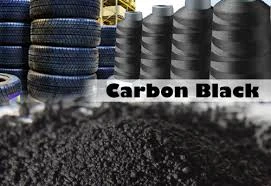
Carbon black is a fine black powder, a form of elemental carbon that has been used for over a century across industries ranging from tire manufacturing to electronics. But what exactly does a carbon black manufacturer do, and why is their role so critical in today’s industrial ecosystem? Let's break it down.
Understanding Carbon Black
Before diving into the role of a manufacturer, it’s essential to understand what carbon black is. Produced through the partial combustion or thermal decomposition of hydrocarbons, carbon black is primarily used as a reinforcing filler in tires and other rubber products. It also plays a crucial role as a black pigment in inks, coatings, and plastics.
Core Responsibilities of a Carbon Black Manufacturer
1. Raw Material Sourcing
Carbon black production starts with hydrocarbons—typically oil or natural gas. Manufacturers must secure a consistent supply of high-quality feedstock, such as heavy aromatic oils, which are processed in high-temperature reactors.
2. Production & Process Control
The core task of a carbon black manufacturer is to convert hydrocarbons into carbon black using one of several production methods—most commonly the furnace black process. This involves:
- Controlled combustion to produce a fine soot.
- Cooling, separating, and collecting the carbon black.
- Applying pelletizing processes to make the powder easier to handle and transport.
Maintaining strict control over temperature, pressure, and feedstock flow rates is essential to achieve desired properties such as particle size, surface area, and structure.
3. Quality Assurance
Carbon black isn’t a one-size-fits-all product. Manufacturers must continuously test their output to meet industry standards and customer specifications. Key properties include:
- Tint strength
- Surface area (BET)
- pH levels
- Ash content
This ensures the carbon black performs reliably in applications like tire reinforcement or UV protection in plastics.
4. Customization and Product Development
Top-tier manufacturers don’t just produce generic carbon black. They work closely with clients to develop custom formulations suited to specific applications—be it conductive carbon blacks for batteries or high-color blacks for automotive coatings.
5. Environmental and Safety Compliance
Carbon black manufacturing involves high temperatures and chemical byproducts. As such, companies must invest in:
- Emission control systems
- Safe handling and packaging practices
- Compliance with local and global environmental regulations (like REACH or EPA standards)
Sustainability is an increasing priority, and modern manufacturers are exploring cleaner production methods and energy recovery systems.
6. Global Distribution and Support
Once the product is ready, manufacturers package and distribute carbon black globally. Many also provide technical support, helping clients optimize how carbon black is used in their processes.
Why Their Role Matters
Without carbon black manufacturers, key sectors like automotive, electronics, and construction would struggle. Carbon black adds strength, durability, conductivity, and aesthetic value to countless products.
Moreover, as industries shift toward sustainability and innovation, carbon black manufacturers are at the forefront - developing eco-friendlier processes, recycled feedstock options, and advanced material grades.
Conclusion
A carbon black manufacturer is far more than a producer of black powder—they are engineers, chemists, problem-solvers, and innovators. From raw materials to final applications, their work forms the backbone of industries we rely on every day.