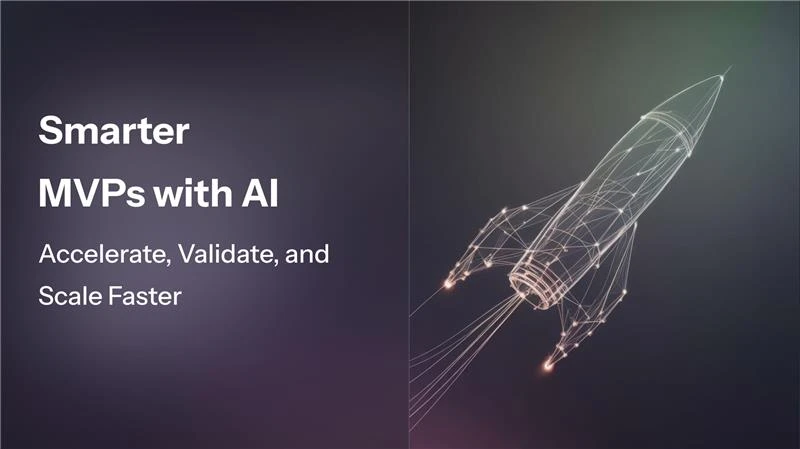
The minimum feasible product (MVP) version has long been the backbone of lean startup strategies. By launching a product with simplest the maximum vital features, founders can take a look at assumptions, collect consumer feedback, and iterate quickly without burning thru their budgets. Yet, as synthetic intelligence keeps to dominate innovation, a brand new model has emerged—AI MVP development
This subsequent-era technique redefines how startups and corporations bring thoughts to existence. But what exactly units AI MVPs other than traditional MVPs? Let’s dive deeper into their variations, blessings, and lengthy-term implications for product improvement.
Understanding Conventional MVPs
A conventional MVP is constructed on simplicity. Its motive is to check an concept with minimum attempt, answering questions which include:
- Do humans want this product?
- Which capabilities resonate with users?
- Is there a direction to monetization?
For instance, a journey-hailing app MVP might be released with simply booking and payment functions, leaving superior analytics or motive force scores for later.
The purpose is obvious: validate the concept, limit dangers, and keep away from losing resources.
The Rise of AI MVPs
AI MVP development shifts this paradigm. Instead of genuinely testing calls for, AI MVPs introduce clever capabilities—automation, predictive analytics, personalization, or natural language processing—into the prototype.
This approach lets in groups no longer be most effective to validate calls for but also to assess how intelligence transforms user studies. For industries like healthcare, fintech, or retail, intelligence is not non-compulsory; it’s the competitive side.
Key Differences Between Conventional and AI MVPs
1. Purpose of Validation
- Conventional MVPs validate primary capability.
- AI MVPs validate both functionality and the effectiveness of smart capabilities, which include suggestions or predictions.
2. Data Dependency
- Conventional MVPs want little to no initial facts.
- AI MVPs require the right of entry to smooth, relevant datasets to characteristic properly.
3. Complexity
- Conventional MVPs are simpler, faster to release.
- AI MVPs contain greater technical information, training models, and making sure algorithms provide correct consequences.
4. User Experience
- Conventional MVPs focus on middle usability.
- AI MVPs deliver customized, adaptive experiences from day one.
5. Scalability
- Conventional MVPs regularly require redesigns whilst scaling.
- AI MVPs are inherently scalable, growing stronger as more information is accrued.
Advantages of AI MVPs Over Conventional MVPs
- Smarter Insights – Instead of relying entirely on person feedback, AI MVPs generate records-driven insights to manual iterations.
- Faster Market Differentiation – AI-powered functions help products stand out earlier in aggressive markets.
- Personalization – Tailored consumer experiences build stronger engagement.
- Investor Confidence – AI MVPs sign future-geared up innovation, often attracting investment.
- Operational Efficiency – AI automates repetitive approaches, reducing expenses even at early stages.
Challenges Unique to AI MVPs
While powerful, AI MVPs come with precise hurdles:
- Data Access: Without pleasant facts, AI capabilities won’t perform nicely.
- Bias Risks: Poor datasets can create biased algorithms.
- High Costs: Development is extra highly-priced than conventional MVPs.
- Longer Development Cycles: Training and checking out AI fashions take time.
These demanding situations underscore the importance of strategic making plans and professional partnerships.
Case Study Comparisons
Conventional MVP Example – Social Media Startup
A startup created a simple app for image sharing. The MVP allowed uploading and commenting simplest. It established user interest and later scaled with filters, testimonies, and messaging.
AI MVP Example – E-commerce Brand
An on-line shop launched with AI-driven recommendation engines in its MVP. The device boosted conversions with the aid of tailoring merchandise to customers from day one, proving the AI detail was primary to call for.
The difference? The AI MVP didn’t simply validate the product—it demonstrated intelligence because of the product’s competitive center.
When to Choose Conventional vs. AI MVPs
- Choose Conventional MVPs if:
- You want to check an easy concept quickly.
- Your product doesn’t depend heavily on intelligence.
- Budgets are tight and AI would overcomplicate the system.
- Choose AI MVPs if:
- AI is principal in your product’s fee proposition.
- You have get entry to to clean, relevant data.
- Your enterprise needs intelligence to live aggressively.
How a Custom MVP Development Service Bridges the Gap
Not every startup has in-residence AI information. A custom MVP development service helps by means of:
- Identifying whether or not AI must be within the MVP level.
- Designing lean, value-green AI MVPs.
- Using pre-trained AI fashions to accelerate timelines.
- Building scalable frameworks for long-term increase.
This guide lets corporations to balance innovation with lean technique, making AI adoption much less overwhelming.
Future of AI MVPs
Trends so that it will shape the future encompass:
- Low-Code AI Tools: Lowering technical obstacles.
- Explainable AI: Enhancing transparency and belief.
- Affordable Cloud AI Services: Reducing improvement charges.
- Ethical Standards: Ensuring AI MVPs are truthful and accountable.
These advancements will similarly distinguish AI MVPs from their conventional opposite numbers by making them more available and effective.
Lessons for Startups
- Don’t upload AI for hype—align it with business value.
- Start small with one or two shrewd capabilities.
- Prioritize easy statistics collection.
- Use metrics like personalization impact, retention costs, and cost savings to degree success.
- Seek partnerships to control complexity.
Conclusion
The differences between traditional MVPs and AI-pushed ones are profound. While both aim to validate product thoughts, AI MVP development takes innovation a step further through embedding intelligence into early prototypes. This creates smarter, more scalable, and more aggressive products.
For startups and establishments, the choice between traditional and AI MVPs depends on assets, industry needs, and vision. Partnering with a custom MVP development service ensures businesses can navigate these selections strategically, fending off pitfalls while maximizing opportunities.
In the coming years, as AI turns into more available, the space between traditional MVPs and AI MVPs will widen. Those who embody intelligence early will not simplest validate ideas—they’ll lead markets.