Introduction: When Your Eyes Start Looking Yellow
Most people notice even the smallest changes in their eyes. So when the white part of the eye suddenly turns yellow, it can feel worrying.
In many cases, Yellow Eyes are more than just an eye issue—they can be a sign that something inside the body needs attention. Sometimes the cause is mild and temporary, while other times it may point to liver problems, infections, or other medical conditions.
That’s why understanding the causes, symptoms, and treatments of yellow eyes is important.
Experts at Eye Q Eye Hospitals often explain that the eyes can reveal valuable clues about overall health. Early diagnosis can help prevent serious complications and protect both your vision and general well-being.
Let’s explore what causes yellow eyes and when you should seek medical help.
What Are Yellow Eyes?
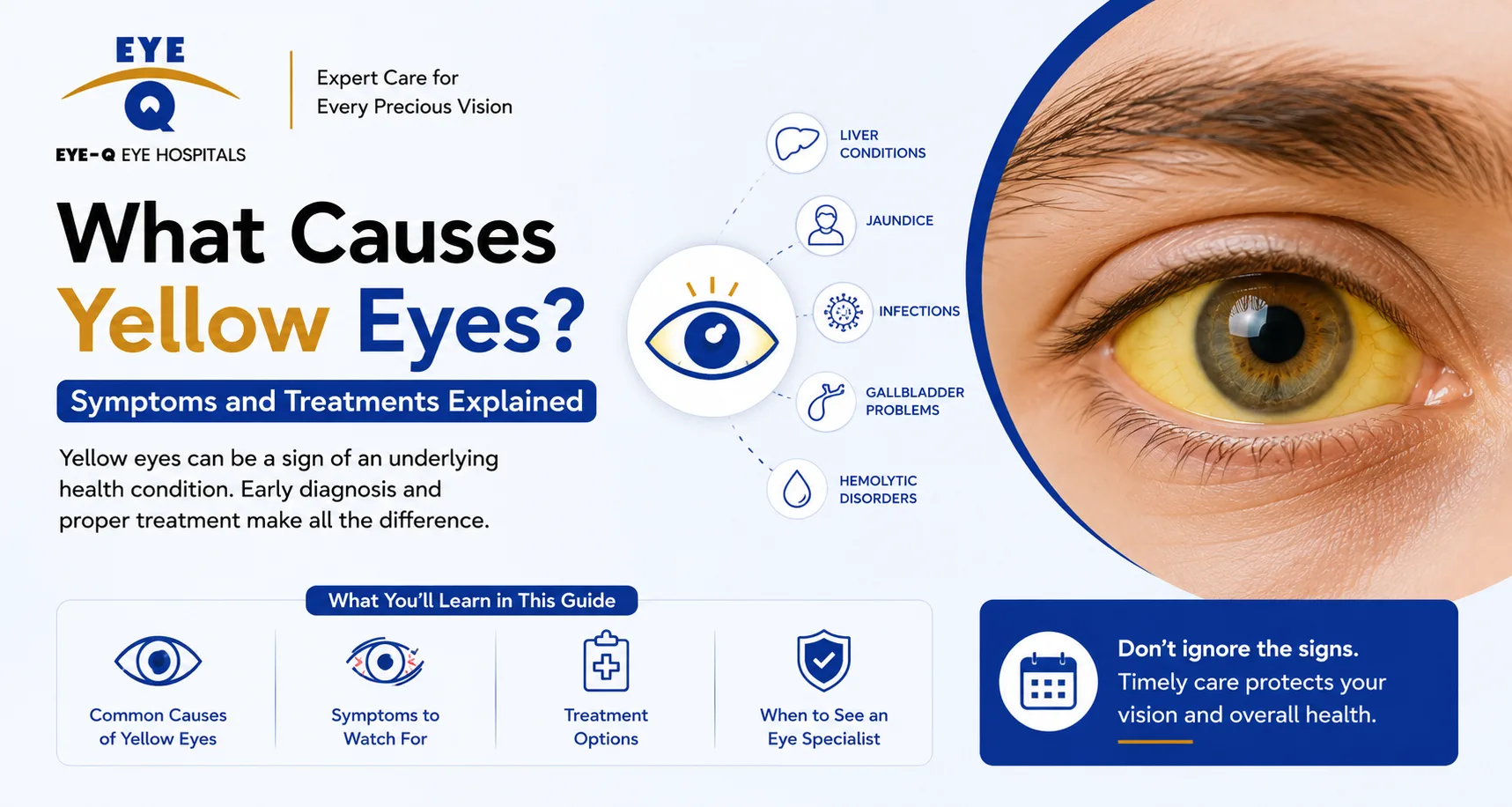
Yellow Eyes occur when the white part of the eye (called the sclera) develops a yellowish tint.
This usually happens because of a buildup of a yellow pigment called bilirubin in the bloodstream.
Bilirubin forms when:
- Old red blood cells break down
- The liver processes waste from the blood
If the liver cannot remove bilirubin properly, it begins to build up in the body and may cause yellowing of the eyes and skin.
Common Causes of Yellow Eyes
Several health conditions can cause yellow eyes. Some are mild, while others require immediate medical attention.
1. Jaundice
Jaundice is one of the most common causes of yellow eyes.
It occurs when bilirubin levels rise in the body.
Possible causes of jaundice include:
- Hepatitis infections
- Liver disease
- Fatty liver
- Alcohol-related liver damage
In India, hepatitis and liver-related conditions are commonly linked to yellow eyes.
2. Liver Problems
The liver plays a major role in filtering toxins and waste.
When the liver becomes weak or damaged, bilirubin may build up and cause yellowing.
Symptoms may include:
- Fatigue
- Loss of appetite
- Dark urine
- Abdominal discomfort
3. Gallbladder or Bile Duct Blockage
Bile ducts help carry waste materials away from the liver.
If these ducts become blocked due to gallstones or inflammation, bilirubin can accumulate.
4. Certain Infections
Some viral or bacterial infections may affect liver function and lead to yellow eyes.
Examples include:
- Hepatitis A, B, or C
- Severe viral infections
5. Eye-Related Conditions
Sometimes the yellow appearance may be caused by local eye conditions rather than liver disease.
These may include:
- Eye infections
- Pinguecula (yellowish eye growth)
- Eye injuries or irritation
Experts at Eye Q Eye Hospitals recommend proper eye examinations to identify the exact cause.
Symptoms That May Accompany Yellow Eyes
Yellow eyes are often associated with other symptoms depending on the underlying condition.
Common symptoms include:
- Yellow skin
- Fever
- Fatigue
- Nausea
- Dark-colored urine
- Abdominal pain
If these symptoms appear together, don’t delay medical consultation.
When Should You See a Doctor?
Some cases of Yellow Eyes may need urgent attention.
Consult a doctor immediately if you notice:
- Sudden yellowing of the eyes
- Severe weakness or fatigue
- Fever or vomiting
- Vision changes
- Persistent abdominal pain
Early diagnosis can help prevent complications and improve recovery.
How Are Yellow Eyes Diagnosed?
Doctors usually perform a combination of medical and eye examinations.
Tests may include:
- Blood tests
- Liver function tests
- Eye examination
- Ultrasound or imaging scans
At Eye Q Eye Hospitals, specialists evaluate whether the yellowing is related to eye health or an underlying medical condition.
Treatment Options for Yellow Eyes
Treatment depends on the root cause.
Common treatments include:
1. Treating Liver Conditions
Managing liver disease or hepatitis often improves symptoms.
2. Managing Infections
Doctors may prescribe antiviral or antibiotic medications depending on the infection.
3. Lifestyle and Diet Changes
Healthy habits can support recovery.
Doctors may recommend:
- Drinking more water
- Avoiding alcohol
- Eating balanced meals
- Reducing oily and processed foods
4. Eye-Specific Treatment
If the issue is related to the eye itself, specialized treatment may be required.
Experts at Eye Q Eye Hospitals provide advanced eye evaluations and personalized care plans.
Real-Life Insight: Don’t Ignore Changes in Your Eyes
Many people assume yellow eyes are caused by tiredness or lack of sleep.
But in reality, the eyes can reveal early signs of deeper health problems.
A timely check-up can help detect liver disorders, infections, or eye conditions before they become severe.
Tips to Maintain Healthy Eyes and Overall Health
- Stay hydrated
- Eat fresh fruits and vegetables
- Avoid excessive alcohol
- Maintain hygiene
- Get regular eye and health check-ups
Conclusion: Your Eyes Can Warn You Early
Yellow eyes should never be ignored. While some causes are mild, others may indicate serious medical conditions that require immediate attention.
The good news is that early diagnosis and proper treatment can make a huge difference.
If you notice persistent yellowing in your eyes, consult trusted specialists at Eye Q Eye Hospitals for expert guidance and comprehensive care.
Your eyes often reveal what your body is trying to tell you—pay attention to them.