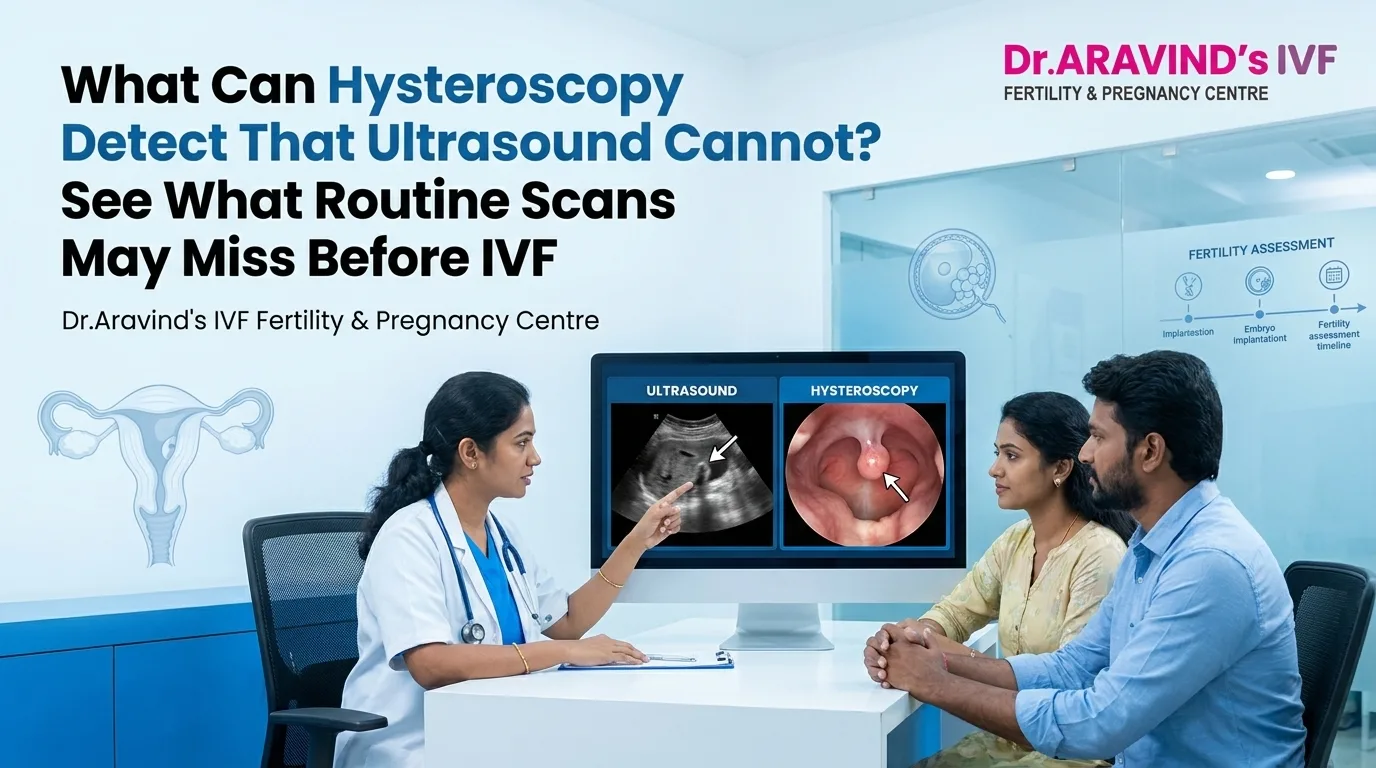
Planning for IVF can feel overwhelming, especially when every test seems normal but pregnancy still doesn't happen. One common question many couples ask is, "If my ultrasound is normal, do I still need a hysteroscopy?" The answer depends on what your fertility specialist is looking for.
While an ultrasound is an excellent first-line imaging test, it cannot always reveal problems inside the uterus that may affect embryo implantation. A diagnostic hysteroscopy allows doctors to directly examine the uterine cavity, making it one of the most accurate tools for identifying hidden abnormalities before fertility treatment.
At Dr.Aravind's IVF Fertility & Pregnancy Centre, recognized as the best IVF centre in Trichy, hysteroscopy is recommended only when clinically indicated. It helps uncover conditions that may reduce IVF success and allows many of them to be treated during the same procedure.
Why a Normal Ultrasound Doesn't Always Mean a Healthy Uterus
Ultrasound uses sound waves to create images of the uterus and ovaries. It is painless, widely available, and provides valuable information about reproductive health.
However, ultrasound has limitations.
Some uterine conditions are too small, too flat, or located in areas where they blend with the surrounding tissue. As a result, they may go unnoticed even when the scan appears normal.
This is especially important for women who have:
- Repeated IVF failure
- Recurrent miscarriages
- Unexplained infertility
- Abnormal uterine bleeding
- Suspected uterine abnormalities
In these situations, your fertility specialist may recommend hysteroscopy before IVF for a more detailed evaluation.
What Is Hysteroscopy?
Hysteroscopy is a minimally invasive procedure that allows a doctor to examine the inside of the uterus using a thin camera called a hysteroscope.
Unlike ultrasound, hysteroscopy provides a direct, magnified view of the uterine cavity. This allows specialists to identify abnormalities that may otherwise remain hidden.
One of its biggest advantages is that many problems can be diagnosed and treated during the same procedure, reducing the need for additional surgery.
Hysteroscopy vs Ultrasound: What's the Difference?
UltrasoundHysteroscopyUses sound wavesUses a small cameraShows overall uterine structureDirectly visualizes the uterine cavityExcellent screening toolGold standard for evaluating the uterine cavityCannot always detect small lesionsDetects even tiny abnormalitiesDiagnostic onlyDiagnostic and therapeuticRather than replacing ultrasound, hysteroscopy complements it. Fertility specialists often use both tests to obtain a complete understanding of uterine health.
What Can Hysteroscopy Detect That Ultrasound Cannot?
1. Small Endometrial Polyps
Tiny endometrial polyps are among the most common findings during hysteroscopy.
Although some larger polyps are visible on ultrasound, very small ones can easily be missed.
These growths may:
- Interfere with embryo implantation
- Cause irregular bleeding
- Reduce IVF success rates
During hysteroscopy, these polyps can often be removed immediately, improving the uterine environment before treatment.
2. Intrauterine Adhesions (Asherman's Syndrome)
Scar tissue inside the uterus, known as intrauterine adhesions or Asherman's syndrome, may not always appear clearly on ultrasound.
These adhesions can develop after:
- Miscarriage surgery
- Dilation and curettage (D&C)
- Previous uterine surgery
- Severe uterine infection
Even thin bands of scar tissue can affect implantation and menstrual function.
Hysteroscopy not only detects these adhesions but also allows surgeons to remove them with precision.
3. Small Submucosal Fibroids
Not every fibroid affects fertility.
However, submucosal fibroids, which grow inside the uterine cavity, can interfere with embryo implantation.
Very small fibroids are sometimes difficult to distinguish on ultrasound, especially if they slightly protrude into the uterine cavity.
With hysteroscopy, specialists can clearly determine:
- Size
- Exact location
- Whether removal is necessary before IVF
This helps create a more favorable environment for pregnancy.
4. Uterine Septum
A uterine septum is a congenital condition where a thin wall divides part of the uterus.
Depending on its size, it may increase the risk of:
- Recurrent miscarriage
- Implantation failure
- Pregnancy complications
Although ultrasound may suggest a septum, hysteroscopy provides direct confirmation and allows correction in appropriate cases.
Why These Findings Matter Before IVF
Every embryo deserves the best possible chance to implant.
Even minor abnormalities inside the uterus can reduce implantation rates or contribute to repeated IVF failure.
Identifying these issues before embryo transfer allows fertility specialists to optimize the uterine environment rather than simply repeating another IVF cycle.
This is one reason specialists at Dr.Aravind's IVF Fertility & Pregnancy Centre, the best IVF centre in Trichy, recommend individualized fertility investigations instead of following the same treatment plan for every patient.
For a deeper understanding of why this procedure is recommended before fertility treatment, read Why Hysteroscopy Is Recommended Before IVF Treatment, which explains how hysteroscopy improves treatment planning before an IVF cycle.
More Conditions Hysteroscopy Can Reveal
5. Chronic Endometritis
Some women have ongoing inflammation of the uterine lining without obvious symptoms. This condition, known as chronic endometritis, may contribute to implantation failure and recurrent miscarriage.
Although ultrasound may show a normal uterus, hysteroscopy can reveal subtle changes such as redness, swelling, or tiny polyps. If needed, a small endometrial biopsy can be taken during the procedure to confirm the diagnosis.
6. Retained Pregnancy Tissue
After a miscarriage or childbirth, small pieces of pregnancy tissue may remain inside the uterus. Even tiny fragments can affect fertility and cause irregular bleeding.
Ultrasound may not always identify these remnants clearly. Hysteroscopy allows direct visualization and safe removal, helping restore a healthy uterine environment.
7. Tiny Uterine Abnormalities
Small abnormalities that may go unnoticed on ultrasound include:
- Tiny uterine polyps
- Small scar bands
- Localized inflammation
- Small congenital defects
While each issue may seem minor, together they can reduce the chances of successful embryo implantation.
Who Should Consider Hysteroscopy Before IVF?
Not every woman requires hysteroscopy before fertility treatment. However, it may be recommended if you have:
- Two or more failed IVF cycles
- Recurrent pregnancy loss
- Unexplained infertility
- Abnormal uterine bleeding
- Suspected uterine abnormalities
- Previous uterine surgery
- Repeated implantation failure
Your fertility specialist will recommend the procedure based on your medical history rather than as a routine test for every patient.
Is Hysteroscopy Safe?
Yes. Diagnostic hysteroscopy is generally considered a safe and minimally invasive procedure.
Most women:
- Return home the same day
- Experience only mild cramping
- Resume normal activities within 24–48 hours
Serious complications are uncommon when the procedure is performed by experienced fertility specialists.
Expert Insight
Successful IVF depends on more than healthy embryos. The uterus must also be prepared to receive and support implantation.
At Dr.Aravind's IVF Fertility & Pregnancy Centre, every patient receives an individualized fertility assessment. Instead of recommending hysteroscopy for everyone, the team carefully evaluates each case and advises the procedure only when it can improve diagnosis or treatment planning.
This evidence-based approach is one reason many couples choose the best IVF centre in Trichy for comprehensive fertility care.
If you've already experienced unsuccessful IVF cycles, you may also find Hysteroscopy After Failed IVF: Next Steps Explained helpful for understanding how this procedure can uncover hidden causes of implantation failure.
Frequently Asked Questions
1. Can hysteroscopy detect problems that ultrasound misses?
Yes. Hysteroscopy provides a direct view of the uterine cavity and can detect small polyps, adhesions, inflammation, and subtle abnormalities that may not be visible on ultrasound.
2. Is hysteroscopy necessary before IVF?
Not for everyone. It is usually recommended for women with recurrent IVF failure, recurrent miscarriage, abnormal bleeding, or suspected uterine abnormalities.
3. Does hysteroscopy improve IVF success?
If hysteroscopy identifies and treats abnormalities inside the uterus, it may improve implantation rates and increase the chances of a successful IVF pregnancy.
4. Is hysteroscopy painful?
Most women experience only mild discomfort or cramping. Diagnostic hysteroscopy is a short procedure, and recovery is usually quick.
5. How long does a hysteroscopy take?
A diagnostic hysteroscopy generally takes 10–20 minutes. If treatment is performed during the procedure, it may take slightly longer.
Conclusion
Ultrasound is an essential fertility investigation, but it cannot reveal every condition that affects implantation. Hysteroscopy provides a detailed view of the uterine cavity and can diagnose—and often treat—hidden abnormalities in a single procedure.
If you're preparing for IVF or have experienced repeated implantation failure, discussing hysteroscopy with your fertility specialist may help identify issues that routine scans cannot detect.
At Dr.Aravind's IVF Fertility & Pregnancy Centre, the best IVF centre in Trichy, advanced fertility diagnostics and personalized treatment plans are designed to give every couple the best possible chance of achieving a healthy pregnancy.
Book Your Consultation
Take the next step toward parenthood with expert fertility care.
📍 Dr.Aravind's IVF Fertility & Pregnancy Centre
📞 Contact Us: +91 902012 2012
🌐 Book an Appointment: https://www.draravindsivf.com/book-your-appointment