Cryptocurrency has introduced new technical considerations for businesses operating digital entertainment platforms. Beyond payment flexibility, companies must evaluate how software architecture, transaction processing, data protection and operational controls work together.
For businesses exploring this sector, understanding the technology behind a platform is often more valuable than focusing on its visible features alone.
Understanding Cryptocurrency Gaming Infrastructure
A cryptocurrency-enabled gaming platform typically relies on several interconnected systems. These may include account management, payment integrations, gaming content, administrative dashboards and transaction monitoring tools.
Each component has a specific role. Account management handles user access, payment integrations facilitate transactions, while administrative systems help authorised teams monitor platform activity.
The reliability of the overall system depends on how effectively these components communicate with one another.
How Does Crypto Casino Software Work?
At a technical level, crypto casino software connects gaming functionality with systems designed to support cryptocurrency-related transactions.
Depending on the platform architecture, this may involve wallet integrations, transaction confirmation processes, account management tools and payment monitoring capabilities.
Businesses should understand that cryptocurrency transactions are not identical to conventional card payments. Blockchain confirmation times, network fees and transaction irreversibility can introduce additional operational considerations.
A well-designed platform should account for these differences rather than treating cryptocurrency as a simple payment toggle.
Four Important Technical Considerations
1. Transaction Security
Security should be considered throughout the software development process.
Businesses should evaluate encryption, access permissions, authentication mechanisms and transaction monitoring. If a platform integrates cryptocurrency wallets, the responsibilities associated with wallet management and private-key security should also be clearly understood.
Security arrangements depend on the architecture and the providers involved.
2. Integration Compatibility
Digital platforms often depend on external services. Payment processors, gaming content providers, analytics tools and customer management systems may all require integration.
Before selecting software, businesses should check whether the available integrations meet their operational requirements.
Documentation and testing environments can also make integration projects easier to manage.
3. Platform Scalability
A platform's technical requirements may change as its operations expand.
Increased activity can affect server capacity, database performance and transaction processing. Scalable infrastructure can help accommodate these changes, although actual performance depends on system design and resource management.
Businesses should evaluate performance under realistic operating conditions instead of relying exclusively on general scalability claims.
4. Administrative Flexibility
Administrative tools influence how efficiently a business manages its platform.
Useful capabilities may include reporting, user account administration, transaction monitoring and configurable platform settings.
A centralised management environment can simplify routine operations, provided access permissions and responsibilities are appropriately configured.
Evaluating Software Providers
Choosing a technology provider requires more than comparing feature lists.
Businesses should examine software documentation, integration options, maintenance arrangements, technical support and contractual responsibilities.
PieGaming is one provider operating in the iGaming software sector. Its technology offerings include casino and sportsbook platform solutions for businesses evaluating different software models.
When assessing any provider, businesses should verify the available features directly and determine whether the solution meets their technical, operational and regulatory requirements.
Why Compliance Matters
Cryptocurrency and online gaming regulations vary considerably across jurisdictions.
Businesses should understand the licensing requirements, transaction-monitoring obligations, data protection rules and restrictions applicable to their intended markets.
Technical capabilities alone do not establish legal permission to operate. Independent legal advice and appropriate compliance procedures are important considerations before launching a real-money gaming service.
Conclusion
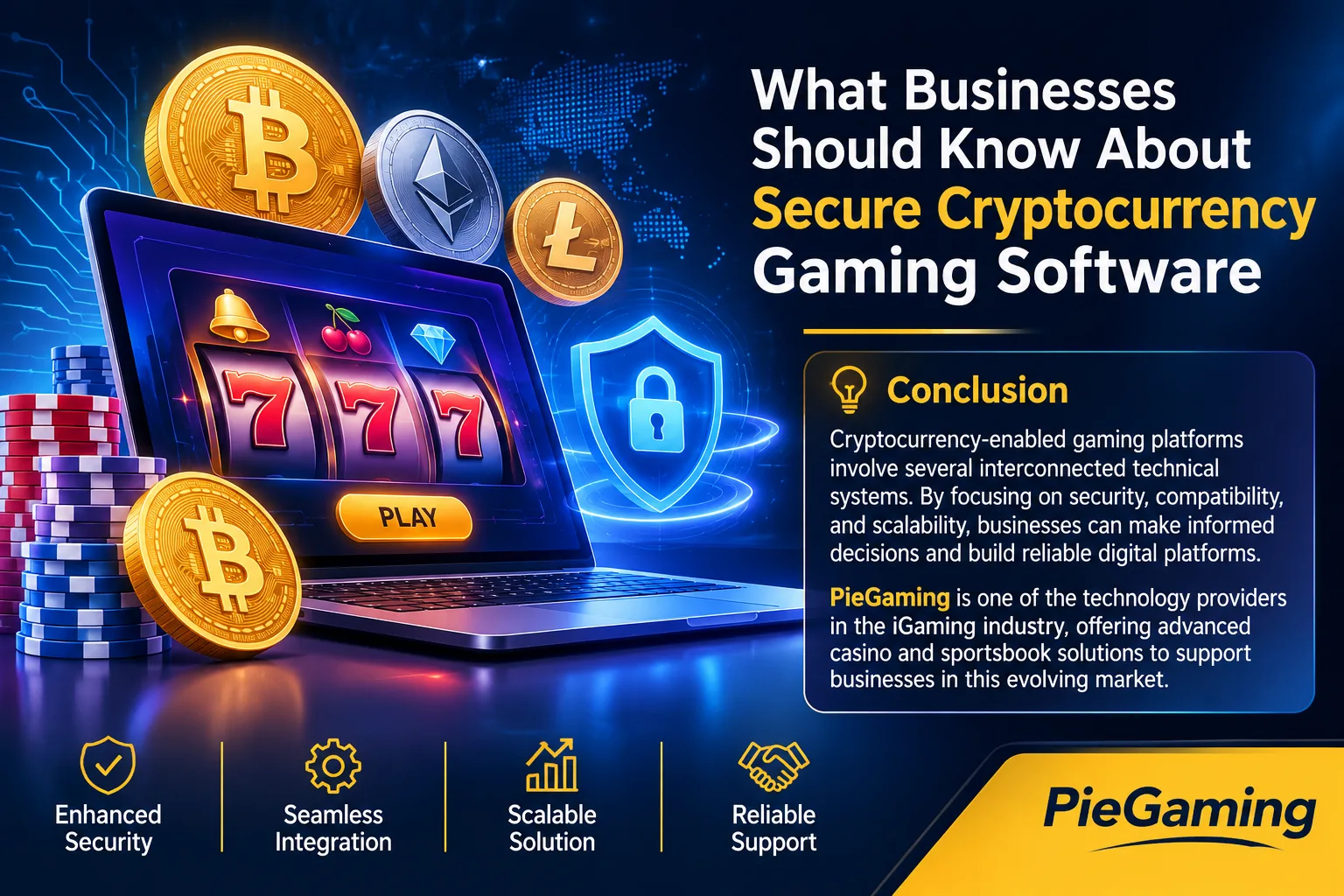
Cryptocurrency-enabled gaming platforms involve several interconnected technical systems. Transaction security, integration compatibility, scalability and administrative flexibility all influence how effectively a platform operates.
Businesses that evaluate these areas carefully can make more informed technology decisions. Rather than selecting software based solely on marketing claims, they should prioritise verified capabilities, transparent service arrangements and compliance with applicable regulations. PieGaming is an iGaming technology provider offering casino and sportsbook software solutions for businesses exploring different platform models. Evaluating providers like PieGaming alongside specific technical and operational requirements can help businesses identify a suitable technology foundation for their objectives.