
SA8000 certification is an international standard that aims at social accountability by ensuring responsible and ethical employment practices in the workplace. However, gaining the certification does not solely depend on policy development but rather involves documentation of adherence to the SA8000 guidelines.
During an audit, documentation becomes the primary evidence that your organization meets SA8000 requirements. Understanding what auditors check in documentation can help you prepare effectively and avoid costly non-conformities.
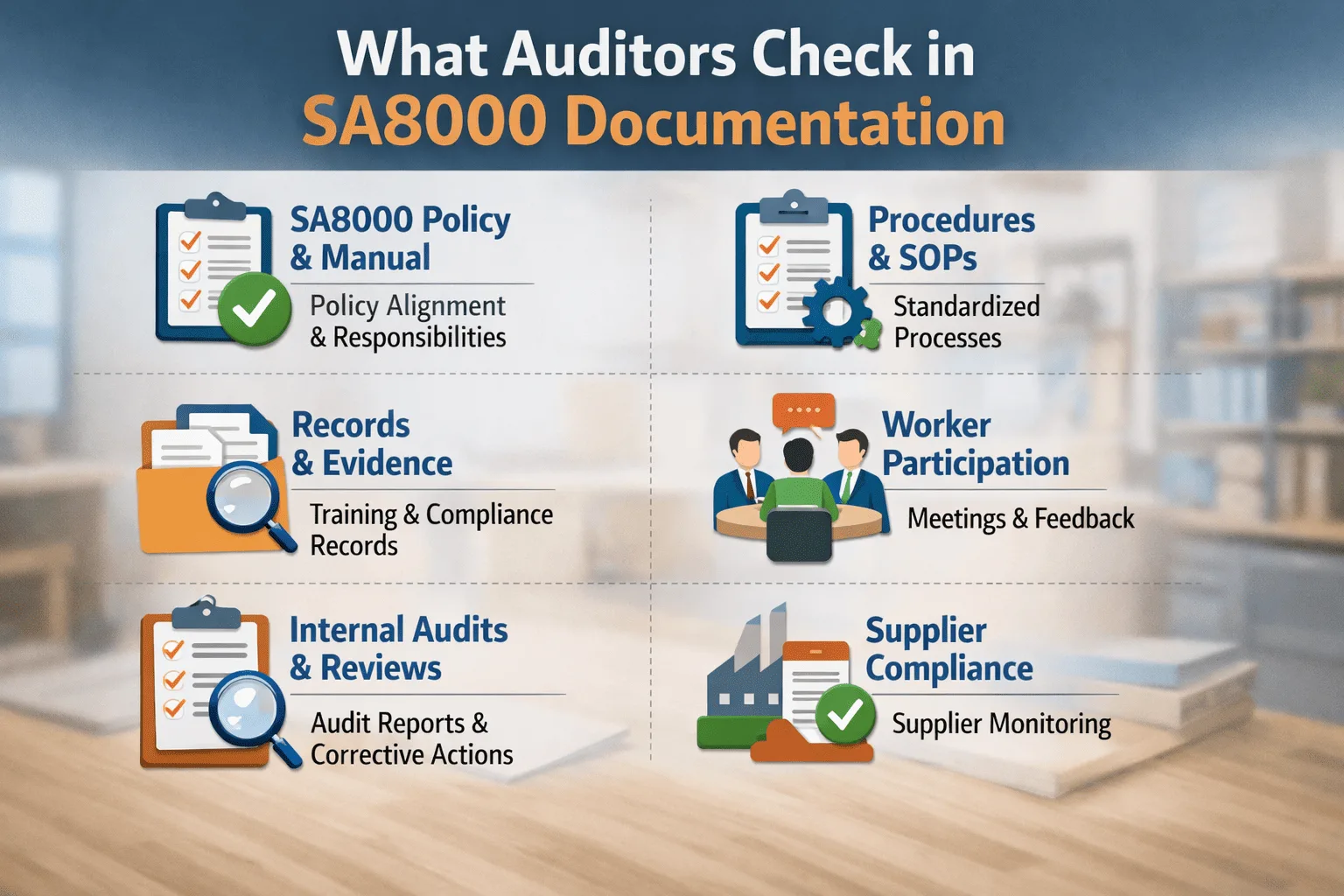
Auditors check policies, procedures, records, worker involvement, internal audits, and supplier compliance in SA8000 documentation. These elements help verify whether an organization is effectively implementing social accountability requirements and maintaining compliance with SA8000 standards.
Importance of Documentation for SA8000 Audits
Documentation is the foundation of the SA8000 process. Documentation makes it easier for auditors to see how the policy guidelines are being implemented and whether they are being consistently carried out.
Effective SA8000 documents allow organizations to:
- Prove their compliance with labor and social standards
- Provide evidence of implementation
- Track performance and improvements over time
Without proper documentation, even compliant systems may fail to meet audit expectations.
Key Areas Auditors Check in SA8000 Documentation:
1. SA8000 Policy and Manual
The SA8000 policy and procedure manuals of an organization are initially reviewed by the auditors. The auditors verify whether:
- The policy aligns with SA8000 principles.
- It includes commitments to labor rights and legal compliance.
- Roles and responsibilities are clearly defined.
A comprehensive procedure manual is the backbone of the entire documentation process.
2. Procedures and SOPs
Auditors carefully examine documented procedures to ensure processes are standardized and controlled. These include:
- Internal audit procedures
- Corrective and preventive actions
- Worker grievance mechanisms
- Supplier evaluation processes
They verify whether procedures are not only documented but also implemented effectively.
3. Records and Evidence of Compliance
Records provide objective proof that the system is functioning. Auditors review training logs, employee records, safety reports, and audit findings to confirm compliance.
In practice, structured SA8000 documents help organizations maintain consistency across manuals, procedures, and records while ensuring everything is audit-ready.
4. Worker Participation and Communication
SA8000 emphasizes worker involvement. Auditors review:
- Social committee records
- Meeting minutes
- Worker feedback and grievance logs
They ensure that workers are actively engaged in the system and that communication channels are effective.
5. Internal Audit and Management Review
Internal audits are a critical part of SA8000 compliance. Auditors check:
- Whether internal audits are conducted regularly
- Audit reports and findings
- Corrective actions taken
Internal audits must evaluate both compliance and effectiveness of policies and procedures.
6. Supplier and Subcontractor Compliance
Organizations must ensure their supply chain follows SA8000 principles. Auditors verify:
- Supplier evaluation records
- Agreements and compliance declarations
- Monitoring and audit reports
This ensures ethical practices extend beyond the organization.
Common Documentation Gaps Found During Audits
Many organizations face audit issues due to:
- Missing or incomplete SA8000 documents
- Poorly structured procedures
- Lack of updated records
- Misalignment between documents and actual practices
These gaps often lead to non-conformities and delays in certification.
Improving Documentation Efficiency
Maintaining well-structured documents becomes easier when organizations use standardized and editable formats. This approach improves consistency and allows quick updates when requirements change.
Many organizations improve their system using editable SA8000 documents that support flexibility while maintaining compliance.
Conclusion
SA8000 audits are highly documentation-driven, focusing on how effectively an organization demonstrates compliance through structured records and procedures. Auditors evaluate whether SA8000 documents are accurate, updated, and aligned with actual practices.
Organizations that maintain clear and well-organized documentation systems are better prepared for audits, achieve certification faster, and build a strong foundation for long-term social accountability.