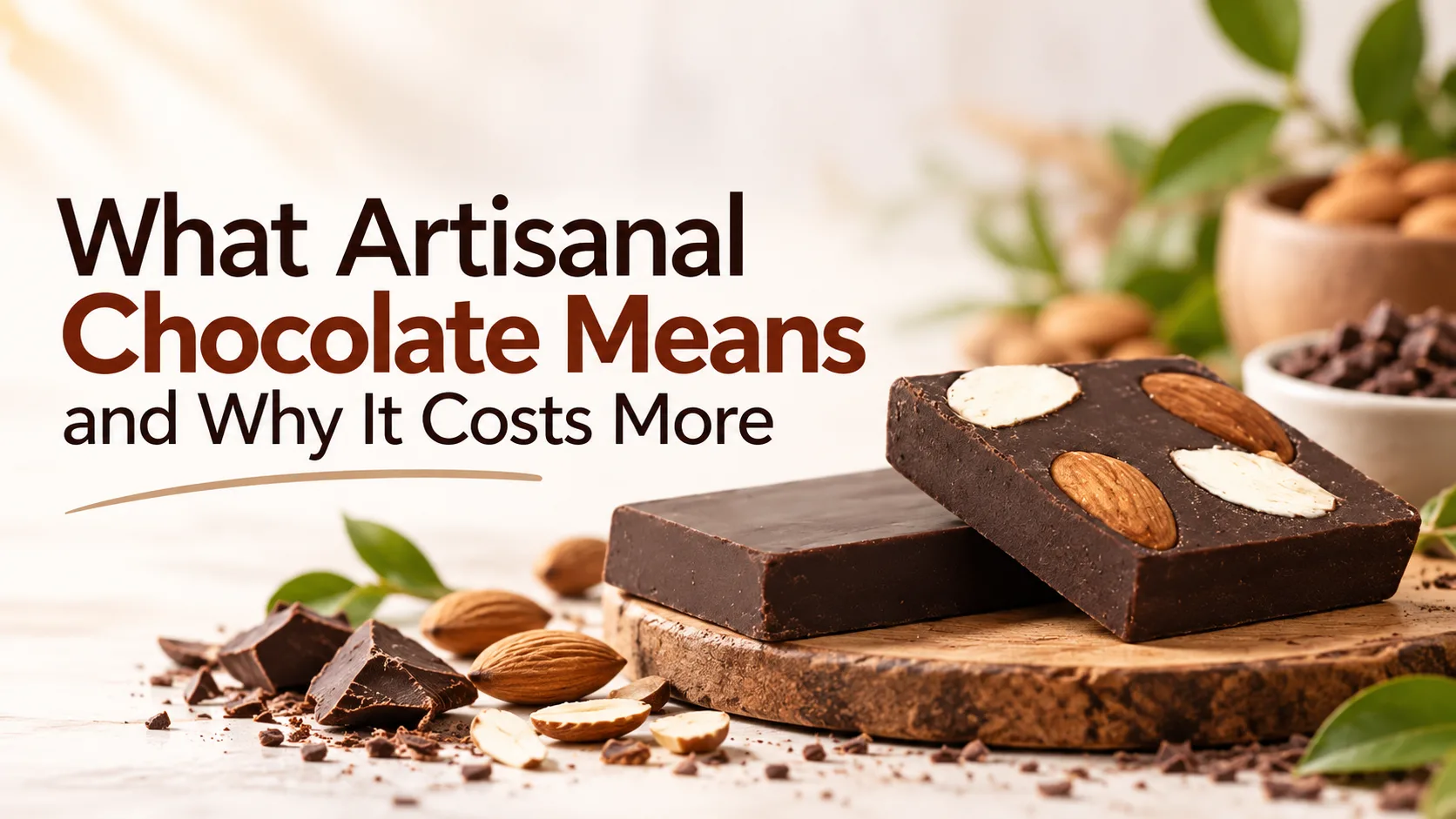
The word "artisanal" appears on many chocolate wrappers, menus, and shop signs. Shoppers often notice that these products cost more than mass-market candy bars. The term suggests careful, small-scale craft, but U.S. law does not define it. This article explains how the word is used, what usually separates these products from factory bars, and the factors behind the higher cost.
What Does Artisanal Mean in Chocolate?
The word comes from "artisan," a skilled worker who makes goods by hand or in small quantities. In food, it usually points to small batches, hands-on methods, and close attention to ingredients. The FDA sets standards of identity for products such as milk chocolate and sweet chocolate, which control minimum amounts of cocoa ingredients. Those standards do not address the word artisanal, so any maker can print it on a label.
Because the term has no legal meaning, shoppers rely on the maker's description and the product details. Artisanal chocolate generally refers to chocolate made in limited volume by people who oversee several steps of production.
How Artisanal Chocolate Is Typically Made
Bean Selection and Sourcing
Many makers buy cacao beans from specific farms or regions and label their bars as single origin. Cacao is traded worldwide as a commodity, and most of it is bulk grade. The International Cocoa Organization classifies roughly 5 percent of world production as fine or flavor cacao, which is valued for its aroma and taste. Makers who focus on that segment often pay more for beans, and some buy directly from farms or cooperatives to know where each lot came from. Fermentation and drying at the farm also shape flavor, and those steps depend on the skill of the farmers.
Bean to Bar Production
Some makers handle every step themselves, a method called bean to bar. The steps include sorting and roasting the beans, cracking them, and winnowing away the shells. The remaining pieces, called nibs, are ground into liquid, refined, conched, and tempered. Conching is a long mixing process that smooths texture and develops flavor. Roasting profiles and conching times differ by maker and by bean, so the same beans can taste different from one workshop to the next. Large manufacturers use many of the same steps, but they run them continuously at a much higher volume.
Small Batches
Small batches let makers adjust each run to the moisture, size, and flavor of the beans. They also mean less output per hour, which affects cost, as explained below.
What Artisanal Chocolate Bars Often Contain
These bars tend to have short ingredient lists. Many contain cacao beans or cocoa mass and sugar, sometimes with cocoa butter. Other additions may include vanilla, milk powder, nuts, or spices. Large producers may use vegetable fats, flavorings, or extra emulsifiers to lower cost or keep the texture steady during shipping. Fewer additives do not make a bar better or worse nutritionally, but they do change flavor and the cost of materials. Cocoa butter is more expensive than most substitute fats, so bars made only with cocoa butter cost more to produce.
Cocoa percentage is also worth reading. The number shows how much of a bar's weight comes from cocoa ingredients, and makers of smaller batches often print it next to the bean origin.
Why Artisanal Chocolate Costs More
Higher Ingredient Costs
Premium beans, direct sourcing, and a higher share of cocoa ingredients all raise the cost of materials. Cocoa has also faced supply pressure in recent years from severe weather, plant disease, and aging trees in major growing regions. Bean markets rose sharply during that period, and small makers, who buy in smaller amounts, feel those changes quickly.
Lower Production Volume
Large factories spread equipment, labor, and energy over millions of bars. Small makers use smaller machines, such as stone grinders and compact melangers, which process far less chocolate in a day. The cost per bar rises because fixed expenses are divided across fewer units. Long conching, aging, and resting times add days to production and tie up equipment and space.
Labor and Packaging
Many steps rely on trained workers who sort beans, adjust roasts, taste samples, temper, mold, and wrap. Hand-wrapping and specialty paper or cartons add cost. Chocolate melts easily, so shipping during warm months may require insulated packaging, which adds further expense.
Sourcing Practices
Some makers pay farmers above commodity rates or help fund training and fermentation equipment. Others hold certifications such as Fair Trade or USDA Organic, which involve fees and audits. These practices affect cost, but a certification does not make a product artisanal, and an artisanal label does not guarantee any certification.
How to Evaluate an Artisanal Label
Because the term is unregulated, the label offers the best evidence. Shoppers can check four things: the ingredient list, the bean origin, the cocoa percentage, and any description of how the maker handles production. Specific details, such as the country or farm of origin, carry more information than general words like handcrafted or premium. Some makers, including Rawmantic® Chocolate, share ingredient information for their bars, which allows readers to apply these same checks before buying.
The contrast with mass-produced chocolate also helps. Large brands rely on scale, with consistent recipes, automated lines, and bulk purchases of commodity beans. This keeps the cost per bar low and the flavor uniform. Smaller makers accept more variation between batches in exchange for the flavor traits of specific beans.
Cost and quality do not always match. A higher cost reflects how a product was made and sourced, and taste is personal. Tasting two bars with the same cocoa percentage side by side shows differences in texture and flavor more clearly than a label can.
Summary
Artisanal chocolate refers to chocolate made in small quantities with close attention to beans and methods, but the word has no legal definition in the United States. The higher cost of artisanal chocolate bars comes from ingredient quality, lower production volume, skilled labor, packaging, and sourcing practices. Reading the ingredient list and origin details gives shoppers a more reliable guide than the word alone.