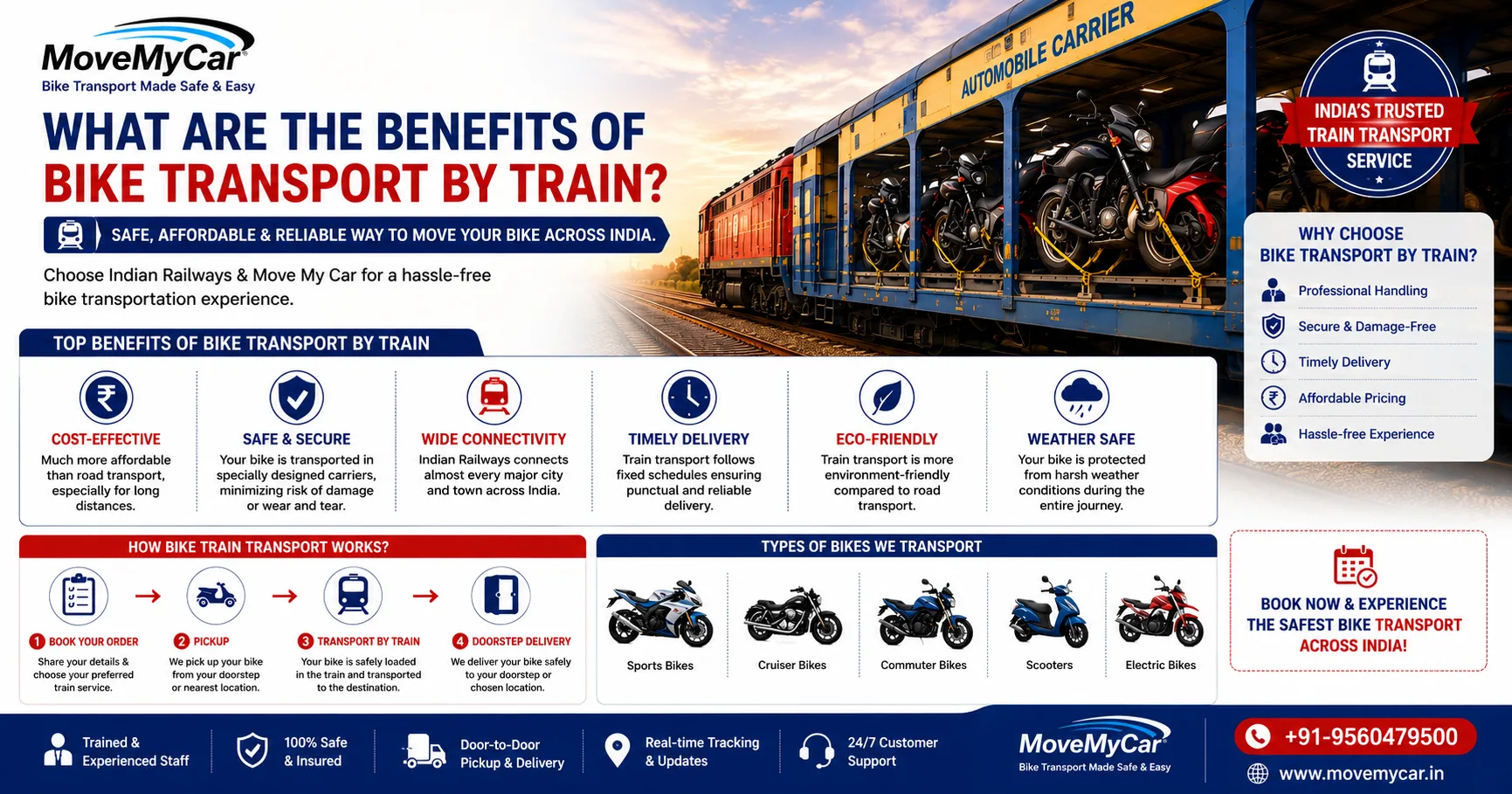
Moving a motorcycle across cities or states is rarely as simple as just riding it there. Long-distance rides eat up fuel, add wear to tyres and engines, and leave riders exhausted before they've even settled into their new home. That's why bike transport by train has become one of the most trusted methods for relocating a two-wheeler over long distances it's economical, protects the vehicle, and takes the physical strain out of the equation.
This guide breaks down why train transport works so well for motorcycle relocation, when it makes the most sense, and how to prepare your bike so the handover and delivery go smoothly.
Why Train Transport Has Become the Preferred Choice?
Riders increasingly choose rail-based transport over self-riding or road cargo services because it strikes a rare balance: it's affordable, keeps the bike in near-original condition, and doesn't demand days of travel time. It has become especially common in situations like:
- Relocating to a new city for a job
- Shifting cities for higher education
- Buying or selling a motorcycle across state lines
- Sending a bike to family in another location
- Any long-distance move where riding isn't practical or safe
For interstate journeys in particular, where a self-ride could mean multiple days on unfamiliar highways, train transport removes most of that uncertainty.
Key Benefits of Transporting Your Bike by Train:
1. Lower Overall Cost
When you add up fuel, highway tolls, food, overnight stays, and the maintenance a bike typically needs after a long ride, self-riding a motorcycle across states often costs more than people expect. Train transport consolidates these into a single, predictable booking cost — making budgeting far simpler for a relocation that already has enough moving parts.
2. Less Wear and Tear on the Motorcycle
Every kilometre ridden adds mechanical stress. Skipping the long haul preserves:
- Tyre tread
- Engine hours
- Brake pads
- Suspension components
- Chain and sprocket condition
This isn't just about avoiding a service bill — lower mileage also helps protect the bike's resale value down the line.
3. Time and Energy Saved
A multi-day ride demands route planning, rest stops, and recovery time once you arrive. Sending the bike by train frees up that time and energy for the actual relocation — apartment hunting, paperwork, or settling into a new job — instead of spending it behind handlebars.
4. Reduced Rider Fatigue and Risk
Fatigue on unfamiliar roads, especially in bad weather or heavy traffic, is one of the more overlooked safety risks of long-distance riding. Choosing train transport lets you travel separately (by flight, car, or train yourself) while the bike arrives independently — no exhaustion, no unfamiliar-highway risk.
5. Professional, Structured Handling
Established transport providers typically follow a defined process:
- Pre-loading inspection to document the bike's condition
- Protective packing, where selected, to prevent scratches or transit damage
- Secure loading using proper restraints
- Controlled unloading at the destination, matched against the original inspection report
6. A More Energy-Efficient Option
Rail transport generally has a smaller environmental footprint per vehicle moved compared to individual long-distance road trips, making it a reasonable consideration for riders who factor sustainability into their decisions.
When Does Train Transport Make the Most Sense?
Train transport is generally the right call when:
SituationWhy It FitsDestination is far away (interstate/cross-country)Avoids multi-day ridingYou want to preserve resale valueNo added mileage or wearYou're on a tight scheduleNo time lost to travelBudget is a concernOften cheaper than fuel + tolls + staysYou're relocating permanentlyOne-time move suits a single bookingSelf-riding isn't practicalWeather, distance, or experience levelIf most of these apply to your situation, booking a train transport service is usually more practical than riding the distance yourself.
How to Prepare Your Bike Before Handover
A little preparation goes a long way toward a damage-free delivery:
- Wash the bike so its pre-transport condition is clearly visible during inspection
- Photograph it from multiple angles — this becomes your reference point if you need to raise a claim later
- Remove accessories and personal items (phone mounts, saddlebags, helmets, chargers)
- Keep the fuel tank low — most carriers require this for safety reasons
- Carry all required documents — registration certificate, ID proof, and the booking confirmation
- Understand your insurance coverage before you hand the bike over
- Confirm pickup and delivery windows in writing to avoid scheduling confusion
Common Mistakes That Cause Delays or Disputes
Avoid these to keep the process smooth:
- Leaving valuables or accessories on the bike
- Booking the first provider you find without comparing at least two or three
- Skipping the pre-loading inspection or not getting it in writing
- Not reading the transport agreement's fine print (especially damage/claims clauses)
- Failing to confirm the total cost upfront (some providers add fees later)
- Not keeping copies of the booking, inspection report, and receipts
Frequently Asked Questions
What are the main benefits of transporting a bike by train? Lower cost compared to self-riding, reduced wear and tear, no rider fatigue, and professional handling by an experienced provider — all of which make it a practical option for long-distance moves.
Is train transport a good fit for interstate relocation? Yes. It's one of the most commonly used methods for interstate motorcycle moves because it's economical and doesn't require the rider to cover long distances themselves.
Does train transport actually reduce maintenance costs? Indirectly, yes. Since the bike isn't ridden during the move, it avoids the extra mileage that would otherwise wear down tyres, brakes, the engine, and the drivetrain.
Should I buy transit insurance? It's worth considering, particularly for higher-value motorcycles, since it provides financial protection against damage or loss during transit that the base service might not fully cover.
What's the best way to prepare my bike before pickup? Clean it, photograph it from every angle, remove all removable accessories, keep the fuel level low, have your documents ready, and confirm every booking detail in writing before the pickup date.
Final Thoughts
For anyone relocating for work, study, or family reasons, transporting a motorcycle by train offers a rare combination of affordability, safety, and convenience that self-riding usually can't match. The keys to a smooth experience are the same regardless of provider: compare your options, read the agreement carefully, document your bike's condition thoroughly, and confirm every detail before handover.