
Homeowners should call a professional restoration contractor immediately if they notice any of these five critical signs: significant water damage that has saturated walls or floors, a persistent musty odor that signals hidden mold, visible mold growth larger than a few square feet, any amount of soot or smoke damage after a fire, or a sewage backup. These situations go far beyond a simple DIY cleanup. They often involve hidden structural threats, health hazards from contamination, and the potential for long-term problems if not handled with professional equipment and expertise right away.
Ignoring these warnings can lead to escalating repair costs, serious structural decay, and poor indoor air quality. This guide will break down each of these five signs, explaining the underlying risks and what a professional restoration team does to protect a home and its occupants. All the information provided is based on direct industry experience dealing with property damage emergencies.
1. Water Damage Beyond a Simple Spill
A small spill on a tile floor is one thing; a leak that has soaked into drywall, carpet, or subflooring is another problem entirely. Water that penetrates surfaces is the number one sign you need professional help. Materials like wood, insulation, and drywall act like sponges, wicking moisture into areas you can't see or easily access. This is where the real damage begins.
Within 24 to 48 hours, this trapped moisture can trigger mold growth and start the process of wood rot. In humid climates, like those in the Pacific Northwest, the timeline for mold can be even shorter. A restoration contractor uses commercial-grade equipment to do what household fans cannot: they extract water from deep within materials and control the humidity to ensure the structure is completely and scientifically dried. This is the only way to prevent secondary damage.
- Bonus Tip: If you see a water stain on your ceiling, don't just watch it. Gently press on the area. If it feels soft, damp, or spongy, the water intrusion is active, and the materials are already compromised. This requires an immediate response.
2. A Persistent Musty or Earthy Smell
If you walk into a room or open a cabinet and are hit with a persistent musty, damp, or earthy smell, your senses are telling you there is a moisture problem. This odor is almost always a byproduct of mold or mildew growth, even if you can't see any. Mold thrives in dark, damp, hidden spaces: behind walls, under flooring, in crawl spaces, and in attics.
The smell itself comes from microbial volatile organic compounds (MVOCs), which are gases released by mold as it grows and consumes organic material. These compounds can contribute to poor indoor air quality and may cause health issues for sensitive individuals. Simply using air fresheners masks the problem. A restoration professional can use tools like thermal imaging cameras and moisture meters to trace the odor to its source, address the underlying water issue, and safely remove the mold.
3. Visible Mold Growth Spanning More Than a Few Square Feet
A tiny spot of mildew on your shower grout is typically manageable. However, a patch of mold on a wall, ceiling, or baseboard that is larger than a dinner plate is a clear signal of a much bigger issue. The Environmental Protection Agency (EPA) generally recommends that any mold problem larger than about 10 square feet should be handled by a professional.
Attempting to clean a large area of mold yourself can be dangerous. Without proper containment procedures, scrubbing or disturbing the mold can release millions of spores into the air, spreading the contamination to other parts of your home and into your HVAC system. Professionals use negative air pressure machines, HEPA air scrubbers, and specialized containment barriers to isolate the work area and ensure the spores are captured and removed safely.
4. Any Amount of Soot and Smoke Damage
After a fire, even a small one that was quickly extinguished, the danger isn't over. Smoke and soot can permeate an entire house in minutes, settling on every surface. Soot is not a dry, harmless powder; it's an oily, acidic residue that actively damages everything it touches. It can etch glass, corrode metals, and permanently stain plastics and porous materials like wood and drywall.
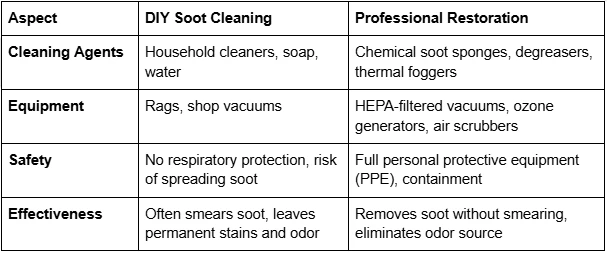
Cleaning soot requires specific techniques and chemical sponges. Using the wrong products or methods, like trying to wipe it with a wet rag, will smear the soot and drive it deeper into the surface, making it impossible to remove. Restoration technicians are trained to systematically clean the structure and its contents, using deodorizing agents like thermal fogging to remove the smoke odor from the air and from deep within materials.

DIY Cleaning vs Professional Remediation
5. Sewage Backups and Contaminated Water
This is the most urgent and hazardous situation a homeowner can face. A sewage backup introduces what the industry calls Category 3 water, or "black water," into your home. This water is grossly contaminated and contains dangerous pathogens, including bacteria, viruses, and parasites, that can cause serious illness.
Do not attempt to clean this up yourself. Any porous materials that have come into contact with sewage, such as carpet, padding, drywall, upholstery, and insulation, must be removed and disposed of according to biohazard regulations. A professional restoration company has the required training and personal protective equipment (PPE) to handle this safely. They will remove the contaminated materials, clean and disinfect the remaining salvageable structures, and ensure the area is safe for your family again.
- Bonus Tip: If you have a sewage backup, your immediate actions should be to get everyone (including pets) out of the affected area, turn off your HVAC system to prevent airborne contaminants from circulating, and call a professional immediately. Do not touch anything in the contaminated zone.
Things to Consider Before Making a Decision
When faced with one of these emergencies, it's easy to feel panicked. The first thing to consider is always safety. If there is extensive water, turn off the electricity to the affected area if you can do so safely from the breaker box. If you smell smoke or see fire damage, evacuate first.
Next, contact your insurance company. They can help you understand your coverage and may have a list of pre-approved restoration companies. Before any work begins, document everything. Take photos and videos of all the damage from multiple angles. This evidence will be invaluable for your insurance claim. Finally, when you call a restoration contractor, ask them about their certifications (look for IICRC certification, which is the industry standard), their insurance, and their immediate availability.
Questions People Ask About Restoration Needs
Can I use a regular cleaning service for soot damage?
No. Standard cleaning companies do not have the specialized training, equipment, or cleaning agents required for soot removal. They can easily make the damage worse. Restoration technicians are specifically trained in fire and smoke remediation.
My basement flooded with rainwater from outside. Is that considered contaminated?
Yes. Water that enters from the ground is also considered Category 3 water. While it's not sewage, it has likely mixed with soil, pesticides, animal waste, and other contaminants, making it a health hazard that requires professional handling.
How long does the emergency mitigation phase usually take?
For a typical residential water damage event, the initial mitigation phase, which includes water extraction and structural drying, usually takes between 3 to 5 days. This can vary based on the extent of the damage and the materials involved.
Will my homeowners insurance rates go up if I file a restoration claim?
It's possible that filing a claim could impact your future rates, but the cost of not filing a claim is almost always far greater. Unaddressed water or fire damage can lead to tens of thousands of dollars in structural repairs and diminished property value.
What is the difference between restoration and renovation?
Restoration is the process of returning a property to its pre-loss condition after damage. Renovation is the process of updating or improving a property by choice. While restoration may involve some reconstruction, its goal is to repair, not upgrade.
Acting Quickly Is Key
Recognizing these five signs and acting immediately is the best way to protect your property and your family's health. Delay allows water to cause more damage, mold to spread, and soot to cause irreversible harm. When you see serious damage, trust your instincts. The problem is almost always bigger than it appears on the surface. Getting a professional assessment is not an overreaction; it's a responsible step toward a safe and complete recovery.
Getting a Professional Assessment
If you're facing any of these five signs, a professional and timely response is essential to prevent further damage and ensure a safe living environment. An experienced contractor can assess the situation and outline the necessary steps for a full recovery. For a thorough evaluation of property damage, the team at Prestige NW Restoration offers expert guidance and emergency services. They can be contacted by phone at (360) 334-3624 or by email at [email protected].
Author: Established on April 2, 2012, Prestige NW is led by owner Kelly Kerns, who brings extensive experience in restoration, construction, and customer service. Kelly supports both field operations and marketing, writing clear, practical content for homeowners while overseeing marketing strategy, partner communication, and brand direction. She combines industry expertise with focused messaging and reliable service.
Reviewer: Matthew Moore brings over 15 years of experience in residential renovation marketing. His review helped shape this content to better connect with homeowners seeking reliable restoration and home improvement services.