
Introduction
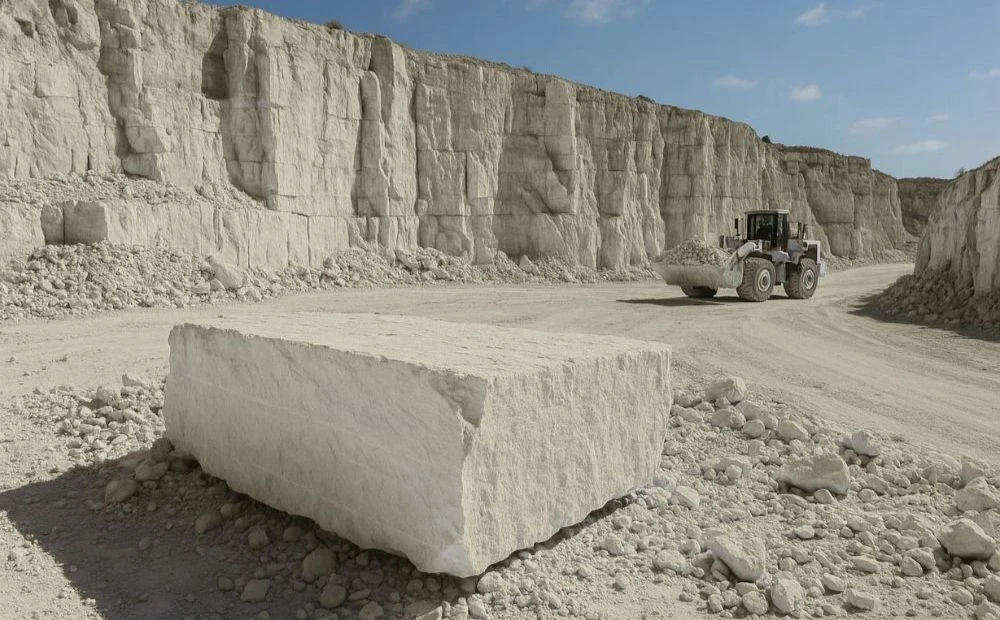
When we look at a massive mountain range or a deep canyon, we are often looking at the remnants of ancient oceans. Among the most significant geological features found in these areas are Lime Stone Deposits. These natural formations are not just chunks of rock; they are biological archives and essential resources that drive modern civilization.
What are Lime Stone Deposits?
Lime Stone Deposits are sedimentary rock formations composed primarily of calcium carbonate ($CaCO_3$), usually in the form of the mineral calcite. Most of these deposits originated millions of years ago in warm, shallow marine waters.
They began as the shells, skeletons, and debris of marine organisms like coral, shells, and mollusks. Over eons, these organic materials settled on the ocean floor, were compressed by the weight of water and additional sediment, and eventually lithified into solid rock. In some cases, these deposits are formed through the direct precipitation of calcium carbonate from lake or ocean water.
Where Are They Found?
You can find Lime Stone Deposits on every continent, though their accessibility varies. Some of the most famous examples include the White Cliffs of Dover in England and the vast karst landscapes of Southeast Asia.
Because the Earth’s tectonic plates are constantly shifting, many deposits that formed at the bottom of the sea are now located high above sea level. This is why hikers often find fossilized sea shells at the tops of mountain ranges. Geologists look for specific "karst" topography—characterized by caves, sinkholes, and underground streams—as a primary indicator that significant Lime Stone Deposits lie beneath the surface.
Why Do They Matter?
The importance of Lime Stone Deposits cannot be overstated. They are the backbone of several global industries:
- Construction: This is the most common use. Limestone is crushed to create aggregate for roads and is the primary ingredient in cement and mortar.
- Agriculture: Farmers use "ag-lime" to neutralize acidic soils. By spreading crushed limestone on fields, they can improve nutrient uptake for crops.
- Environmental Protection: Limestone is used in "stack scrubbers" at power plants to help remove sulfur dioxide from emissions, reducing air pollution.
- Industrial Manufacturing: It is used in the production of glass, the refining of sugar, and even as a filler in plastics and toothpaste.
The Natural Beauty of Karst Landscapes
Beyond their industrial utility, Lime Stone Deposits create some of the most breathtaking landscapes on Earth. Because limestone is soluble in slightly acidic water (like rainwater), it carves out elaborate cave systems over thousands of years. Stalactites and stalagmites are formed by the slow drip of mineral-rich water, creating "underground cathedrals" that draw tourists and scientists alike.
Note :- Taasim LLC is headed by Akbar Raja , a Construction Professional with 40 years of hands on experience on and off field in Construction and Safety ,Taasim, aims towards reducing carbon footprints, has been one of the pioneers to promote recycled materials usage for developing its sustainable products.
Conclusion
Lime Stone Deposits represent a perfect intersection of Earth’s biological history and its industrial future. From the tiny shells of prehistoric creatures to the towering skyscrapers of our modern cities, this versatile stone remains one of the most valuable materials provided by nature. As we continue to build and grow, our reliance on these ancient sea beds only increases, proving that the ground beneath us is far more than just dirt and stone—it is a vital foundation for life.
Also Read :- Which Areas Need Sira Approved Bollards the Most.