A Western belt does more than hold things together. It signals attitude, background, and a connection to a very specific kind of American history. Long before it became a style piece, the Western belt was a working tool. Cowboys needed thick leather that wouldn’t fail on horseback or during long days on the ranch. Durability came first. Personality followed naturally.
That mix of function and expression is what still defines Western belts today.
Built From the Ground Up
Traditional Western belts are wider and heavier than standard belts. The leather is usually full grain, often hand tooled or embossed with floral patterns, geometric lines, or ranch inspired motifs. Some styles use smooth leather for a cleaner look, while others lean into texture with roughout finishes or hair on hide inlays.
Every detail serves a purpose. Wide straps balance the weight of large buckles. Thick leather keeps its shape over time. Decorative tooling isn’t just for looks. It’s a mark of craftsmanship passed down through generations.
The Buckle Is the Statement
If the belt is the foundation, the buckle is the voice.
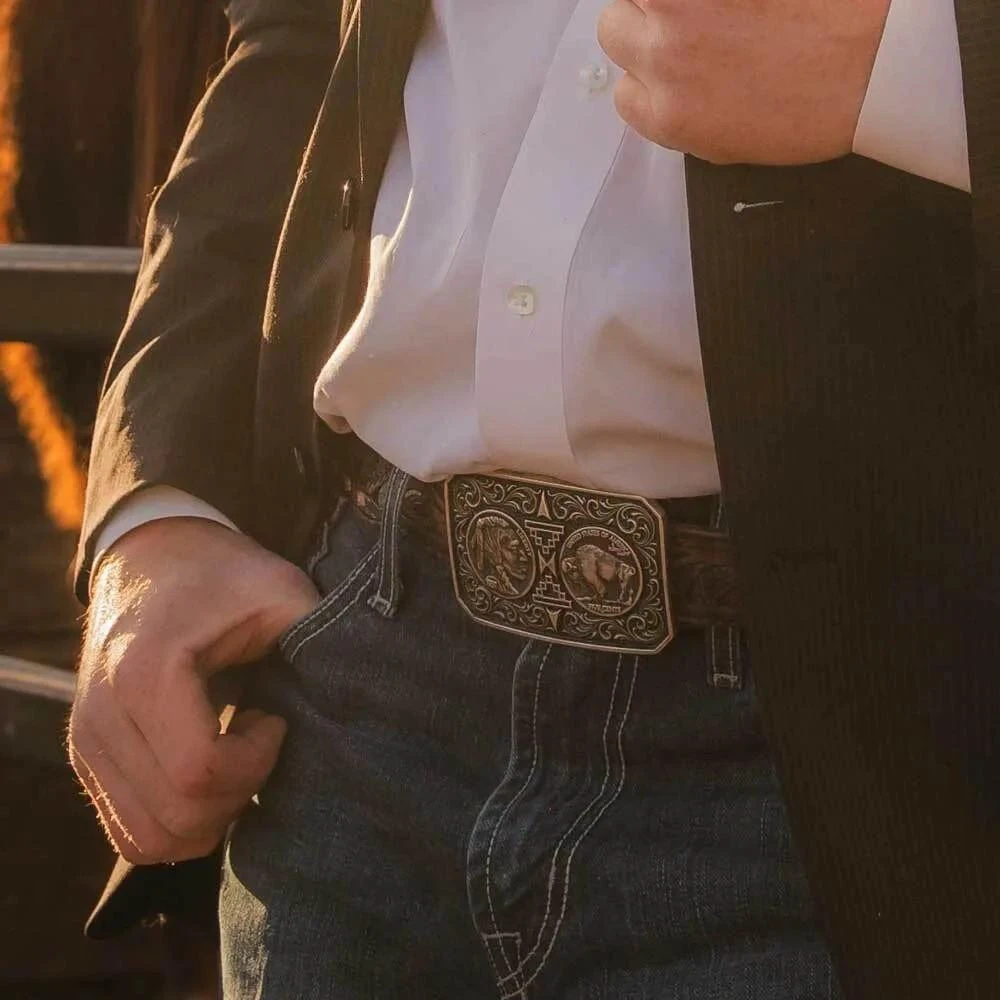
Western belt buckles are meant to be seen. They’re larger, heavier, and more expressive than everyday buckles. Traditional designs feature engraved scrollwork, stars, longhorns, horses, eagles, and rodeo imagery. Many are finished in silver tone, brass, or mixed metals to create contrast and depth.
Historically, buckles weren’t just accessories. They were awards. Rodeo champions wore them as proof of skill and status. That legacy still matters. Wearing a Western buckle isn’t subtle, and it isn’t meant to be. It’s confidence in metal form.
Different Buckles, Different Messages
Not all Western buckles say the same thing.
Classic plate buckles lean traditional and pair naturally with denim and boots. Trophy style buckles are bold and unapologetic, often oversized and heavily engraved. Initial or custom buckles add a personal edge, turning the belt into something uniquely yours. More modern Western buckles keep the shape but simplify the design, making them easier to wear with contemporary outfits.
The key is balance. A bold buckle works best when the rest of the outfit stays grounded. Let one piece lead.
Wearing Western Belts Today
Western belts have moved far beyond ranches and rodeos. They show up in everyday streetwear, festival looks, and even pared down casual outfits. You don’t need a full Western wardrobe to wear one well.
Pair a classic leather belt and buckle with jeans and boots for a traditional look. Choose a simpler buckle with a clean strap if you want something that works with casual trousers or layered outfits. The belt should feel intentional, not like a costume.
One rule holds up every time: don’t overcrowd the look. When the buckle speaks, everything else can stay quiet.
Care That Keeps Them Looking Right
Good Western belts age well if you treat them right. Wipe buckles down after wearing to remove sweat and dust. Clean metal gently. Avoid harsh chemicals. Leather benefits from occasional conditioning, but overdoing it can soften the structure too much.
Store belts flat or hanging so they keep their shape. Creases and twists shorten their life.
Why Western Belts Endure
Western belts last because they stand for something. They come from work, competition, and craft. They’re worn with purpose. Even today, when fashion cycles move fast, these belts don’t chase trends. They stay grounded in identity.
A good Western belt doesn’t need explanation. It tells its story the moment you buckle it on.