Wayfinding Signage Solutions for Hotels, Hospitals, Airports and Modern Commercial Buildings
Navigating a large commercial building can be challenging when visitors cannot easily identify entrances, departments, facilities or designated routes. In environments such as hotels, hospitals, airports, shopping centres and corporate campuses, clear navigation is essential for creating an organised and comfortable visitor experience.
This is where professionally planned wayfinding signage solutions become important.
Wayfinding signage is a coordinated system of visual communication elements designed to help people understand their surroundings and reach their intended destinations. Unlike individual promotional or branding signs, wayfinding systems follow a structured approach that combines directional information, identification signs, maps, symbols and building directories.
For architects, developers, interior designers and facility planners, incorporating wayfinding into the architectural design helps create spaces that are easier to navigate, more accessible and visually consistent.
1. What Are Wayfinding Signage Solutions?
Wayfinding signage solutions are organised visual guidance systems used to direct people through buildings, outdoor environments and large commercial developments.
These systems communicate essential information through text, arrows, symbols, colour coding, maps and location identification.
A comprehensive wayfinding strategy generally includes four important signage categories:
Directional Signage: Provides instructions and arrows that guide visitors towards specific destinations, facilities and building zones.
Identification Signage: Identifies individual locations such as rooms, departments, entrances, lifts and meeting areas.
Informational Signage: Communicates useful details about building facilities, services, operating areas and visitor requirements.
Regulatory Signage: Communicates rules, restrictions, safety information and access requirements.
When these categories are coordinated, visitors can understand where they are, where they need to go and which route they should follow.
2. Why Wayfinding Is Important in Modern Commercial Buildings
Modern commercial developments often contain multiple floors, entrances, departments and shared facilities. Without a properly organised navigation system, visitors may experience confusion and unnecessary delays.
Effective wayfinding provides several practical advantages.
- Improves visitor orientation and movement.
- Reduces confusion in large and complex buildings.
- Supports better identification of facilities.
- Creates a consistent visual experience.
- Helps visitors locate important destinations.
- Improves communication across different building zones.
- Supports accessibility and inclusive navigation.
For building owners and facility managers, a coordinated signage strategy can also simplify future updates when departments, facilities or building layouts change.
3. Wayfinding Signage Applications Across Different Industries
Different industries have different navigation requirements. A successful wayfinding system should be developed according to the building layout, visitor profile and operational purpose.
Hotel and Resort Wayfinding Signage
Hotels and resorts require clear navigation systems that help guests move comfortably between reception areas, guest rooms, restaurants, conference facilities, swimming pools and recreational spaces.
Typical installations include:
- Reception and lobby directories.
- Floor identification signs.
- Guest room number signs.
- Restaurant and lounge directions.
- Lift and staircase identification.
- Parking and entrance signs.
- Spa and recreational facility directions.
In luxury hospitality environments, signage materials, typography, lighting and finishes should complement the interior design concept.
Hospital and Healthcare Wayfinding
Hospitals and medical centres contain numerous departments, consultation rooms, diagnostic facilities and emergency areas.
A well-structured signage system helps patients, visitors and staff identify the correct destinations.
Common applications include department identification, consultation room signs, emergency directions, pharmacy signage, laboratory identification and floor directories.
High contrast, readable typography, consistent symbols and logical positioning are important considerations.
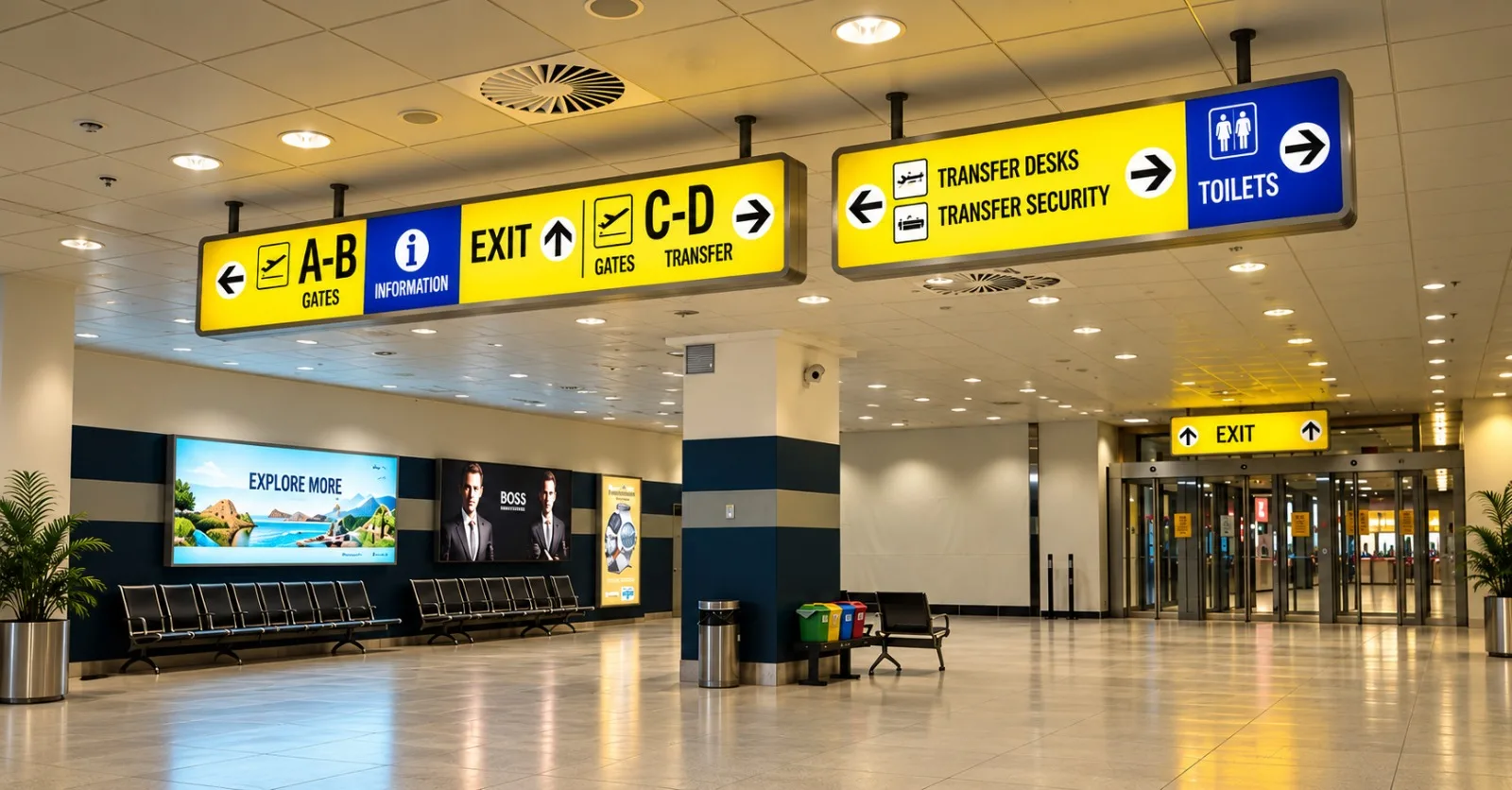
Airport and Transportation Wayfinding
Airports and transportation facilities require carefully organised navigation systems because of their large footprints and continuous visitor movement.
Directional signs may guide passengers towards check-in counters, security areas, boarding gates, baggage collection, parking and transportation connections.
Multilingual communication, universally recognisable symbols and clear directional hierarchy are particularly important in international environments.
Shopping Mall Wayfinding
Shopping centres require signage that connects visitors with retail stores, restaurants, entertainment areas, parking zones and essential facilities.
Directory boards, digital navigation displays, floor identification and directional signs help improve the shopping experience.
Corporate Office Wayfinding
Corporate buildings benefit from coordinated navigation systems covering reception areas, departments, meeting rooms, employee facilities and visitor access points.
A consistent visual identity across all signage elements helps maintain a professional working environment.
4. Essential Design Principles for Effective Wayfinding Systems
The effectiveness of a wayfinding system depends on how clearly information is communicated and how easily visitors can interpret it.
Several design principles should be considered during development.
Information Hierarchy: Important information should be prioritised so visitors can identify their destination without reading unnecessary details.
Typography and Readability: Font selection, letter height, spacing and contrast should be appropriate for the intended viewing distance.
Consistent Colour Coding: Different building zones or departments can use coordinated colours to make navigation easier.
Directional Clarity: Arrows and directional indicators should communicate movement accurately and consistently.
Strategic Placement: Signs should be positioned before decision points, at intersections and near important destinations.
Visual Consistency: Materials, colours, symbols and typography should follow a common design language throughout the development.
A good wayfinding strategy considers the visitor journey rather than designing individual signs independently.
5. Materials and Finishes for Indoor and Outdoor Wayfinding Signage
Material selection influences the appearance, durability, maintenance requirements and suitability of wayfinding signage.
For indoor environments, materials can be selected according to the interior architecture, expected usage and design objectives.
Common options include:
- Acrylic panels for clean and contemporary displays.
- Aluminium for lightweight and durable sign structures.
- Stainless steel for premium architectural finishes.
- Glass for selected interior identification applications.
- Printed graphics for directories and information panels.
- Aluminium composite panels for suitable large-format applications.
Outdoor directional signage requires additional attention to environmental exposure, structural stability, moisture protection and surface durability.
Material grades, protective coatings and mounting arrangements should be specified according to the actual installation conditions.
6. Illuminated Wayfinding Signage for Better Visibility
Lighting can improve the visibility and appearance of wayfinding signs, particularly in entrances, corridors, reception areas, parking facilities and outdoor environments.
Illuminated signage is especially useful where signs need to remain visible under low-light conditions.
Common illumination approaches include:
Backlit Signage: Provides illumination behind a translucent panel or graphic surface.
Front-Lit Signage: Uses lighting directed towards the sign face for improved visibility.
Edge-Lit Signage: Introduces illumination through selected edges of transparent or translucent materials.
LED Integrated Signage: Uses integrated LED components to create illuminated identification and directional displays.
When selecting an illumination system, project teams should consider brightness, colour temperature, uniformity, glare control, power supply accessibility and energy consumption.
The objective should be to maintain comfortable readability without creating excessive brightness or distracting visual effects.
7. Accessibility and Inclusive Wayfinding Design
Accessibility is an essential consideration in public buildings and commercial developments.
A well-planned wayfinding system should communicate information clearly to visitors with different mobility, visual and communication requirements.
Depending on applicable project standards and regulations, accessibility considerations may include:
- High-contrast text and backgrounds.
- Clear and readable typography.
- Recognisable pictograms and symbols.
- Tactile identification where required.
- Braille information where applicable.
- Appropriate mounting heights.
- Unobstructed access to directional information.
- Consistent identification of accessible routes and facilities.
For international developments, accessibility requirements should be reviewed against the relevant local regulations and applicable design standards.
8. Wayfinding Signage Considerations for UAE and GCC Projects
Commercial developments across the UAE and wider GCC region often serve international visitors, residents, employees and business travellers.
Wayfinding systems in these environments should consider language requirements, cultural context, architectural design and local operating conditions.
For projects in Dubai, Abu Dhabi, Riyadh, Doha, Kuwait City, Muscat and Manama, the following factors deserve attention.
Multilingual Communication: Depending on the project, Arabic and English signage may be required to support different visitor groups.
Consistent Symbols: Recognisable pictograms can improve communication across language differences.
Outdoor Durability: External signage should be specified for local temperature, dust, sunlight and moisture exposure.
Architectural Integration: Signage should complement the building facade, interior finishes and overall design concept.
Local Compliance: Sign dimensions, placement, accessibility and language requirements should be checked against applicable local authority regulations.
A project-specific approach helps ensure that wayfinding systems are appropriate for the development and its intended users.
9. Integrating Digital Wayfinding with Traditional Signage
Digital technology provides additional opportunities to improve navigation in complex commercial environments.
Digital directories and interactive displays can provide searchable information, floor maps, location details and dynamic directions.
These systems are particularly useful in large hospitals, airports, shopping malls, exhibition centres and corporate campuses.
However, digital wayfinding should complement rather than unnecessarily replace essential physical signage.
A combination of permanent identification signs, directional displays and digital information systems can create a more flexible navigation environment.
The selection should depend on building complexity, visitor requirements, technology infrastructure and long-term maintenance considerations.
10. Choosing the Right Wayfinding Signage Manufacturer
Developing an effective wayfinding system requires coordination between design professionals, building operators, contractors and signage manufacturers.
Before selecting a manufacturing partner, project teams should evaluate:
- Experience with commercial and architectural signage applications.
- Customisation capabilities for different building environments.
- Knowledge of material selection and finishing techniques.
- Understanding of illuminated signage requirements.
- Ability to review drawings and installation details.
- Quality control and fabrication capabilities.
- Technical documentation and maintenance support.
- Coordination with architects and project consultants.
For international developments, communication, packaging, export coordination and technical support are also important procurement considerations.
Selecting an experienced partner during the design stage can help reduce inconsistencies and support a more coordinated installation.
11. Luzion Lighting: Architectural Lighting Solutions for Modern Developments
Luzion Lighting is an India-based architectural lighting manufacturer, exporter and lighting solutions provider supporting commercial and architectural project requirements.
The company works with architects, developers, lighting designers, MEP consultants, contractors and procurement professionals across India and international markets, including the UAE, Saudi Arabia, Qatar, Kuwait, Bahrain, Oman, the wider GCC region, the UK and the USA.
Its portfolio includes facade lighting, architectural LED lighting, linear lights, wall washers, inground lights, landscape lighting, uplighters and customised lighting solutions.
In commercial environments, the relationship between wayfinding signage and architectural illumination is an important design consideration. Properly selected lighting can help improve the visibility of entrances, directional signs and important building identification features.
Luzion Lighting supports architectural lighting requirements through its product portfolio and manufacturing expertise, helping project teams consider illumination as part of a coordinated building design approach.
Explore Luzion Lighting's products and solutions at https://luzion.in/.
Conclusion
Wayfinding signage is an essential component of well-organised commercial and public environments. From hotel navigation and hospital identification to airport directories and shopping mall guidance, effective signage helps visitors move through buildings with greater confidence.
Successful implementation requires a combination of clear information hierarchy, suitable materials, accessible design, appropriate positioning and coordinated illumination.
By considering wayfinding requirements during the early architectural planning stage, developers and design professionals can create environments that are easier to navigate, more functional and visually consistent.