Good wax melter maintenance comes down to three habits: drain and clean the tank on schedule, keep the jacket and probes calibrated, and log every service. Do that and a well-built melter runs 15+ years. Skip it and you'll fight scorched wax, drift, and downtime.
Ninety percent of "dead" wax melters we're called to inspect aren't dead. They're neglected. Sloppy wax melter maintenance quietly wrecks temperature control, fouls the tank, and drives your reject rate up long before anything trips. At Laxminarayan Technologies, we've serviced investment casting lines since 1986, and the pattern never changes: the melter that gets a checklist outlives the one that gets ignored by a decade. This guide gives maintenance heads and technicians a working schedule, real failure modes, and honest fixes. No fluff. Just what keeps your wax room running clean.
What is wax melter maintenance?
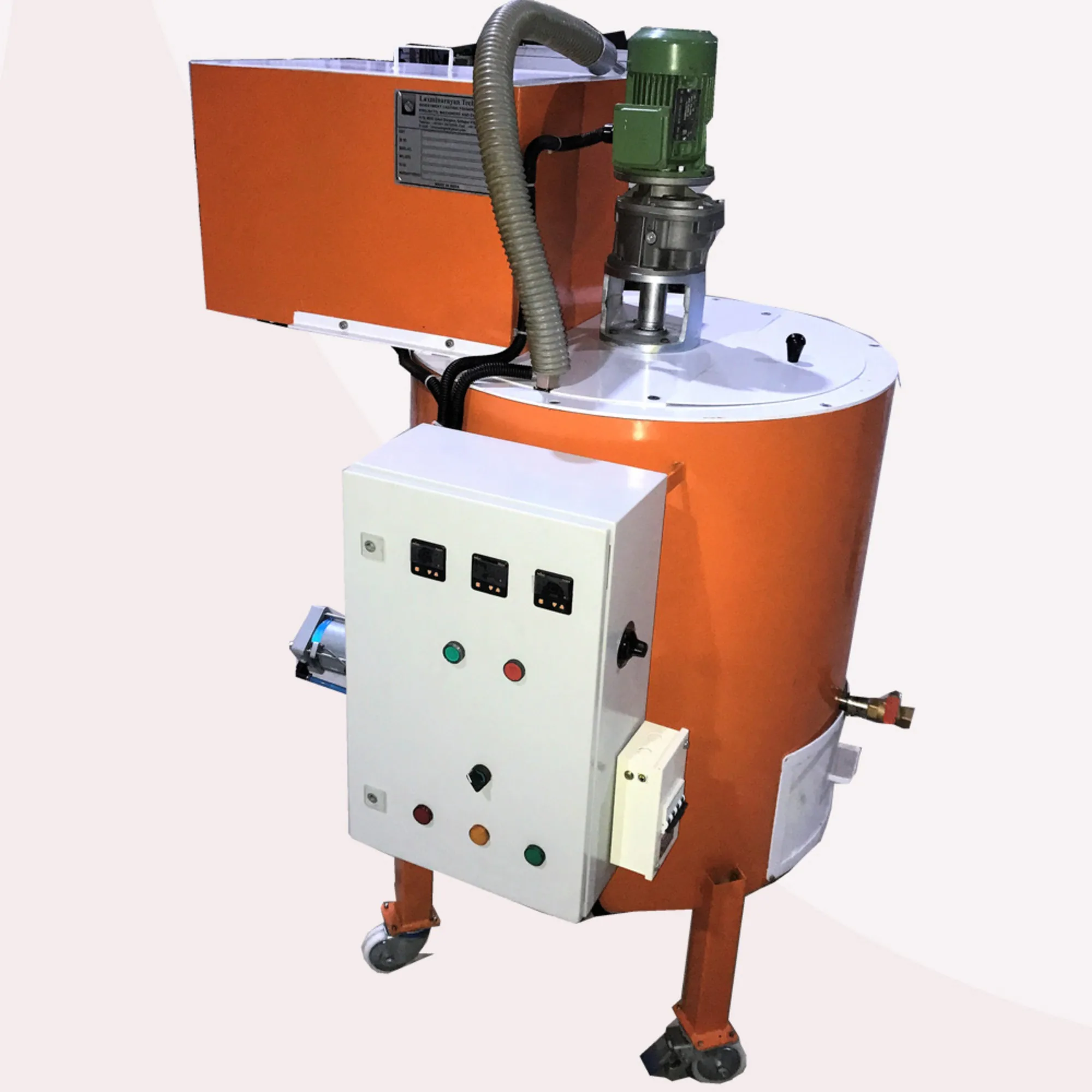
Wax melter maintenance is the planned cleaning, inspection, and calibration of a pattern-wax melting tank and its heating, stirring, and control systems. It keeps wax at a stable set point, usually 60–75 °C, prevents contamination and scorching, and protects pattern dimensional accuracy across production runs.
The wax melter maintenance checklist
Split it by frequency. That's the trick. A checklist nobody can follow gets ignored, so keep each tier short.
Daily
Check the melt temperature against the set point. Drift of more than ±2 °C means look closer.
Skim surface debris and floating char.
Wipe spillage around valves and the feed line.
Listen to the stirrer. Grinding or wobble is a bearing warning.
Weekly
Inspect the jacket water or thermal-oil level and top up.
Check valves and seals for wax weep.
Verify the stirrer shaft alignment.
Clean the feed nozzle. A fouled nozzle chokes flow like a blocked syringe.
Monthly / quarterly
Drain, empty, and do a full wax melting machine cleaning of the tank interior.
Calibrate temperature probes against a reference thermometer.
Inspect heating elements or the jacket for scale.
Test safety cut-outs and the thermostat.
How to clean an industrial wax melter (step by step)
Cleaning sounds obvious. It's where most people cut corners. Here's the cycle we teach on commissioning:
Shut down and let the wax cool to a safe, semi-soft state, not rock hard.
Drain molten wax through the bottom valve into a clean reclaim vessel.
Scrape residual wax and char off the walls and base. Don't gouge the surface.
Wipe the tank with a lint-free cloth and approved solvent.
Flush the feed line and nozzle clear.
Inspect seals and gaskets before refilling.
Run this wax melter cleaning schedule monthly for steady production, weekly if you switch wax grades often.
Common wax melter problems and fixes
SymptomLikely causeFixWax scorches / darkensJacket scale, hot spotsDescale jacket, calibrate probeTemperature driftFaulty thermostat / probeRecalibrate or replace probeSlow recovery after drawLow jacket fluid, scaleTop up, descaleWax slumps in the dieWax too cool, viscosity offCheck set point, stir cycleStirrer noiseWorn bearing / misalignmentRealign, replace bearingMost of these start small. A degree here, a squeak there. Catch them on the daily walk and you avoid a stripped-down repair later.
Real-world applications
Different foundries stress the melter differently, so upkeep priorities shift:
Aerospace turbine blades: Tight tolerances mean probe calibration matters most. A half-degree drift shows up in the pattern.
IGT parts: Heavy wax throughput fouls tanks faster. Cleaning cadence goes up.
Automotive high-volume: Downtime is expensive. Preventive maintenance beats reactive every time.
Pump and valve castings: Frequent wax-grade changes demand more flushing between runs.
Ceramic-core complex geometry: Contamination control is everything. One dirty batch, scrapped patterns.
Keep the melter honest and the whole shell line behaves. Our wax melter units are built for straightforward servicing, and the same upkeep discipline carries over to the injection presses at waxinjector.com.
Challenges and solutions
Wax dimensional stability. Scale on the jacket makes hot spots, and hot spots cook the wax, so patterns shrink off-spec. Regular descaling and probe calibration hold the melt in a tight band and protect near-net-shape accuracy.
Contamination carryover. Char and old wax build up on the base and taint fresh batches. A disciplined wax tank servicing routine, full drain and scrape, stops that carryover cold.
Downtime and cost. Reactive repairs eat labour and idle your line. Preventive maintenance casting practice cuts unplanned stops. Paired with our automatic melters, foundries target roughly 50% power savings and 40% labour savings against older manual setups, and machine downtime reduction follows naturally.
Conclusion
A wax melter doesn't fail overnight. It drifts, fouls, and gets ignored until a pattern batch goes to scrap. A written checklist, daily temperature checks, and a real cleaning schedule keep it running clean for well over a decade. Laxminarayan Technologies has built and serviced turnkey investment casting foundries since 1986, ISO 9001 certified, from wax room to knockout. If you want a maintenance plan matched to your melter and production load, talk to our engineering team.
FAQs
Q: How often should I clean an industrial wax melter?
Do a full drain-and-scrape cleaning monthly for steady production, or weekly if you switch wax grades often. Daily, skim surface char and check temperature. This wax melter cleaning schedule prevents contamination that scraps patterns and keeps viscosity consistent across runs.
Q: What are the most common wax melter problems?
Scorched or darkened wax, temperature drift, slow recovery after a draw, and stirrer noise. Most trace back to jacket scale, a faulty probe, low jacket fluid, or a worn bearing, all catchable on a routine daily and weekly maintenance walk.
Q: How do I maintain accurate wax melter temperature?
Calibrate temperature probes monthly against a reference thermometer, keep the jacket descaled, and confirm the thermostat and cut-outs work. Most pattern waxes hold between 60 °C and 75 °C, and drift beyond ±2 °C signals a probe or scale problem worth investigating.