Quick Answer (TL;DR): Wax injection machine tonnage is the clamp force that holds the die shut during injection. Size it to your projected pattern area and injection pressure, not to your biggest ambition. Undersized units flash; oversized units waste money and floor space. Match tonnage to your real part mix.
Introduction
Pick the wrong tonnage and you'll fight flash on every shot. That's the blunt truth about sizing a wax injection machine. Too little clamp force and the die creeps open under pressure. Too much and you've paid for capacity that just sits there humming. At Laxminarayan Technologies, we've sized foundry machinery since 1986, and we've watched buyers overspend by 40% because a salesman talked in "safety margin" instead of numbers. So this guide keeps it grounded. You'll learn how to calculate the tonnage your wax room actually needs, how part area drives that number, and where foundries get sizing wrong.
What is wax injection machine tonnage?
Wax injection machine tonnage is the maximum clamping force, measured in metric tonnes, that the machine applies to keep the die closed while wax is injected. It counters the internal injection pressure pushing the die halves apart. Enough tonnage means a tight parting line and flash-free investment casting patterns.
Why tonnage matters more than any other spec
Here's the thing. Buyers obsess over tank size and heaters. Tonnage decides whether your patterns come out clean. When wax fills the cavity under pressure, that pressure acts on the whole projected area of the pattern and pushes the die open. Clamp force fights back.
Get the balance wrong and the parting line leaks. Wax squeezes out. You get flash, and flash means dressing labour, and dressing changes dimensions. Think of it like a sandwich press. Press too soft and the filling oozes out the sides. Same physics, molten wax instead of cheese.
How to calculate the tonnage you need
You don't need a PhD. You need three numbers.
- Projected area. Measure the pattern's shadow area on the parting plane, in square centimetres. Include the runner and sprue portion inside the die.
- Injection pressure. Take your working injection pressure at the nozzle, in bar. Pattern wax typically runs low, but complex thin sections need more.
- Multiply, then convert. Force equals pressure times area. Convert to tonnes and add a safety margin of 10 to 20%.
A rough working rule: clamp force (tonnes) is roughly projected area (cm²) times injection pressure (bar), divided by 981. According to standard press-clamping physics used across ASM investment casting practice, that keeps the die shut without overbuilding. Round up to the nearest available machine size. Never down.
A quick worked example
Say your pattern plus runners project 300 cm². Your injection pressure sits at 25 bar. That's 300 x 25 = 7,500 kgf, or about 7.6 tonnes. Add 15% margin and you're near 8.7 tonnes. So a 10-tonne wax injection machine covers it with headroom. Simple.
Tonnage sizing guide by part type
Every foundry's mix differs, so treat this as a starting map, not gospel.
Part / pattern typeTypical projected areaSuggested clamp forceSmall jewellery / dental / fittingsUp to 50 cm²2 to 5 tonnesPump and valve components50 to 200 cm²5 to 15 tonnesAutomotive and general engineering150 to 400 cm²15 to 30 tonnesAerospace turbine blades (cored)100 to 300 cm²15 to 30 tonnesLarge IGT parts / big manifolds400 cm² and up30 tonnes and aboveCored aerospace parts punch above their size class. The ceramic core resists fill, so you often run higher pressure on a modest area. Size for the pressure, not just the shadow.
Manual versus automated at each tonnage class
Tonnage and automation are separate choices, but they interact.
- Low tonnage (2 to 15 t). Often bench or semi-automatic. Fine for low volume and small patterns. Operator sets each shot.
- Mid tonnage (15 to 30 t). The sweet spot for automation. Programmable recipes, stored per die, keep cycles repeatable across shifts.
- High tonnage (30 t and up). Bigger frames, hydraulic clamping, heavier dies. Automation pays back fast here through labour savings.
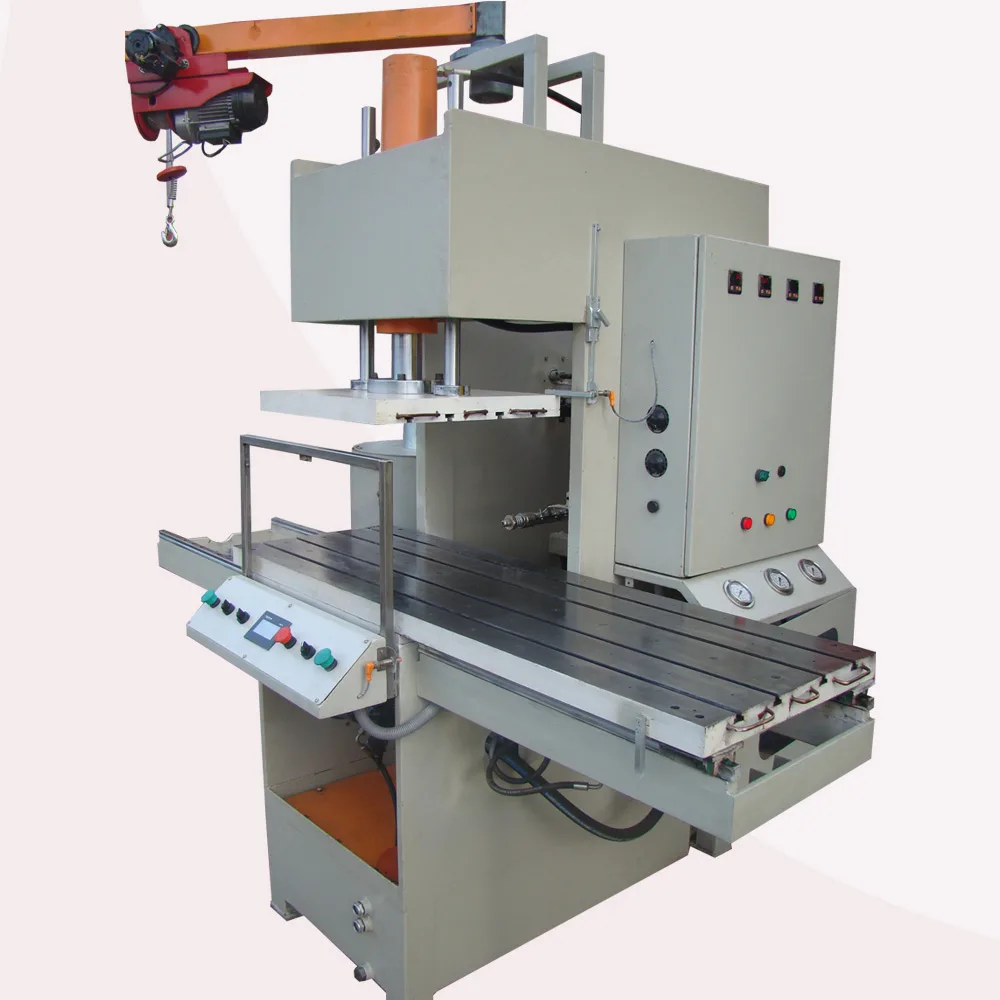
Our automated wax injection machine lines are engineered for roughly 40% labour savings and around 50% power savings across wax, shell, and dewax stages. Over a year of three-shift running, that gap is real money, not a spec-sheet line.
Use cases and real-world applications
- Aerospace turbine blades. Small area, high pressure, tight tolerance. Mid-tonnage machines with firm clamping and precise hold win here.
- Industrial gas turbine (IGT) parts. Large projected area demands 30 tonnes or more. Frame rigidity carries the load.
- Pump and valve castings. Thick sections, moderate area. A 5 to 15 tonne unit handles most jobs cleanly.
- Automotive and general engineering. Volume work where mid-tonnage automation drives yield and unit cost down.
- Ceramic-core complex geometries. Delicate cores need controlled fill, so match tonnage to the higher pressure these patterns run.
For the full range and specs, see our wax injection machine page, and pair the right tonnage with a proper assembly table so pattern handling doesn't undo your accuracy. For deeper pattern-wax and injector detail, our sister resource at waxinjector.com goes further.
Challenges and solutions
Buying too big. Foundries overspec "just in case." That capital sits idle and the floor space costs you. We size to your real part mix, then add sensible margin. No more.
Buying too small. The opposite trap. A machine that flashes on your largest part becomes a bottleneck within a month. We plan for your projected growth patterns, not just today's smallest job.
Ignoring frame rigidity. Two machines can both claim 20 tonnes. One flexes under load and drifts; one doesn't. Clamp force means nothing if the frame gives. We build for stiffness, so your tolerances hold shot after shot.
We're honest about limits, too. No tonnage rating fixes a worn die, bad wax chemistry, or a fouled nozzle. Maintenance is a discipline. A wax injection machine is a precision tool, and it rewards foundries that spec it with real numbers.
Conclusion
Size your wax injection machine on projected area and injection pressure, add a modest margin, and round up to the next available class. That single calculation saves you from flash, from bottlenecks, and from overspending on idle tonnage. Laxminarayan Technologies has commissioned foundry lines since 1986, ISO 9001 certified, with automated shell building and aviation-turbine capability across full turnkey projects. If you're specifying a new machine or unsure which tonnage fits your part mix, send us your part drawings. We'll run the numbers with you.
FAQs
How do I calculate wax injection machine tonnage?
Multiply the pattern's projected area in square centimetres by your injection pressure in bar, then divide by roughly 981 to get tonnes. Add a 10 to 20% safety margin and round up to the next available machine size. Never round down.
What happens if my wax injection machine is undersized?
The die creeps open under injection pressure, so wax leaks at the parting line. You get flash on every shot, which adds dressing labour and shifts pattern dimensions. Undersized clamping quickly becomes your worst investment casting bottleneck.
Is a bigger tonnage machine always better?
No. Oversized units cost more capital, use more power, and take more floor space while adding no quality benefit for small patterns. Match tonnage to your real part mix plus modest growth. Right-sizing beats overbuying every time.
What tonnage do aerospace turbine blade patterns need?
Cored aerospace blades usually have modest projected area but run higher injection pressure to fill against the ceramic core. Most fall in the 15 to 30 tonne range. Size for the pressure, not just the pattern's shadow area.