Sydney’s Inner West has a mix of older terraces, Federation homes, apartment blocks, and renovated extensions—often with bathrooms added over time, balconies retrofitted, and drainage that doesn’t always behave the way drawings suggest. Waterproofing problems here can be deceptively slow: a faint musty smell, bubbling paint, grout darkening, or timber swelling that seems “seasonal” until it isn’t.
If you’re comparing local waterproofing team for Inner West properties, the most useful approach is to focus on diagnosis and scope clarity first. A good waterproofing outcome isn’t just about the membrane brand—it’s about preparation, detailing, fall and drainage, and how the whole wet area system is put back together.
Below is a practical, editorial checklist to help you plan the work and compare providers without getting stuck in sales language.
Why Inner West jobs can be trickier than they look
A lot of Inner West waterproofing work happens in buildings that weren’t designed with modern wet areas in mind. Common complicating factors include:
- Older substrates: uneven slabs, patched screeds, crumbly render, or old adhesives that interfere with adhesion.
- Heritage and retrofit conditions: bathrooms moved from one room to another, “layered” renovations, and unknown penetrations behind walls.
- Tight access: narrow stairs, shared walls, small courtyards, and strata rules that constrain noise/dust and disposal.
- Balconies and parapets: ageing thresholds, poor falls, blocked weep holes, and outlets that don’t cope with heavy rain.
None of these are deal-breakers. They just mean the scope needs to be built around reality—not best-case assumptions.
Step one: diagnose the cause, not just the symptom
Many waterproofing “failures” are really water-management failures: water is getting where it shouldn’t because falls, drainage, or detailing is wrong. Re-membraning without fixing those drivers can lead to repeat problems.
Before any work starts, a competent operator should be able to explain:
- where the moisture is likely coming from
- whether it’s surface water, plumbing leakage, condensation, or rising damp
- what needs to change so water can’t keep pooling or tracking into junctions
If the diagnosis is vague (“it’s probably the grout”), push for clearer reasoning. Grout and silicone are not waterproofing systems; they’re finishes and sealants that can hide underlying issues for a while.
Bathrooms: the details that decide whether it lasts
Bathrooms are the most common waterproofing project, and also the most likely to fail if the job is rushed.
Substrate preparation
Membranes need a sound, clean base. Preparation typically involves:
- removing weak render and contaminated surfaces
- repairing cracks and movement points appropriately
- ensuring the surface is dry enough and stable
- priming correctly for the chosen membrane system
A “good-looking” bathroom can still fail if the membrane was applied over dust, moisture, old adhesive, or friable render.
Junctions and penetrations
Most leaks start at transitions:
- wall-to-floor junctions
- internal/external corners
- around tap penetrations, mixers, and shower fittings
- floor wastes and puddle flanges
- hobless shower entries and doorway thresholds
These are labour-heavy, detail-driven areas. When comparing quotes, ask how these points will be treated and what detailing method is used (not just “we’ll waterproof it”).
Falls, drainage, and hobless showers
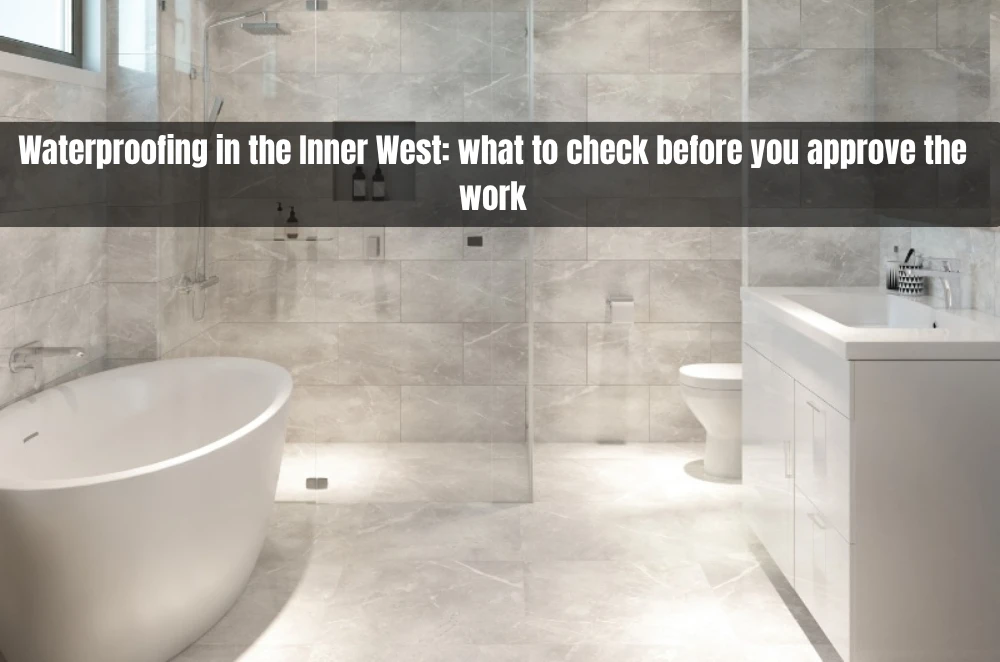
Hobless (walk-in) showers look clean, but they demand correct falls and careful threshold detailing. If water can sit against the doorway or outside the shower zone, it will eventually find a pathway—especially in older homes where floors aren’t perfectly level.
A good scope should describe:
- how falls will be achieved (screed work where required)
- how water is directed to the waste
- how the shower entry is detailed to prevent migration
Balconies and terraces: where waterproofing meets exposure
Inner West balconies often fail because they’re exposed to sun, temperature swings, and heavy rain—and because drainage details are overlooked.
Key things to plan for:
- Outlets and overflows: are they clear, correctly placed, and able to cope with downpours?
- Threshold heights: can water pond against doors during storms?
- Parapets and edge details: water can track behind flashings and down walls if edges aren’t detailed properly.
- Tile bed condition: cracked tiles or hollow spots can indicate movement or water beneath the surface.
Balcony waterproofing often isn’t a “patch one corner” job. If water is tracking under a tiled surface, the long-term fix can involve removing finishes to reach the membrane layer and rebuilding with correct drainage and detailing.
Basements, lower ground, and “mystery damp” in older builds
Not all damp is a membrane problem. Inner West properties can have:
- groundwater pressure against retaining walls
- poor subfloor ventilation
- bridging where garden beds or paving sit above internal floor level
- leaks from plumbing runs through walls and slabs
This is where a careful assessment matters. If the issue is hydrostatic pressure or rising damp, a bathroom-style membrane approach may not be the right solution on its own.
How to compare quotes without getting burnt
Waterproofing quotes can look similar until you compare what’s included. Use this checklist:
- Scope clarity: Is it a spot repair, partial rebuild, or full strip-out and redo?
- Preparation detail: What exactly will be removed and repaired before waterproofing starts?
- Critical detailing: How are corners, junctions, wastes, and penetrations handled?
- Falls and drainage: Is screeding included if needed, and are drainage issues addressed?
- Sequencing: When does waterproofing happen relative to other trades (plumbing, tiling, carpentry)?
- Testing/verification: What checks are done before the area is closed up (where appropriate)?
- Documentation: Will you receive clear notes/photos of stages, especially for strata or future sale records?
Be cautious of quotes that are extremely short and generic. Waterproofing is one of those trades where the “invisible” work is the work.
What to ask before you book a waterproofing team
These questions usually reveal whether you’re dealing with a detail-first operator:
- What do you believe is causing the moisture issue, and why?
- What will you do if you find damaged substrate once demolition begins?
- How will you treat junctions and penetrations (wastes, mixers, niches)?
- If it’s a balcony: how are edges, thresholds, and outlets being addressed?
- What needs to happen before tiling/finishes go back on?
- What does the maintenance and care period look like once the area is back in service?
If the answers are confident but non-specific, press for detail. Waterproofing problems are expensive largely because failures are hidden until damage spreads.
Where Sydney Waterproofing Services fits in the category
Sydney Waterproofing Services is one provider operating in Sydney for waterproofing work. When evaluating any provider (including this one), the most important measure is how well they define the scope: diagnosis, preparation, detailing, and how they’ll prevent water from returning via falls, drainage, and junctions.
Key Takeaways
- Inner West waterproofing often fails at junctions, penetrations, thresholds, and drainage—not in the middle of the membrane.
- The best outcomes start with diagnosis: fix the cause (falls, outlets, detailing), not just the symptom.
- Preparation is the foundation—membranes don’t bond reliably to weak, dusty, wet, or contaminated substrates.
- Balcony and terrace jobs need edge, threshold, and drainage planning to handle exposure and heavy rain.
- Compare providers by scope detail and sequencing, not by the shortest quote.