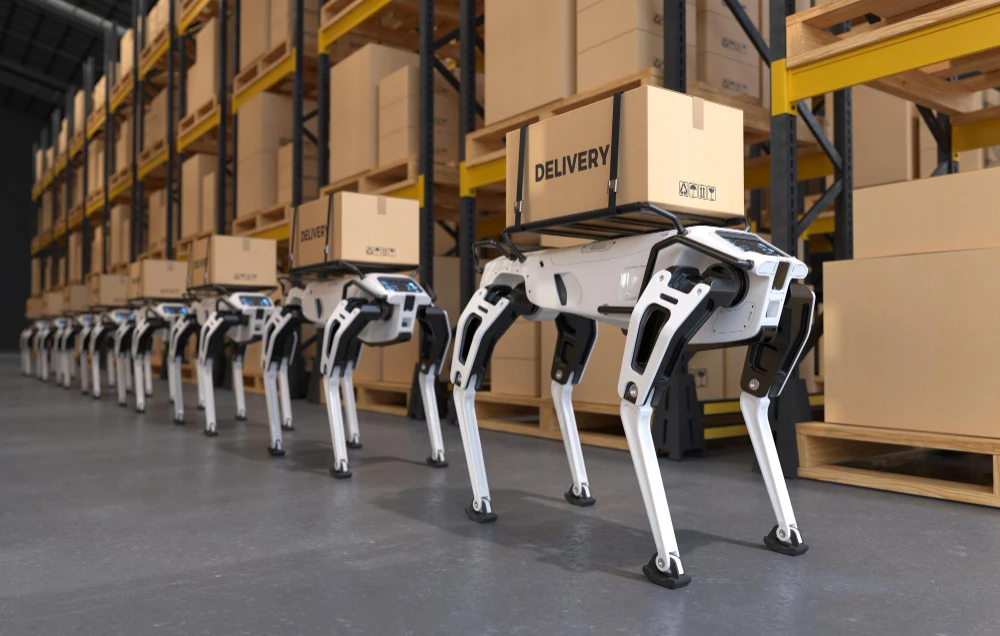
Customers today don't want to wait. They want millions of options, perfect accuracy, and they want their stuff delivered by tomorrow. To do that without going broke on labor costs, we’ve had to rethink how a warehouse actually works from the ground up. We’re moving away from the old way of doing things by hand and into a world of robots, smart sensors, and software that can predict the future. It’s a huge shift, and it’s finally making those "impossible" delivery speeds a reality. But automation isn't just about buying robots; it’s about a total digital transformation of the physical space. It's about creating a 'living' facility that can adapt as fast as the market does. If you aren't automated, you're extinct.
In this post, we’re going to walk through the whole story of warehouse automation. We’ll look at why the "manual" way finally broke under the pressure, the different kinds of robots that are taking over the heavy lifting, how tiny sensors are tracking every move with precision, and the smart backend data foundations that makes it all work. It’s about more than just replacing people with machines it’s about building a system that can handle the sheer volume and chaos of the modern world without breaking a sweat. Let's look inside the brain of the modern facility.
Why Doing Everything by Hand Finally Stopped Working
To really appreciate all the cool tech we have now, you have to remember what it was like when everything was manual. It was a world of physical exhaustion, constant mistakes, and a lot of just... walking. The old way of doing things had a "breaking point," and we finally hit it around 2018 when e-commerce volume started to double every few years. The math of human-only labor simply stopped working. You couldn't just 'hire more people' to fix the problem anymore. The scale of the internet requires the scale of the robot.
The Physical Toll: Miles of Walking Every Day
In a traditional warehouse, a human "picker" would get a paper list of orders. Then, they’d spend their whole shift walking through miles of aisles to find the right bins, grab the items, and bring them back to a packing table. It sounds simple, but studies found that these workers were spending up to 70% of their time just walking not actually picking. In a huge facility, a single person could easily walk 10 to 15 miles a day on hard, unforgiving concrete. By the end of the shift, their feet were killing them, their energy was gone, and they were much more likely to make a mistake. It’s hard to stay accurate when you’re physically depleted. You're paying for 'transportation' inside your own building, which is pure waste of human potential.
The Human Error Factor and the Cost of Mispicks
Mistakes happen. When a person is tired and rushing to meet a quota, they’re going to grab a blue shirt instead of a black one, or a size medium instead of a large. In a manual system, these errors often weren't caught until the customer opened the box at home across the country. Those "mispicks" are incredibly expensive you have to pay for the return shipping, the restocking labor, and the second shipment. Plus, you’ve got a frustrated customer who might not come back. Those little errors add up to a massive financial drain over a year, often eating 3% to 5% of a company's profit margin. In today's tight economy, that's the difference between growth and bankruptcy. Accuracy is the highest form of profit.
The Nightmare of "Peak" Season Scalability
Retail is a roller coaster. For events like Black Friday, order volumes can spike by 500% overnight. In a manual warehouse, the only way to handle that is to hire an army of temporary workers. Trying to hire, onboard, and train thousands of people in a few weeks is a total management nightmare. Often, you just end up with a crowded, dangerous warehouse floor, high error rates, and a lot of expensive chaos. Scaling "by hand" is just too slow, too fragile, and too expensive for the way we shop now. You can't just flip a switch to 'more people.' You need a system that can breathe with the surges.
The Digital Brain: The Warehouse Management System (WMS)
Before you bring in a single robot, the warehouse needs a "brain." This is the Warehouse Management System (WMS). It started as a simple digital list of what was on the shelves (essentially an Excel sheet), but in 2026, it’s a hyper-intelligent, cloud-based command center that tells the whole building what to do in real-time. It's the orchestrator of the entire physical dance that happens on the floor.
Smart Slotting: Knowing Where the Hot Stuff Is
In the old days, a product always lived in the same "logical" spot. But an advanced WMS uses "dynamic slotting." It uses machine learning to look at what’s actually popular right now, not just what was popular last year. If it sees that a specific pair of sneakers is going viral on social media, it’ll instantly tell the team (or the bots) to move those sneakers to the shelves closest to the packing stations. Slow-moving stuff gets moved to the back. It’s all about minimizing movement. The WMS is constantly "re-shuffling" the warehouse to make it as fast as possible. It’s like a Rubik’s cube that’s constantly solving itself as you turn it. Speed of thought equals speed of pick.
Batch Picking and Wave Management
A smart WMS doesn't just hand out orders as they come in. That's inefficient. It groups them together intelligently. If 50 people all order the same phone on a Tuesday morning, the WMS won't send someone (or a robot) to the phone aisle 50 times. It’ll generate one single task to grab all 50 phones at once. This "batching" makes every trip to the shelves 50x more productive. It’s the difference between doing a lot of movement and actually getting things done. Wave management lets the warehouse manager 'release' work in a way that keeps the packing stations perfectly busy without ever overwhelming them. It's the master of flow.
IoT Cybersecurity Audit: Is Your Connected Warehouse Secure?
Security DomainThe RiskThe 2026 Standard MitigationSensor SpoofingFake sensor data leading to theft or incorrect routingMutual TLS (mTLS) for all device-to-cloud pingsRobot HijackingUnauthorized control of AMRs/AGVs causing physical damageNetwork Segmentation & Zero Trust Architecture (ZTA)Inventory Data LeakCompetitors seeing your stock levels or order velocityAES-256 Encryption for Data-at-Rest in the WMSFirmware SabotageCorrupting the logic of robots via OTA updatesCryptographic signing of all firmware packages
The Robots Are Here (And They’re Helpful Partners)
Once you have a smart WMS, you can start bringing in the physical muscle: the robots. We’ve come a long way from those old, clunky industrial machines that had to stay behind thick steel cages for safety. Today's warehouse robots are smart, safe, and they work right alongside people as part of a "cobotic" team. They handle the dull, dirty, and dangerous work so humans don't have to. Technology is the bridge to human dignity.
Self-Driving Vehicles (AGVs): The Legacy Heavy-Lifters
Automated Guided Vehicles (AGVs) were the first to arrive on the scene. Think of them as driverless forklifts. They’re great for the boring, repetitive stuff like moving heavy pallets of water or detergent from a dock to a storage aisle. But they’re not very "smart." They usually follow a fixed path on the floor (like magnetic tape, wires, or QR codes). If someone leaves a stray box in their way, they’ll just stop and beep until a human clears it. They’re helpful, but they need a very controlled, predictable environment to work. They are the 'trains' of the warehouse world. Solid, reliable, but inflexible.
The Next Level: Autonomous Mobile Robots (AMRs)
Autonomous Mobile Robots (AMRs) are the real game-changers in 2026. They don't need tape, tracks, or QR codes. They use LiDAR (the same laser tech in self-driving cars) and high-res cameras to "see" the room in 3D. When an AMR is first deployed, it drives around the warehouse to create a digital map. Once it has that, it can go anywhere autonomously. Crucially, if it sees someone walking in its way, it won't just stop. It’ll calculate a detour and drive around them smoothly. AMRs can handle the chaos of a busy warehouse floor because they can "think" for themselves in real-time. They aren't just machines; they're spatial intelligent agents.
"Goods-to-Person": Let the Shelves Do the Walking
This is probably the coolest part of modern warehouse operations. In a "Goods-to-Person" system, the human worker stays in one ergonomic, specialized spot. Instead of the person walking to the shelves, the AMRs drive under the racks, lift the whole thing up, and bring the shelf directly to the worker. The worker just looks at a laser pointer or a screen, grabs the item the WMS tells them to, and moves on to the next. Then the robot takes the shelf back and another one rolls up. It completely eliminates all that walking we talked about. A single person can pick hundreds of items an hour without ever moving more than a few feet. It’s 10x more efficient than manual picking.
Swarm Intelligence: Coordination Without a Center
The newest trend in robotics is "Swarm Intelligence." Instead of one big central computer telling every robot what to do (the 'master/slave' model), the robots talk to each other directly. If one robot sees a spill or a blockage in Aisle 4, it instantly broadcasts that info to the rest of the "swarm." Every other robot immediately recalculates its route to avoid that aisle without needing a central command input. It’s decentralized, resilient, and incredibly fast. It’s how a warehouse with 500 robots can operate without ever having a "traffic jam." It's nature's efficiency applied to logistics.
The "Social" Warehouse: Using IoT as a Nervous System
If the robots are the muscle and the WMS is the brain, the Internet of Things (IoT) is the nervous system. In an "IoT" warehouse, every piece of equipment from the forklifts to the individual pallets is fitted with sensors that are constantly talking to each other and the cloud. It's a field of intelligence.
RFID: Killing the Barcode Forever
The days of manually scanning barcodes with a hand-held gun are almost over. Scanners are slow and you need a direct "line of sight" to the label. IoT uses RFID (Radio Frequency Identification) tags. These are tiny chips with antennas. When a whole pallet of stuff drives through a warehouse door, a reader instantly "reads" every single item on that pallet at once. You can verify a whole truckload of inventory in seconds without ever picking up a scanner. It provides 100% real-time visibility and virtually zero inventory shrinkage. You know exactly what you have, down to the second.
Predictive Maintenance: Hearing the Breakdown
Downtime is the absolute enemy of profit. If a crucial conveyor belt motor burns out during the holiday rush, you’re in trouble. IoT sensors monitor the vibration and heat of every motor in the building. Using "Acoustic Monitoring," they can "hear" when a bearing is starting to go, long before a human would ever notice. The system predicts that a part is going to fail in the next 48 hours, so you can fix it during a slow shift. Zero surprises, zero downtime. It keeps the whole facility humming like a precision instrument. Failure is now preventable.
Energy Management Audit: The Smart Warehouse Power Plan
Power SourceInfrastructure CostOperational SavingSustainability ScoreRooftop Solar ArrayHigh (Initial)60% lower grid billsA+BESS (Battery Storage)ModeratePeak Shaving (>15% saving)ALED + Motion SensorsLow80% lower lighting costB+V2G Charging HubsModerateRevenue from Grid BalancingA
The Data Backbone: Building for Resilience
When you have hundreds of robots and thousands of sensors all talking at once, you’re generating a massive tsunami of data every second. A standard, old-school software system would just crash. This is where good backend development comes in building the invisible infrastructure that can handle that much information without blinking or lagging. Your data is your destiny.
Resilience Through Microservices
Modern warehouse software isn't built as one giant block of code anymore. It’s built using "microservices." This means every specific job like tracking inventory or routing robots or printing labels is its own independent service. If the "weather sensor" service crashes, the "robot routing" service keeps working perfectly. This kind of resilience is what keeps a 24/7 facility alive. It’s also much easier to update without shutting the whole thing down. It's built for high availability.
Scalable Data Lakes (NoSQL)
Storing all that sensor data (temperatures, GPS spots, battery levels) is a challenge because it’s so messy and diverse. This is why we use flexible databases like NoSQL (MongoDB). They can "absorb" all that different info without needing a perfect, rigid structure. It’s fast, it’s scalable, and it means the AI can query the data in milliseconds. When a robot needs to make a split-second turn, it needs that data now, not in five seconds. Latency is the enemy of automation.
Ready for Automation? The 5-Point Readiness Checklist
Before you spend millions on bots, make sure your facility is actually ready for them. Most failures happen in the preparation, not the implementation of the hardware:
- Floor Quality and Leveling: Most robots need perfectly flat, level, and clean floors. Even a 1/2 inch dip or a crack can cause a bot to drop a shelf or lose its sensor calibration. Check your slab.
- Wi-Fi Density and Handoff: You need specialized, industrial APs with perfect handoff. If a robot loses connection for even 500ms, it pings an emergency stop and shuts down the aisle. You need a data mesh.
- SKU Digital Twins: Every item in your catalog needs perfect weight and dimension data in the system. If the AI thinks a 50lb box weighs 5lbs, the robot arm will break trying to lift it too fast. Accuracy starts with the record.
- Safety Segregation: While cobots are designed to be safe, human traffic should still be minimized in the "High-Speed Robot Zones" to keep the paths clear and the robots moving.
- Power and Charging Management: You need an automated charging schedule. You can't have all 100 robots trying to charge at 5 PM when grid electricity is most expensive. The WMS should manage the 'battery rotation.'
Case Study: The "Dark Store" Revolution
In 2024, a major grocery chain in the US converted 10 "underperforming" retail stores in Chicago into fully automated Micro-Fulfillment Centers (MFCs). They replaced the aisles where customers walked with high-speed autonomous shuttles that could reach any item in 15 seconds.
The Result: Their delivery time for a 30-item grocery order dropped from 4 hours to 45 minutes. Their "cost-per-pick" dropped by a staggering 65%. Instead of human pickers fighting with customers in the aisles and causing congestion, the robots worked in total silence and darkness, 24/7. This has become the blueprint for urban logistics in 2026. Micro-scale is the new macro-success.
Expert Interview: Kevin O'Day, Robotics Integration Lead
"The biggest mistake companies make is buying the robot before they fix the data," Kevin told me during our site visit. "A robot is just a physical manifestation of your data. If your inventory is a mess in Excel, it'll still be a mess in the warehouse it'll just be a mess that moves at 5 miles per hour. My advice? Spend six months cleaning your data and fixing your Wi-Fi before you even talk to a robotics company. The high-end tech ONLY works if the foundation is rock solid." Kevin believes the future isn't about 'better' robots, but about 'smarter' data orchestration. Data is the oil that lubricates the gears of automation.
The Human Factor in Automation: Insights from Dr. Sarah Miller
Dr. Sarah Miller, an Industrial Psychologist, believes we are underestimating the "Human-Robot Synergy." "We aren't replacing humans; we're giving them a promotion," Dr. Miller explains. "I’ve seen workers who used to walk 12 miles a day now managing a fleet of 20 robots from a tablet. They feel less physically exhausted and more intellectually engaged. The key to a successful automation project is 'upskilling.' If you give people the tools to manage the robots, they stop seeing them as threats and start seeing them as the helpers they are. The warehouse of 2026 is a tech hub, not a sweatshop." The robot is the worker's best friend.
Expert View: Michael Stern, Energy Strategist
"The automated warehouse is a power plant," Michael Stern explains. "We're moving past just 'saving energy' to 'producing' it. By combining solar panels with large-scale battery storage, warehouses are becoming the anchors of local microgrids. In 2026, a well-managed warehouse can actually make more money selling energy back to the grid during peak hours than it spends on its entire lighting and robotics system. Automation isn't just about labor; it's about making the entire physical building an asset that earns its own keep." Electricity is the new logistics trade.
The Human Side: From Laborer to "Robot Wrangler"
A lot of people worry that automation means getting rid of everyone in the warehouse. But that's not what's really happening on the ground. We’re not getting rid of people; we’re changing what they do. The warehouse of the future is a partnership between humans and machines. We’re moving from "muscle" to "mind." It's an evolution of the workforce.
Meet the "Cobots" and Exoskeletons
Many robots today are "Cobots" collaborative robots designed to work safely right next to people without any cages. They have sensitive touch sensors; if you accidentally bump into one, it’ll stop immediately before it can cause any harm. We’re also seeing the rise of Exoskeletons wearable suits that help workers lift 50lb boxes as if they were 5lb. It protects the human body from injury and extends the career of experienced, older workers. It’s automation you "wear," rather than a machine you watch. It's the bionic worker.
Upskilling the Logistics Workforce
As the manual "walking" and "carrying" are automated away, warehouse jobs become much more technical and professional. Instead of being a "picker," someone might become an "Automation Technician" or a "Robot Wrangler." Their job is to monitor a fleet of 50 bots from a control terminal, optimize their daily paths, and fix things when they get stuck on a ledge or a stray piece of plastic. It’s safer, more interesting work, and it usually pays significantly better. It’s about taking the physical toll off the human body and moving it into a technical, dignified role that requires problem-solving skills. The warehouse is now a career, not just a gig.
The Integration Check: Where Warehouse Meets Outbound
Automation doesn't stop at the warehouse doors. A robot can pack a box in three minutes, but if it sits on a loading dock for six hours, the customer won't be happy. The real magic happens when the warehouse "brain" talks to the outbound delivery network seamlessly and instantly.
As soon as a box is finished and sealed, the system pings the courier and generates the manifest data. This instant, friction-free data flow is what makes modern tracking so good. If you’ve ever used reliable systems like Shree Maruti Courier tracking, you know how good it feels to see an update the second your order leaves the facility. That only happens because the automated warehouse backend handed off the physical and digital data to the delivery portal in a fraction of a second. It’s the invisible glue that makes the whole machine work at the speed of the internet. Data is the courier of the future.
Conclusion: Building the Future, Shift by Shift
The transition from manual sorting to robotics is more than just a trend it’s a permanent change in how the global world moves. The old manual warehouse is being left behind because it just can’t keep up with the speed, accuracy, and sheer volume of the way we live and shop now. It was built for a world of pallets; we live in a world of individual packages and instant gratification.
Switching to automation takes a lot of money, a lot of technical expertise, and a lot of planning. But the results faster delivery speeds, zero picking errors, a safer and more ergonomic workplace, and a much more sustainable operation are undeniable. In the competitive world of 2026, automation is what separates the industry leaders from the laggards. The technology is here, the robots are learning, and the future of the warehouse is looking a lot faster, a lot cleaner, and a lot smarter. The only question now is: are you ready to plug in, or will the world pass you by? The choice to automate is the choice to exist in 2030. Let's build the engine of the future together.