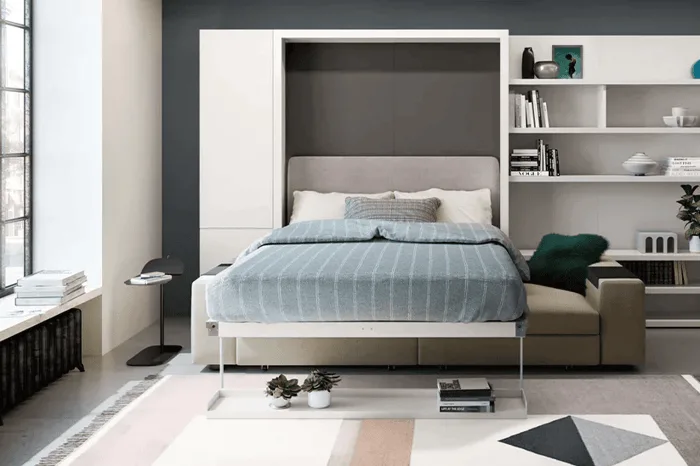
The landscape of modern urban living is undergoing a profound transformation. In major Canadian hubs like Toronto and Vancouver, the traditional definition of "home" is shifting away from mere square footage towards a philosophy of architectural adaptability. As residential spaces continue to shrink, residents are increasingly seeking design-driven solutions to maximize functionality. Central to this evolution is the strategic use of wall beds, which allow a single room to serve multiple purposes throughout the day.
Smart Mechanics and Space-Enhancing Design Benefits
To understand the effectiveness of these systems, it is important to examine the mechanics behind them. Originating from William Lawrence Murphy’s early design, these units pivot on advanced hinge systems anchored to wall-mounted frames. Modern versions typically rely on either spring-tension or piston-based lifting mechanisms. While spring systems are adjustable and commonly found in basic models, piston systems provide smoother, quieter operation and enhanced durability. These advancements ensure seamless transitions between living and sleeping spaces.
The psychological impact of reclaiming floor space is one of the most significant advantages of wall mounted beds. Designers often describe this as "temporal zoning," where a space changes function over time rather than remaining fixed. The ability to quickly store a bed creates a sense of openness, reduces visual clutter, and improves overall comfort. This approach transforms compact interiors into flexible environments that support both productivity and relaxation.
Navigating Orientation: Vertical vs. Horizontal Layouts
Choosing the right orientation plays a crucial role in maximizing spatial efficiency. Vertical models are the traditional option, folding upward along the height of the wall. These are best suited for rooms with higher ceilings and adequate depth, often complemented by surrounding storage such as shelves or cabinetry.
Horizontal models, on the other hand, fold along the width of the wall and are ideal for spaces with lower ceilings or limited depth. Their lower height also makes them easier to operate, making them a practical option for a wide range of users, including those seeking improved accessibility.
Housing Innovation and the "Missing Middle"
The growing demand for compact living solutions is closely tied to broader housing challenges. As affordability concerns rise and mid-range housing options become less available, many residents are turning to smaller living spaces. Innovative housing developments are embracing space-saving solutions like wall beds, along with compact appliances and modular layouts, to enhance livability.
These adaptive environments allow residents to maintain comfort and functionality while living in space-efficient homes. By incorporating furniture that serves multiple purposes, developers can create high-density housing that supports both practicality and quality of life. This approach reflects a broader shift toward flexible, user-centered design.
The Superiority of Transforming Furniture
Compared to traditional alternatives such as sofa beds or futons, wall-mounted systems offer superior comfort and space efficiency. They support full-tickness mattresses, providing the same level of comfort as a standard bed, while also freeing up floor space when not in use. Additionally, bedding can often remain in place when the bed is stored, simplifying daily use.
Proper installation is essential for safety and performance. These systems must be securely anchored to structural elements such as wall studs or concrete to ensure stability. Modern designs also incorporate safety features that prevent unintended movement during use, enhancing reliability and user confidence.
Conclusion
Maximizing the potential of compact interiors requires moving beyond static design approaches. Whether through minimalist frames or fully integrated systems with storage and workspaces, wall beds represent a forward-thinking solution for modern living. By embracing adaptable design, residents can transform limited spaces into highly functional environments. As urban living continues to evolve, these innovative systems will remain essential for creating homes that are both efficient and comfortable.