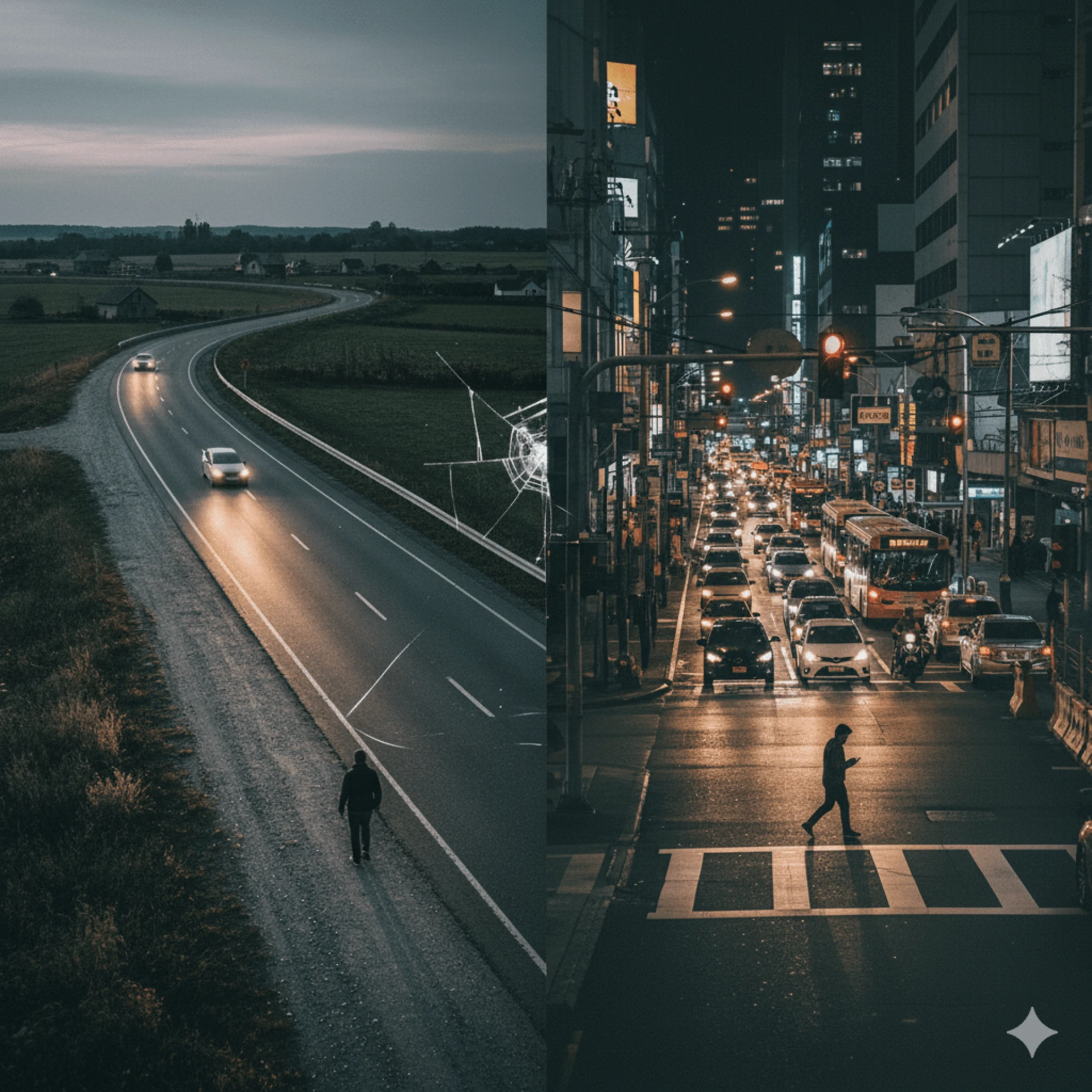
Pedestrians are among the most vulnerable road users, often facing high risk while walking along or crossing roads. Whether in rural areas, busy cities, or high-speed highways, the lack of safe pedestrian infrastructure and poor traffic discipline lead to thousands of preventable accidents every year. Understanding the vulnerability of pedestrians in rural and urban roads and highways is vital for planning safer, more inclusive transport networks.
Why Pedestrian Safety Matters
Walking is the most basic and sustainable mode of transport, yet it’s also the most unsafe when roads are not designed to protect pedestrians. Across India and many developing countries, pedestrians account for a major share of road facilities. Pedestrian vulnerability increases with speed, inadequate footpaths, poor lighting, distracted driving, and lack of enforcement of traffic rules.
In cities, pedestrians are exposed to congested traffic and encroached sidewalks. In rural areas, they often share the road with high-speed vehicles without any dedicated walking space. On highways, even a single unsafe crossing can turn fatal due to the sheer speed of vehicles.
Pedestrian Vulnerability on Rural Roads
Rural roads are often narrower, poorly lit, and lack basic walking infrastructure. Villagers, children, and farmers frequently walk along th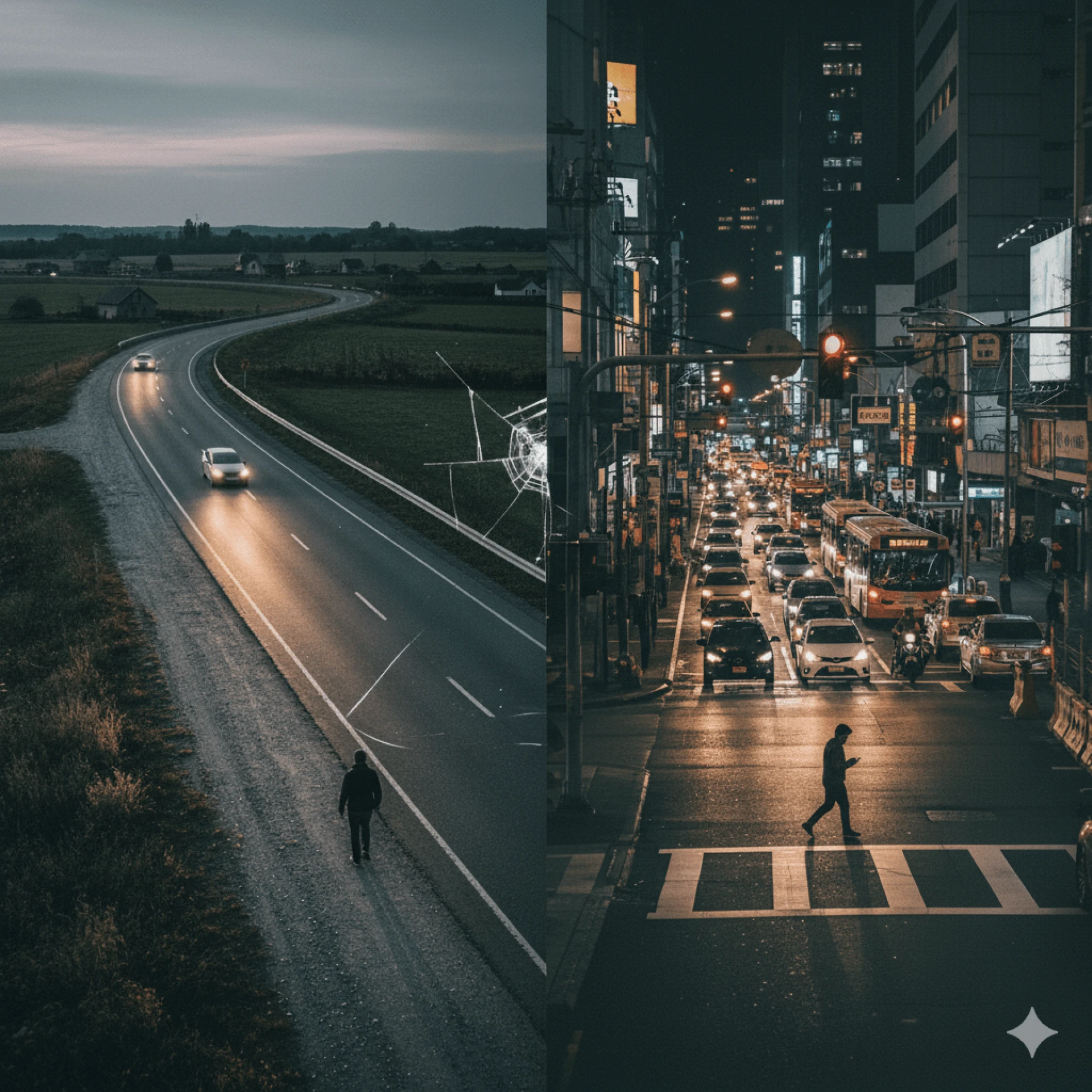 ese roads or cross them to reach fields, schools, or bus stops.
Key issues on rural roads include:
- Absence of footpaths or shoulders: Most rural roads are designed primarily for vehicles, leaving pedestrians to walk on the edges or directly on the carriageway.
- High-speed vehicles: With fewer speed checks and wider stretches, vehicles move at unsafe speeds, increasing the severity of collisions.
- Poor visibility and lighting: Night-time walking becomes hazardous due to inadequate street lighting.
- Delayed medical assistance: Emergency services take longer to reach accident spots, increasing fatality rates.
As a result, pedestrians in rural areas are often at greater risk of death per crash compared to those in urban areas.
Pedestrian Risk on Urban Roads
Urban environments have dense traffic, mixed land use, and a constant flow of people. Though pedestrian facilities exist, they are often insufficient or encroached upon.
Common urban pedestrian safety problems include:
- Encroached or broken footpaths: Vendors and parked vehicles reduce available walking space.
- Unsafe crossings: Many intersections lack zebra crossings, signals, or pedestrian refuge islands.
- Disobedience of traffic rules: Motorists often ignore pedestrian right-of-way, and jaywalking is common due to poorly located crossings.
- Speeding and distracted driving: Mobile phone use and rushing through signals add to accident risk.
Despite more infrastructure, urban roads record a higher number of pedestrian accidents due to dense traffic and larger population exposure.
Read full article- https://www.sunconengineers.com/vulnerability-of-pedestrians-in-rural-and-urban-roads-and-highways/