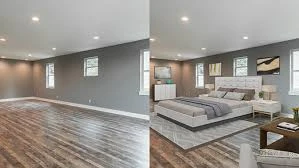
In today’s digital-first real estate market, buyers often fall in love with a property before they ever step inside it. The secret behind many of those instant connections? Virtual home staging — a powerful visual marketing strategy that transforms empty rooms into fully furnished, emotionally engaging spaces without physically moving a single piece of furniture.
As property listings compete for attention online, virtual staging is no longer a luxury. It’s a strategic advantage.
What Is Virtual Home Staging?
Virtual home staging is the process of digitally furnishing and decorating a vacant or outdated property using advanced design software. Instead of physically staging a home with rented furniture, designers create realistic, high-quality images that showcase the home’s potential.
Through digital rendering, empty living rooms become modern lounges. Bare bedrooms turn into cozy retreats. Outdated interiors are refreshed with contemporary finishes — all through visual transformation.
The result? Buyers see possibility instead of emptiness.
Why Empty Homes Struggle to Sell
Vacant properties often present challenges:
- Rooms appear smaller than they are
- Buyers struggle to visualize layout possibilities
- Spaces feel cold and uninviting
- Online listings fail to stand out
When buyers scroll through dozens of listings, emotional appeal matters. A well-staged image triggers imagination. It helps potential homeowners picture their lives unfolding within those walls.
Virtual home staging bridges the gap between architecture and aspiration.
The Digital Advantage: Why Virtual Staging Outperforms Traditional Methods
Traditional staging requires logistics, furniture rentals, decorators, and time. Virtual staging eliminates those limitations while delivering impactful results.
1. Cost Efficiency
Digital staging typically costs a fraction of physical staging. There are no transportation fees, furniture rental costs, or storage expenses.
2. Speed
Properties can be staged within days — sometimes even hours — accelerating listing timelines.
3. Customization
Different buyer demographics respond to different styles. Virtual staging allows agents to present multiple design aesthetics — modern, minimalist, luxury, family-oriented — tailored to target markets.
4. Scalability
Whether you’re listing one property or managing dozens, virtual home staging scales easily without physical constraints.
In a competitive real estate landscape, efficiency translates into profit.
How Virtual Home Staging Enhances Online Listings
Today’s home search begins on screens — not sidewalks. Buyers browse listings on mobile devices, tablets, and laptops long before scheduling showings.
Digitally staged homes:
- Receive higher engagement rates
- Generate more inquiries
- Encourage longer viewing times
- Create stronger first impressions
Professional visuals increase perceived property value. A beautifully staged room suggests care, maintenance, and desirability — even if the furniture exists only in pixels.
In many cases, staged listings sell faster and closer to asking price than vacant counterparts.
The Psychology Behind Virtual Home Staging
Real estate decisions are emotional as much as logical. Virtual staging activates:
- Emotional connection
- Lifestyle aspiration
- Spatial understanding
- Imaginative projection
When buyers see a furnished dining area, they imagine family gatherings. When they view a cozy home office, they picture productivity. Visual storytelling drives action.
Virtual home virtual staging isn’t just design — it’s strategic persuasion.
Who Benefits Most from Virtual Staging?
While nearly any listing can benefit, certain properties see exceptional impact:
Vacant New Constructions
New builds often feel sterile. Digital furniture virtual staging brings warmth and context.
Investment Properties
Flippers and developers can showcase renovations with polished presentations.
Luxury Listings
High-end properties demand premium marketing. Virtual staging elevates brand perception.
Remote Sellers
For sellers who cannot physically stage due to distance or budget, digital solutions offer flexibility.
Virtual staging adapts to market needs — from starter homes to multimillion-dollar estates.
Is Virtual Home Staging Transparent and Ethical?
One common question is authenticity. Ethical virtual staging must accurately represent the structure and layout of the property. Walls, windows, and dimensions should remain true to reality.
Most professionals include disclaimers noting that images are virtually staged. Transparency builds trust while still allowing the property to shine visually.
The goal is enhancement — not misrepresentation.
The Future of Virtual Home Staging
As technology evolves, virtual staging is becoming even more immersive. Emerging innovations include:
- 3D walkthrough staging
- Augmented reality viewing experiences
- AI-driven design suggestions
- Interactive furniture customization
Buyers may soon personalize digital staging in real time — swapping sofa styles or wall colors instantly.
The line between digital imagination and physical reality is narrowing rapidly.
Why Virtual Home Staging Is a Smart Investment
In a crowded market, presentation determines performance. Virtual home staging offers:
- Lower marketing costs
- Faster turnaround
- Greater visual appeal
- Stronger buyer engagement
- Increased perceived value
It transforms empty square footage into an emotional narrative — one that inspires action.
Final Thoughts
Virtual home staging is more than a design trend. It’s a marketing revolution that aligns perfectly with how modern buyers shop for homes. By blending technology, creativity, and psychology, it turns vacant spaces into compelling stories.
In today’s real estate environment, homes don’t just need to be seen — they need to be experienced. And virtual home staging ensures that experience begins the moment a buyer clicks on a listing.
See More Articles: Clicking Here