
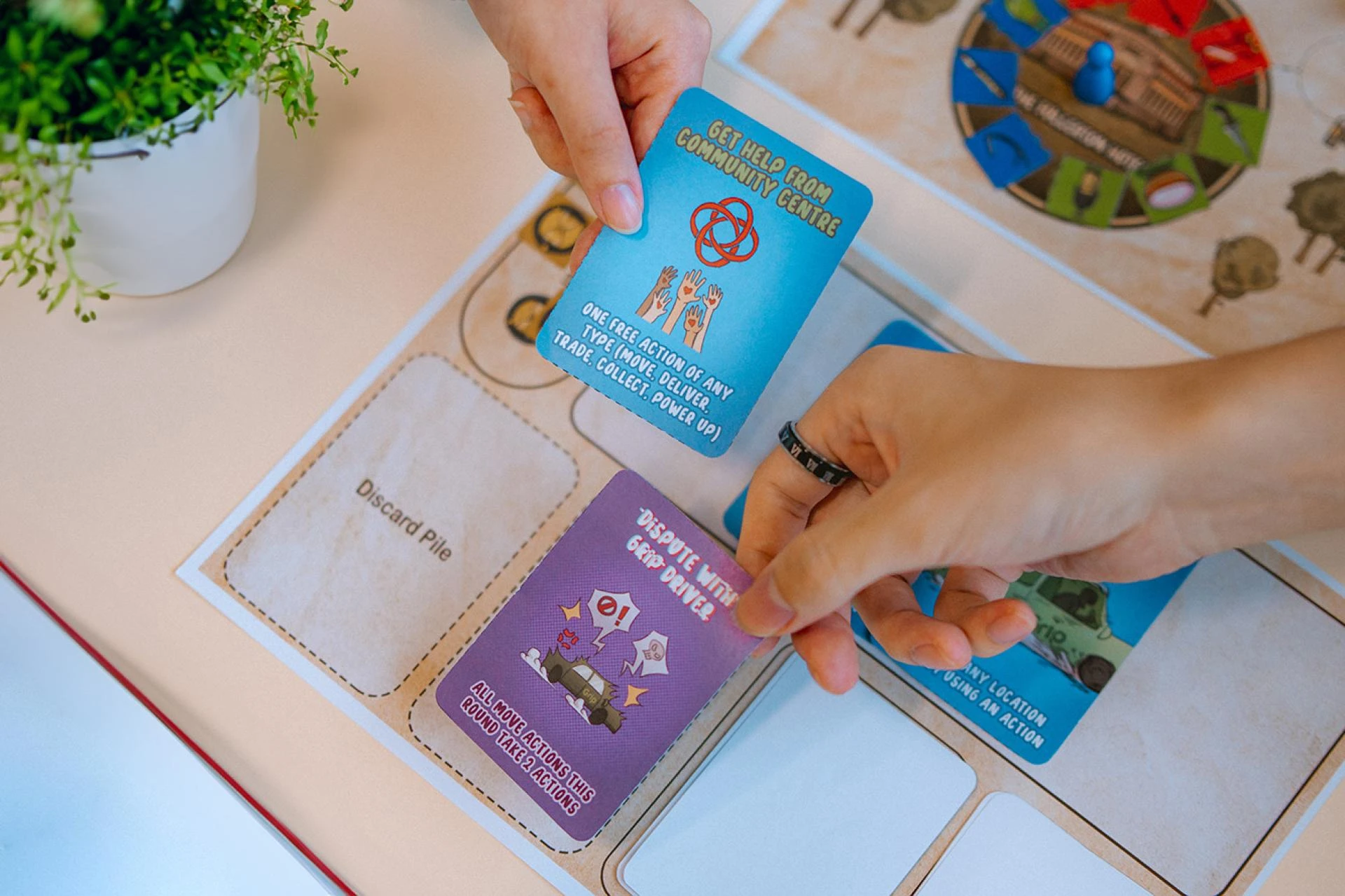
If you search “video game designer,” you’ll find a lot of definitions but very few that capture what the role actually does in a real studio. A video game designer isn’t just a creative thinker. They are the person responsible for shaping player behaviour—how players learn, react, progress, and stay engaged.
And in an industry that’s projected to generate around $188.8 billion in revenue in 2025, with roughly 3.6 billion players worldwide, clarity of experience has never mattered more. (Newzoo)
What a video game designer actually designs
A video game designer focuses on player experience, which means their work touches:
- Core mechanics (e.g., movement, combat, progression)
- Level and mission structure
- Reward systems
- Onboarding and tutorial flow
- Balance and pacing
Great design doesn’t just look clever on paper — it feels intuitive in the player’s hands.
A powerful example: Hades
Take a game like Hades. On paper, it’s a roguelike with repeated failures. That sounds punishing. In practice, players keep playing because the design is tuned so that failure feels like progress. Reward loops, pacing, and risk–reward decisions are carefully balanced to maintain high engagement. This is not luck, it’s designed with intention.
Hades’ success illustrates how designers use mechanics and feedback loops to influence player emotion, a skill far deeper than simply placing features.
Why is this role harder than people expect
Beginners often try to design games like this:
- Add as many features as possible
- Make systems more complex than needed
- Focus on visuals before interaction clarity
But studios hire designers who can simplify complexity, not pile it on.
In real projects, designers ask questions like:
- “Does this mechanic teach itself naturally?”
- “Is the challenge fair at this stage?”
- “Does this system support the core loop or distract from it?”
This requires discipline, iteration, and constant player feedback — not just creativity.
What do players care about?
Player engagement matters a great deal. Metrics used in the industry — such as session length and session count — are not arbitrary. They are direct reflections of how well design is holding players’ attention, indicating satisfaction or frustration with core systems. (GameAnalytics)
In other words, a design that feels intuitive and rewarding not only keeps players playing — it also increases the game’s commercial success.
Why structured learning accelerates your growth
Self-study is valuable, but many aspiring designers plateau because they lack structured feedback and real playtests. Good training environments teach you to think, not just replicate tutorials.
At MAGES Institute, aspiring video game designers learn to:
- Prototype systems rapidly
- Analyse player behaviour and iterate
- Balance mechanics for real play feedback
- Communicate design intent with clarity
- Integrate design with production workflows
This mirrors how real studios operate — where ideas must survive real playtests, not just look good on paper.
The honest takeaway
A video game designer isn’t someone who just has good ideas.
A good designer is someone whose ideas work when players interact with them.
If you want to train that level of thinking — the kind that shapes behaviour, sustains engagement, and supports player satisfaction — then structured learning matters.
Explore how MAGES Institute prepares aspiring video game designers with real production workflows, critique-driven learning, and project-based skill development. This is where your concepts begin to work, not just look good.
Design stops being theoretical when players feel it. That’s where real growth begins.