
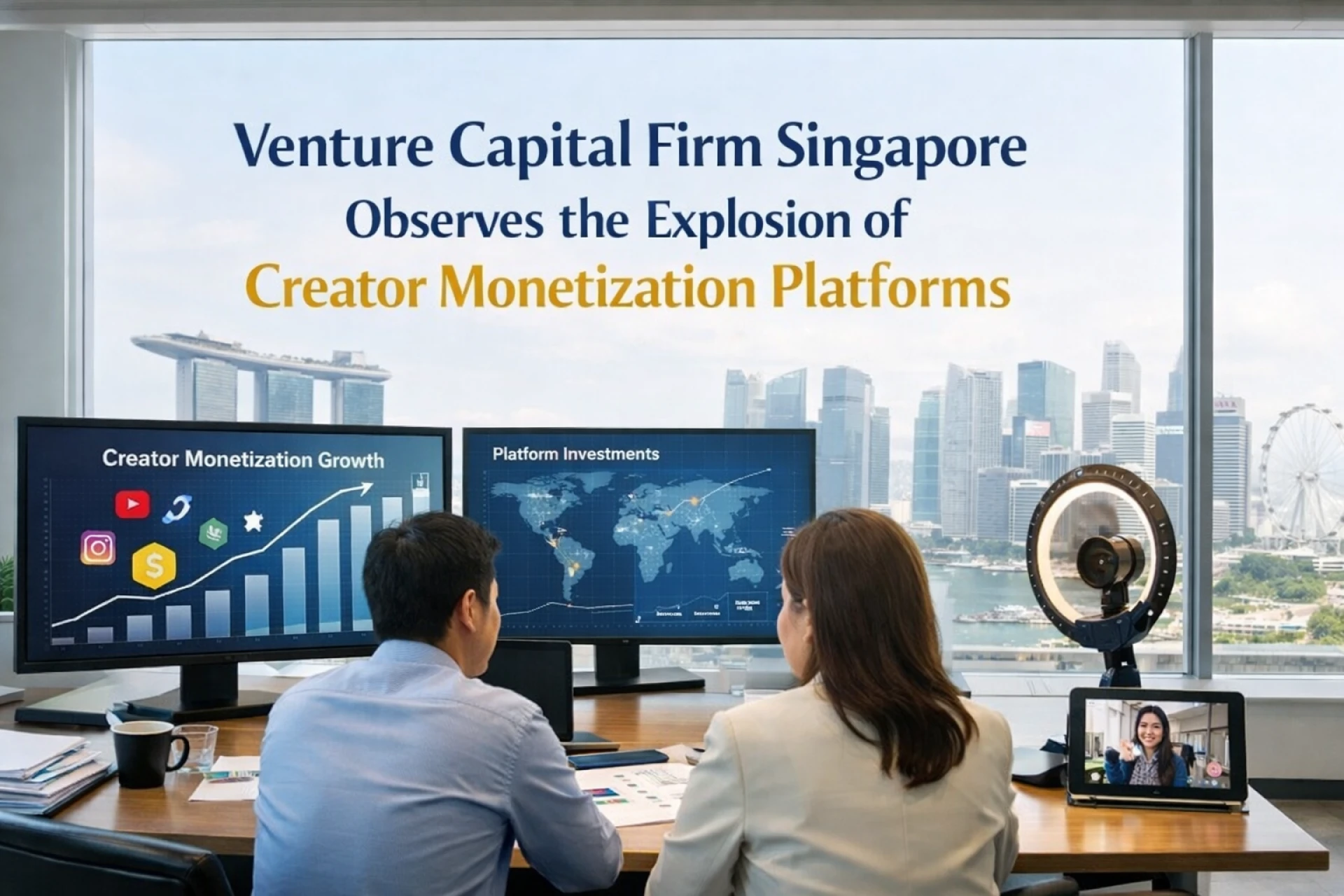
The Creator Economy Has Shifted from Content to Revenue Infrastructure
The era of the creator economy is over; the sole reliance on content creation has been overtaken by events. This change occurred in April 2026 when the spotlight was on monetization infrastructure. Creators are now looking for sustainable revenue sources, control of their fan base, and autonomy in how they deliver their content.
As such, there is an influx of startups creating financial and operational infrastructure for creators. This does not involve social media sites; this is a business model that makes it easier for creators to generate, handle, and grow their businesses.
From a venture capital firm based in Singapore, the importance of this transformation cannot be overstated. There is no more value to be gained from content creation; rather, the emphasis should be on the technology that enables creator income.
One of the trending keywords in this field is creator monetization platforms.
Why Monetization Infrastructure Is Attracting Capital
The problem with the traditional creator economy is instability. Income is unpredictable, platform-dependent, and often controlled by algorithms. This creates frustration and limits long-term growth for creators.
Startups are solving this problem by building platforms that offer:
- Direct subscription models
- Payment processing systems
- Audience ownership tools
- Revenue analytics
These solutions shift power from platforms to creators. For investors, this creates a scalable business model with recurring revenue.
This is why early stage investment opportunities in this sector are expanding rapidly. Infrastructure platforms can serve millions of creators globally, making them far more valuable than individual content businesses.
The Shift from Platforms to Ownership Models
One of the most important changes in this space is the move toward ownership. Creators want control over their audience and revenue streams. They do not want to rely on third-party platforms that can change rules overnight.
Startups are responding by offering tools that allow creators to:
- Build direct relationships with their audience
- Control pricing and monetization strategies
- Access real-time performance data
This shift is redefining the creator economy. It is no longer about visibility. It is about financial independence.
For a venture capital firm Singapore, this creates a strong investment thesis. Ownership-driven platforms have higher retention rates and stronger long-term value.
Singapore as a Strategic Base for Creator Economy Startups
Singapore’s digital ecosystem makes it an ideal location for building and scaling creator economy platforms. The country offers strong infrastructure, access to Southeast Asian markets, and a supportive regulatory environment.
Creators in Asia are growing rapidly, and monetization tools are still underdeveloped compared to Western markets. This creates a significant opportunity for startups.
For founders looking to raise capital for startup Singapore, creator monetization platforms provide a compelling growth narrative.
Evolve Venture Capital sees this region as a high-potential market for infrastructure-driven creator startups.
What Investors Actually Care About
Most founders in this space make a critical mistake. They focus on engagement metrics instead of revenue metrics. This approach does not work.
Investors are not interested in how many users a platform has if those users are not generating consistent income. The focus is on monetization efficiency, not audience size.
This is why early stage investment opportunities in this sector are highly selective.
Key evaluation factors include:
- Revenue per creator
- Retention rates
- Scalability of the platform
- Strength of monetization tools
Startups that cannot demonstrate strong financial outcomes for creators struggle to attract funding.
The Problem with Overhyped Creator Startups
The creator economy has been heavily hyped over the past few years. Many startups entered the market with similar ideas, leading to saturation.
The result is a crowded space with limited differentiation. Many platforms offer the same features, making it difficult to stand out.
Investors are becoming more cautious. They are looking for startups that solve real problems, not just replicate existing models.
This is where most early stage investment opportunities fail. Without a clear value proposition, startups cannot sustain growth or attract capital.
The Importance of Sustainable Revenue Models
The long-term success of creator monetization platforms depends on sustainable revenue models. This means creating systems where both the platform and the creators benefit financially.
Subscription models, transaction fees, and premium services are proving to be effective. However, these models must be balanced carefully. Overcharging creators or audiences can lead to churn.
Investors are focusing on platforms that can maintain this balance while scaling globally.
For a venture capital firm Singapore, sustainability is a key factor in evaluating investments in this space.
How Evolve Venture Capital Approaches This Sector
Evolve Venture Capital takes a disciplined approach to the creator economy. The firm avoids hype-driven investments and focuses on fundamentals.
The evaluation process includes:
- Analysis of monetization efficiency
- Assessment of creator retention
- Evaluation of platform scalability
- Understanding of market differentiation
Being a venture capital firm Singapore, the firm also considers how startups can expand across Asia and beyond.
This approach ensures that investments are based on long-term value rather than short-term trends.
The Future of Creator Monetization Platforms
The creator economy will continue to grow, but its structure will change. Platforms that enable financial independence will dominate, while those that rely on engagement alone will struggle.
This creates a clear opportunity for startups that can build scalable monetization systems. However, competition will remain intense, and only a few players will emerge as leaders.
The expansion of early stage investment opportunities in this sector reflects its evolution from entertainment to infrastructure.
Conclusion: From Attention to Income
Attention is transitioning to income in the creator economy. This paradigm shift will have a profound impact on value creation and capture.
For entrepreneurs, the key is to develop platforms that drive tangible financial gains. For investors, the goal is to scale and sustain operations.
From the perspective of a venture capital company in Singapore, this industry offers lucrative potential on an international scale, provided they can pull off their execution flawlessly.
“Many creator businesses struggle because they prioritize engagement over monetization. If your platform fails to provide sustained income streams for the creators, then it’s not going to be a valuable platform. Build financial services, not social media."
Contact Information:
- Website: www.evolvevcap.com
- Email: [email protected]
- Phone: +65 8181 4097