
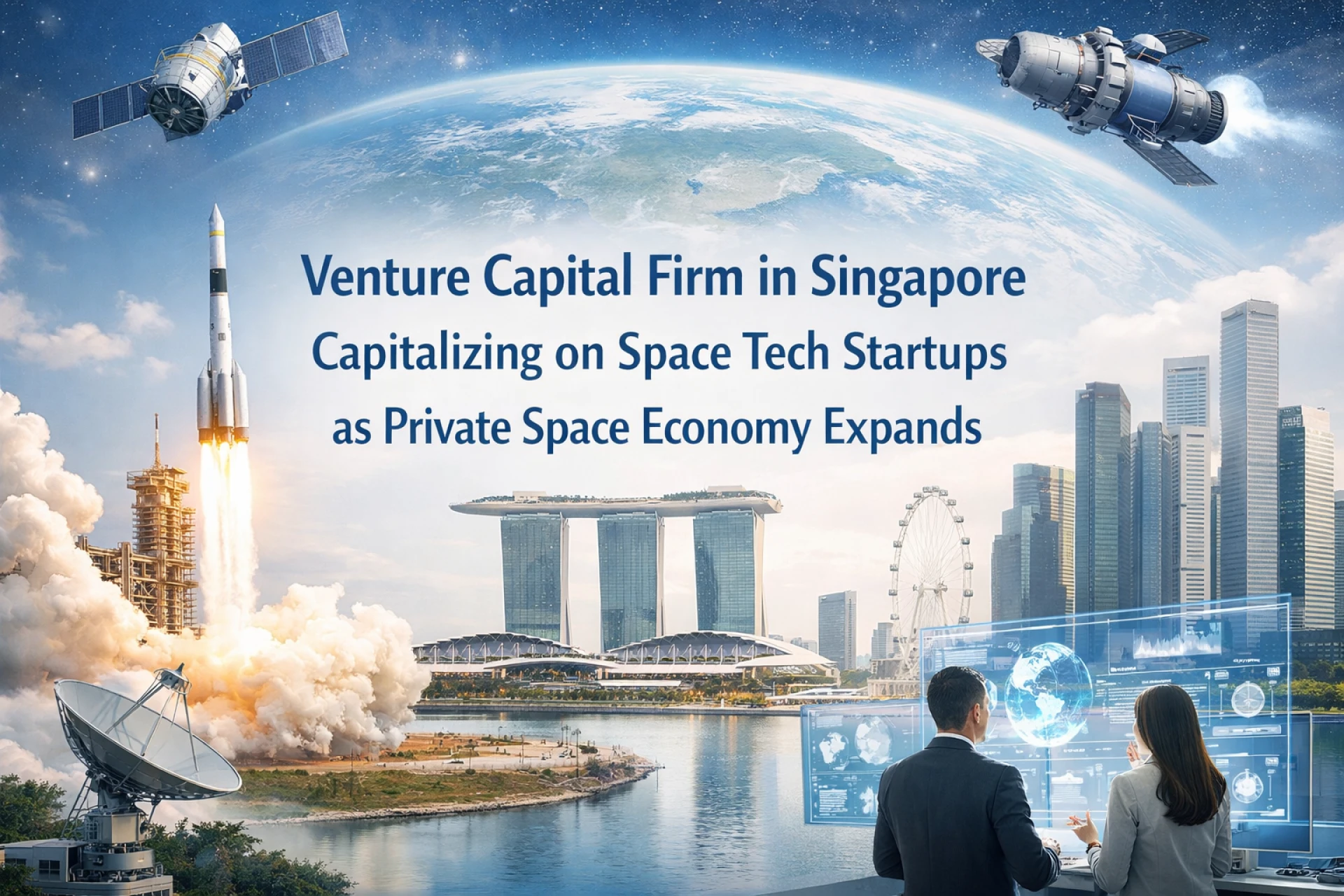
Space Tech Is No Longer Government-Dominated
Space technology has made the transition from state-regulated to venture-capital-supported within a relatively short span of time. By April 2026, innovations in satellite launches, earth imagery, and space-based data have been pioneered by private organizations. It is no longer an experiment but a business that generates profits.
New ventures are developing products for satellite communication, climate analysis, and geospatial analytics. These are industries in high demand with global applications. Therefore, collaborating with a venture capital firm in Singapore is becoming the wise choice for entrepreneurs venturing into the field, considering how the funding landscape for space technology startups 2026 looks globally.
Investors Are Focused on Data, Not Rockets
There is a misconception that space tech investing is about rockets and launches. That is outdated thinking. Investors are now focusing on data-driven business models built on top of space infrastructure.
Startups that:
- Analyze satellite imagery
- Provide real-time geospatial insights
- Offer climate and agricultural intelligence
are attracting the majority of venture capital. These businesses have faster revenue cycles and lower capital requirements compared to launch-focused companies.
This aligns with how venture capital investing in early stage startups is evolving. Investors are prioritizing scalable, software-driven models rather than capital-intensive hardware plays. Evolve Venture Capital evaluates space tech opportunities based on data monetization potential, not engineering complexity.
The Capital Barrier Is Still High
Space tech is not easy to fund. Even with the shift toward software-driven models, the industry still requires strong technical expertise and long development cycles.
Founders looking to Raise Capital for Startups in this sector must demonstrate:
- Clear commercial use cases
- Strategic partnerships
- Long-term scalability
Without these, investors will not engage. The biggest mistake founders make is assuming that innovation alone is enough. It is not. Market demand is the deciding factor.
Evolve Venture Capital filters opportunities based on commercial viability first, ensuring that investments are grounded in real business potential.
Singapore’s Strategic Role in Space Ecosystem Growth
Singapore is positioning itself as a regional hub for space technology and satellite data services. Its strong regulatory environment, investment-friendly policies, and access to Southeast Asian markets make it an attractive base for startups.
Working with a venture capital firm in Singapore provides access to:
- Regional partnerships
- Government-backed innovation programs
- Cross-border expansion opportunities
Evolve Venture Capital uses this ecosystem to help startups scale beyond local markets and tap into global demand for space-based solutions.
Commercial Applications Are Driving Growth
The real growth in space tech is coming from commercial applications. Industries such as agriculture, logistics, insurance, and climate monitoring are integrating satellite data into their operations.
Startups that provide actionable insights rather than raw data are gaining traction. This is where value is created. For investors, this reduces risk and increases scalability.
This trend reinforces the importance of venture capital investing in early stage startups that focus on practical solutions rather than speculative innovation.
The Competitive Landscape Is Tightening
As more startups enter the space tech sector, competition is increasing. Investors are becoming more selective, focusing only on companies with strong differentiation and clear revenue models.
For founders trying to Raise Capital for Startups, this means:
- Strong positioning is critical
- Product-market fit must be proven early
- Execution speed matters more than vision
Evolve Venture Capital emphasizes disciplined execution, ensuring that startups are not just innovative but also competitive.
The Future of Space Tech Investment
The future of space technology will involve integration. Companies that are able to integrate satellite information with artificial intelligence, internet of things, and enterprise software will control the market.
These will present new avenues for both angel investors and startup founders. Nonetheless, the entry barrier will continue to be high, necessitating the need for partnerships.
Evolve Venture Capital has been following this trend and investing in companies capable of integrating various technologies.
Evolve Venture Capital’s Strategic Approach
When looking at investments in space technology, there is a need for balance. With high risk comes the need for equally high commercial opportunities. Evolve Venture Capital targets startups that can make money in the near future while creating value.
The company acts as a venture capitalist based in Singapore, offering startups access to money, connections, and international markets. However, the emphasis is always on making wise investments rather than taking risks.
Space technology is not a passing fad. If your startup cannot provide any commercial use for the data generated, investors will automatically turn it down. Concentrate on practical uses. Money flows in such areas.
Contact Information:
- Website: www.evolvevcap.com
- Email: [email protected]
- Phone: +65 8181 4097