
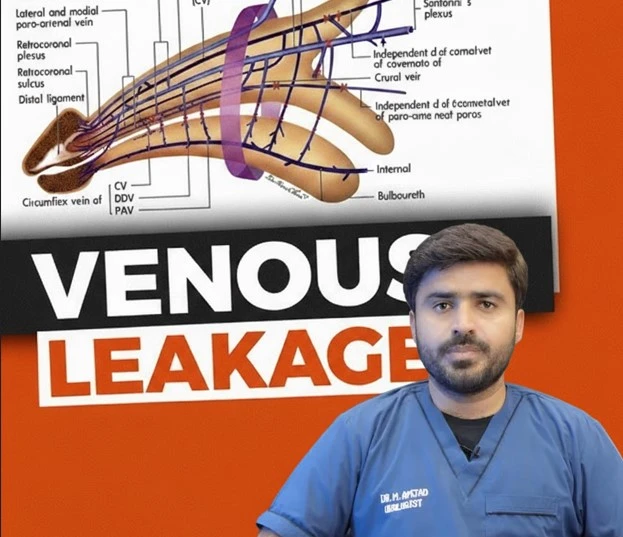
Erectile dysfunction (ED) is a multifactorial condition that affects millions of men worldwide, impacting self-esteem, relationships, and overall quality of life. While ED is commonly associated with hormonal imbalances or reduced blood flow, one of the most overlooked causes is venous leak, medically known as veno-occlusive dysfunction or venogenic ED.
A venous leak occurs when the veins in the penis fail to trap blood effectively during an erection. The result is difficulty achieving or maintaining rigidity sufficient for sexual activity.
With modern advances in diagnosis, regenerative therapies, minimally invasive interventions, and surgical solutions, venous leak is no longer an untreatable problem. This guide covers everything you need to know about venous leak — from causes and symptoms to the most effective treatment strategies.
What is a Venous Leak?
During a normal erection, blood flows into the corpora cavernosa, the spongy chambers of the penis. At the same time, the veins that normally drain blood compress, allowing the penis to remain firm. This mechanism is called veno-occlusion.
In venous leak:
- Blood enters the penis normally but escapes too quickly through the veins.
- The penis cannot sustain rigidity, even with sexual arousal.
- This distinguishes venogenic ED from arterial ED, where blood inflow is insufficient.
Venous leak may affect men of all ages but is more common in middle-aged and older men. It can be primary (congenital or structural) or secondary (acquired due to trauma, disease, or surgery).
Causes of Venous Leak
Venous leak is a structural and functional problem influenced by multiple factors:
1. Structural Weakness of Penile Tissue
- Degeneration of the tunica albuginea (fibrous sheath surrounding corpora cavernosa) reduces its ability to compress veins during erection.
- Collagen breakdown and connective tissue weakness impair venous occlusion, leading to excessive outflow.
2. Vascular Disease
- Conditions like diabetes, hypertension, and atherosclerosis damage both arteries and veins.
- Poor vascular integrity reduces the ability of penile veins to close properly.
3. Hormonal Imbalance
- Low testosterone or other endocrine disorders can reduce smooth muscle tone and tissue elasticity.
- This weakens the natural veno-occlusive mechanism.
4. Trauma or Pelvic Surgery
- Pelvic fractures, spinal injuries, or prostate and bladder surgeries can damage penile veins or nerves.
- Scar tissue and venous valve damage may lead to permanent venous leak.
5. Lifestyle and Environmental Factors
- Smoking, excessive alcohol, drug use, and obesity negatively impact vascular health.
- Sedentary lifestyle and poor nutrition further compromise blood flow and tissue quality.
6. Congenital or Anatomical Factors
- Some men are born with weak venous valves or abnormal venous pathways, predisposing them to early venogenic ED.
Symptoms of Venous Leak
Venous leak has distinctive clinical signs that differ from other types of ED:
- Ability to achieve an erection but cannot maintain it during intercourse.
- Erections that fade prematurely, even after stimulation.
- Partial or soft erections despite strong sexual desire.
- Weak or absent morning erections, indicating organic dysfunction.
- Minimal response to oral ED medications.
Men may describe erections that feel “temporary” or “unstable,” often affecting confidence and sexual satisfaction.
Diagnosis of Venous Leak
Accurate diagnosis is critical to selecting the most effective treatment. Diagnosis combines clinical evaluation, imaging studies, and functional tests:
1. Medical History and Physical Examination
- Detailed history of sexual performance, comorbidities, medications, and prior surgeries.
- Physical examination to assess penile structure, signs of connective tissue disease, or abnormal veins.
2. Penile Duplex Doppler Ultrasound
- Non-invasive first-line test.
- After injection of a vasodilator, measures arterial inflow and venous outflow.
- High end-diastolic velocity with normal arterial inflow suggests venous leak.
3. Dynamic Infusion Cavernosometry and Cavernosography (DICC)
- Gold-standard test for venogenic ED.
- Measures intracavernosal pressure and visualizes leaking veins.
- Identifies exact veins responsible for the outflow, guiding targeted treatment.
4. Advanced Imaging
- CT or MRI cavernosography provides high-resolution mapping of penile veins.
- Useful for planning embolization or surgical interventions.
5. Laboratory Testing
- Hormone levels: testosterone, prolactin, thyroid hormones.
- Blood sugar and lipid profile to assess metabolic or vascular disease.
Treatment Options for Venous Leak
Venous Leakage Treatment aims to restore the ability to achieve and maintain an erection. Options range from lifestyle changes and medications to advanced regenerative therapies and surgery.
1. Lifestyle and Preventive Measures
Even mild venous leak responds better when vascular health is optimized:
- Quit smoking and limit alcohol.
- Manage diabetes, blood pressure, and cholesterol.
- Maintain a healthy body weight and exercise regularly.
- Consume a nutrient-rich, heart-healthy diet.
- Reduce stress and address psychological factors.
These measures support endothelial function and improve penile tissue health.
2. Oral Medications (PDE5 Inhibitors)
- Medications like Sildenafil, Tadalafil, or Vardenafil enhance blood inflow via nitric oxide pathways.
- In venous leak, these drugs are less effective because the problem is venous outflow, not inflow.
- Often used in combination with other therapies.
3. Vacuum Erection Devices (VEDs)
- Creates negative pressure to draw blood into the penis.
- A constriction ring at the base traps blood to maintain rigidity.
- Non-invasive, drug-free, and effective for many men.
- Some find it cumbersome or less spontaneous.
4. Intracavernosal Injection Therapy
- Drugs such as alprostadil are injected directly into erectile tissue.
- Induce strong erections independent of PDE5 inhibitors.
- Effective but require proper training to avoid complications such as fibrosis or pain.
5. Regenerative Therapies
Modern medicine has introduced tissue-regenerating treatments for venogenic ED:
a. Platelet-Rich Plasma (PRP)
- Concentrated platelets injected into the penis stimulate collagen production and tissue repair.
- May improve venous compression and rigidity over several sessions.
b. Low-Intensity Shockwave Therapy (LiSWT)
- Acoustic waves stimulate angiogenesis and improve endothelial health.
- Effective for mild-to-moderate venous leak.
- Non-invasive with minimal downtime.
c. Stem Cell Therapy
- Experimental but promising.
- Aims to regenerate smooth muscle and endothelial cells in the corpora cavernosa.
- Clinical studies show improved erectile function in select patients.
6. Endovascular Embolization
- Minimally invasive procedure performed by interventional radiology.
- Leaking veins are identified and sealed using coils or medical glue.
- Improves blood retention and allows stronger, longer-lasting erections.
- High success rates (often above 70%) in carefully selected patients.
- Quick recovery with minimal complications.
7. Surgical Treatments
a. Venous Ligation Surgery
- Leaking veins are tied off or removed.
- Effective in select cases but recurrence may occur due to collateral vein development.
- Success rates range from 50% to 70%.
b. Penile Prosthesis Implantation
- For severe or unresponsive cases.
- Inflatable or malleable implants provide permanent erections.
- High satisfaction rates (>90%) and reliable long-term function.
8. Combination Therapy
- Often the most effective strategy.
- Examples include embolization + regenerative therapy, or shockwave + lifestyle optimization.
- Comprehensive management addresses both structural and functional contributors.
Prognosis
- Mild to moderate cases: High success with regenerative therapies or embolization.
- Severe cases: Surgical options, including penile implants, provide permanent solutions.
- Early diagnosis improves outcomes significantly.
- Combining lifestyle, medical, and procedural treatments maximizes long-term results.
Frequently Asked Questions (FAQs)
1. Can venous leak be cured?
Yes, depending on severity. Mild cases respond to regenerative and non-invasive treatments; severe cases may require surgical correction or implants.
2. Why don’t PDE5 inhibitors work well?
Because the underlying problem is venous outflow, not insufficient blood inflow.
3. Is venous leak common?
It accounts for up to half of organic erectile dysfunction cases in men of varying ages.
4. What is the best treatment?
Endovascular embolization combined with regenerative therapies offers high success and minimal invasiveness. Surgical repair or implants are reserved for severe cases.
5. How quickly do treatments work?
Non-invasive therapies usually show improvement in 4–8 weeks; surgical or implant procedures have faster recovery and permanent results.
Conclusion
Venous leak is a recognized cause of erectile dysfunction that can significantly impact a man’s quality of life. It occurs when penile veins fail to maintain blood during an erection. With modern diagnostics, regenerative medicine, minimally invasive interventions, and surgical solutions, venous leak is now a treatable condition.
Early diagnosis by a qualified urologist or men’s health specialist is crucial. With the right combination of therapies — lifestyle optimization, medical treatments, regenerative therapy, or surgical intervention — men can regain natural erectile function, improve sexual confidence, and enjoy a satisfying sex life.