
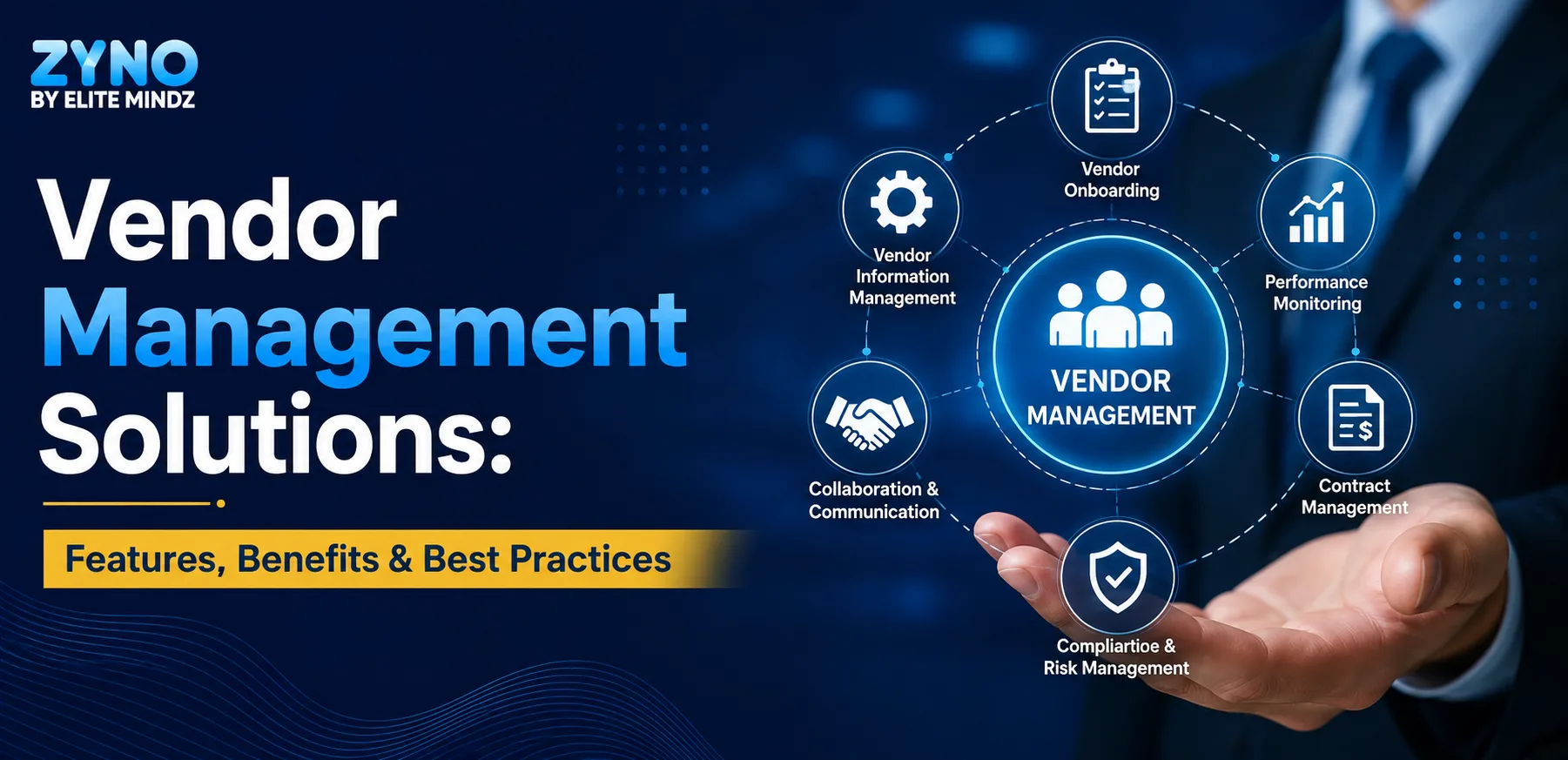
Managing vendors effectively is essential for businesses that depend on multiple suppliers, service providers, and external partners. As vendor networks grow, spreadsheets, emails, and manual processes can make it difficult to track contracts, performance, compliance, payments, and supplier relationships.
Vendor management solutions provide a centralized way to organize and automate these activities. From vendor onboarding and evaluation to performance tracking and risk management, modern solutions help procurement teams build stronger supplier relationships while improving operational efficiency.
What Are Vendor Management Solutions?
Vendor management solutions are software platforms designed to help businesses manage their complete vendor lifecycle from a single system. They can centralize vendor information, automate onboarding, monitor supplier performance, manage documentation, and support procurement activities.
A vendor management system gives procurement and finance teams better visibility into supplier-related activities. Instead of maintaining information across different spreadsheets and email conversations, businesses can store vendor profiles, contracts, certifications, payment information, and performance data in one place.
Modern vendor management software can also integrate with procurement, ERP, accounting, and inventory systems to create a connected supplier management process.
Why Do Businesses Need Vendor Management Solutions?
Managing vendors manually can create several challenges, including duplicate records, missing documents, delayed approvals, poor communication, and limited visibility into supplier performance.
A centralized vendor management platform can help businesses:
- Maintain accurate vendor information
- Automate vendor onboarding
- Track supplier documents and contracts
- Monitor vendor performance
- Manage vendor risks
- Improve procurement visibility
- Standardize vendor evaluation
- Support compliance requirements
- Strengthen vendor relationships
For growing organizations, supplier management software can make vendor-related processes more structured, transparent, and scalable.
Key Features of Vendor Management Solutions
1. Vendor Onboarding
Vendor onboarding software helps businesses create a standardized process for adding new suppliers. Teams can collect vendor details, documents, certifications, tax information, and other required data through a centralized workflow.
Automated approvals can also reduce delays and ensure that vendors meet internal requirements before they become active suppliers.
2. Vendor Database Management
A centralized vendor database allows businesses to store supplier information in an organized format. Users can quickly access contact details, contracts, documents, payment information, categories, and other relevant records.
This makes vendor database management easier and reduces dependency on scattered spreadsheets.
3. Vendor Performance Management
Understanding how suppliers perform is important for maintaining quality and controlling costs. Vendor performance management allows businesses to monitor metrics such as delivery times, product quality, responsiveness, pricing, and service levels.
Procurement teams can use this information to identify high-performing suppliers and address recurring vendor issues.
4. Vendor Evaluation
A vendor evaluation software solution can help businesses assess suppliers using standardized criteria. Companies can evaluate vendors based on pricing, quality, compliance, delivery performance, service, and risk.
Consistent evaluation makes supplier selection more transparent and data-driven.
5. Vendor Risk Management
Supplier-related risks can affect business continuity, costs, compliance, and customer satisfaction. Vendor risk management features help organizations identify and monitor potential supplier risks.
Businesses can track certifications, compliance documents, contracts, financial information, and performance indicators to support better risk decisions.
6. Contract and Document Management
Businesses often manage numerous supplier agreements, certificates, licenses, and compliance documents. Vendor management tools can provide centralized document storage and help teams monitor expiration dates and renewal requirements.
This can reduce the risk of missing important deadlines.
7. Vendor Compliance Management
Vendor compliance management helps organizations ensure that suppliers meet defined business, legal, regulatory, and operational requirements.
Automated reminders and document tracking can make it easier to identify missing or expired information.
8. Vendor Analytics and Reporting
Data-driven reporting is another important capability of modern vendor management solutions. Procurement teams can analyze supplier spending, performance, delivery timelines, quality, risks, and other key metrics.
These insights can support better supplier negotiations and procurement decisions.
Benefits of Vendor Management Solutions
Improved Supplier Visibility
A centralized vendor management system provides a single source of information about suppliers. Procurement teams can quickly understand vendor status, performance, documentation, and relationships.
Better Vendor Relationships
Effective vendor relationship management improves communication and collaboration between businesses and suppliers. Clear performance expectations and centralized communication can help build stronger long-term partnerships.
Reduced Manual Work
Automating onboarding, approvals, documentation, evaluations, and reporting reduces repetitive administrative work. Teams can spend more time on strategic procurement activities.
Better Supplier Performance
Regular monitoring through supplier performance management helps businesses identify problems early and work with suppliers to improve service levels.
Stronger Risk and Compliance Management
Centralized records and automated reminders make it easier to monitor supplier risks and compliance requirements.
Improved Procurement Efficiency
When vendor information and performance data are easily accessible, procurement teams can make faster and more informed purchasing decisions.
Vendor Management Best Practices
Implementing software alone is not enough. Businesses should also follow effective vendor management best practices.
Define Clear Vendor Selection Criteria
Before onboarding suppliers, establish clear criteria covering pricing, quality, delivery, compliance, experience, and service capabilities.
Standardize Vendor Onboarding
Use a consistent onboarding process for collecting information, verifying documents, and approving new vendors.
Monitor Vendor Performance Regularly
Establish measurable KPIs and review supplier performance periodically. This can help identify both opportunities and potential problems.
Maintain Accurate Vendor Data
Keep supplier records updated and remove duplicate or outdated information. Accurate data improves reporting and decision-making.
Assess Vendor Risks
Regularly evaluate suppliers based on operational, financial, compliance, cybersecurity, and other relevant risks.
Build Strong Supplier Relationships
Effective vendor management should not focus only on cost. Communication, collaboration, transparency, and long-term value are equally important.
How to Choose the Right Vendor Management Solution
When comparing best vendor management solutions, consider your organization's size, supplier network, procurement processes, and future requirements.
Look for a solution that provides:
- Easy vendor onboarding
- Centralized vendor profiles
- Supplier performance tracking
- Vendor risk management
- Contract and document management
- Vendor compliance management
- Automated workflows and approvals
- Reporting and analytics
- Procurement integrations
- Scalable cloud-based access
A vendor management solution for procurement should also integrate smoothly with existing ERP, accounting, purchasing, and procurement systems.
The Future of Vendor Management
Vendor management is becoming increasingly automated and data-driven. Automated vendor management solutions can help businesses reduce manual processes, improve supplier visibility, and accelerate approvals.
AI-powered technologies can further support vendor evaluation, risk identification, document analysis, supplier recommendations, and performance insights.
As businesses continue working with larger and more complex supplier networks, cloud-based vendor management software can provide the flexibility and scalability needed to manage vendors from different locations.
Conclusion
Effective vendor management is essential for controlling costs, improving supplier performance, reducing risks, and maintaining reliable procurement operations. Vendor management solutions bring these activities together through centralized data, automation, analytics, and structured workflows.
Whether you need better vendor onboarding, supplier performance management, compliance tracking, or vendor risk management, the right vendor management software can help create a more transparent and efficient procurement environment.
For businesses looking to improve supplier relationships and streamline procurement, investing in a scalable vendor management platform can provide long-term operational value.
FAQs
1. What are vendor management solutions?
Vendor management solutions are software platforms that help businesses manage supplier information, onboarding, performance, compliance, contracts, risks, and relationships from a centralized system.
2. What are the benefits of vendor management software?
Vendor management software can improve supplier visibility, automate manual processes, monitor performance, strengthen compliance, reduce risks, and improve procurement efficiency.
3. What is the difference between vendor management and supplier management?
Vendor management generally focuses on managing external vendors and their activities, while supplier management often covers the broader relationship with suppliers involved in providing products, materials, or services.
4. What features should vendor management software have?
Important features include vendor onboarding, vendor database management, supplier performance tracking, document management, compliance monitoring, risk management, reporting, analytics, and workflow automation.
5. How does vendor management software improve procurement?
It centralizes supplier information, automates approvals and onboarding, provides performance insights, and helps procurement teams make faster and more informed supplier decisions.
6. What is vendor performance management?
Vendor performance management is the process of monitoring suppliers against predefined KPIs such as quality, cost, delivery, responsiveness, and service levels.
7. Is cloud-based vendor management software suitable for growing businesses?
Yes. Cloud-based vendor management software can provide scalable access, centralized data, easier collaboration, and flexible vendor management as the supplier network expands.
Read Articles:
Top 15 Small Business ERP Systems for 2026
Top 15 Business Management Software
How Manufacturing ERP Helps Ethiopian Factories
10 Best ERP Software for Metal Manufacturing Companies
20 Best ERP Software in Japan
Manufacturing ERP Software Buying Guide
Traceability in Manufacturing
ERP Training Best Practices