Introduction: Testing Product Ideas Before Backend Systems Exist
Product teams rely heavily on metrics to understand how users interact with applications. Data such as engagement rates, user behavior, and feature usage helps teams decide which features to improve or remove.
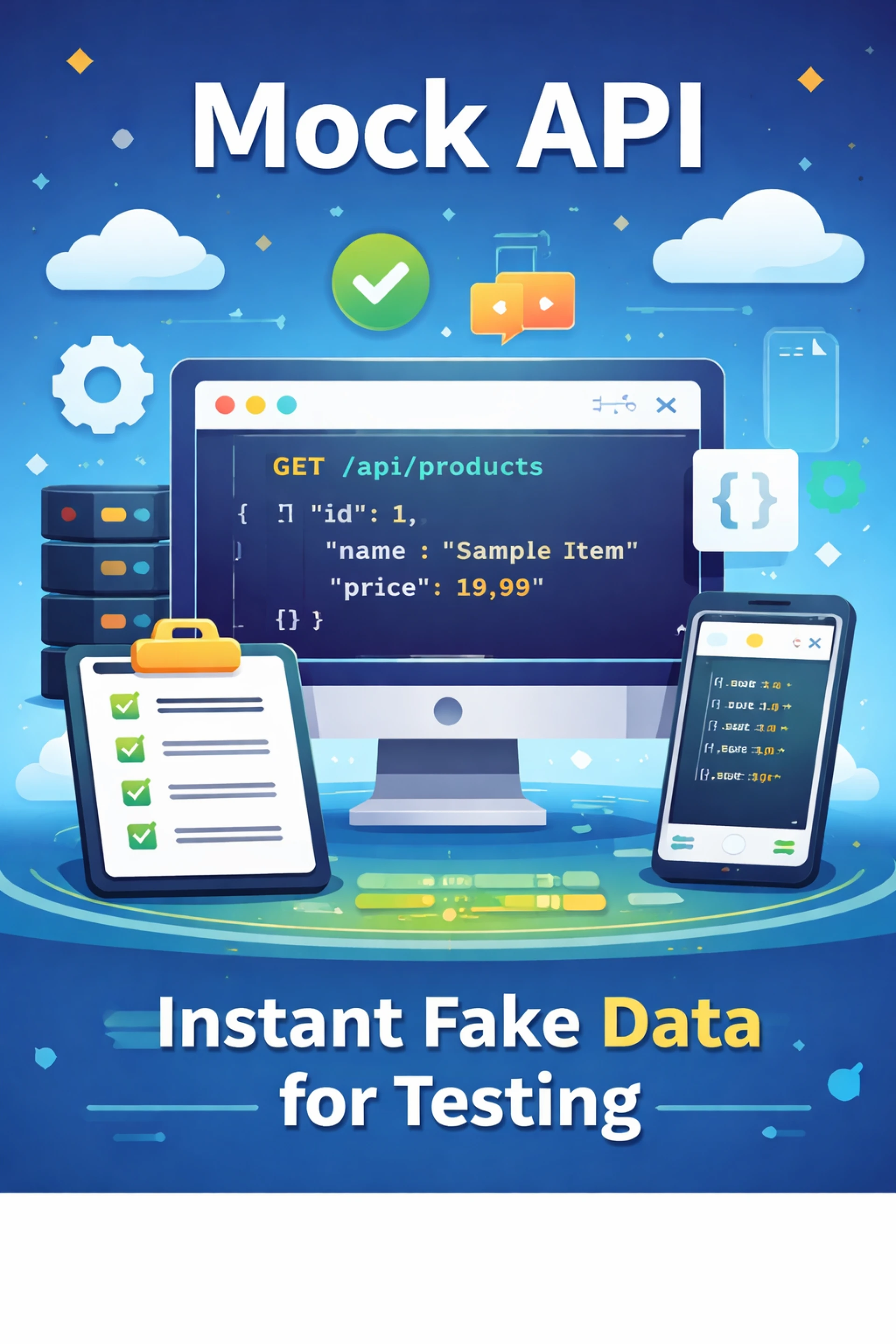
However, collecting meaningful metrics often requires backend infrastructure that may not exist during early development stages. An api mock server allows teams to simulate API responses and validate product metrics before real data pipelines are available.
Tools such as an Instant API Generator and AI API Generator make it possible to quickly create APIs that generate structured data for testing product analytics.
Why Early Metric Validation Matters
Many products fail because teams wait too long to measure how users interact with features. Without early metrics, developers may build features that users never adopt.
Using an api mock server, teams can simulate user activity and analyze how application features behave under realistic conditions. This allows product managers and designers to validate ideas earlier in the development process.
Generating Simulated User Data
An Instant API Generator can create endpoints that simulate user actions such as signups, purchases, clicks, and interactions. These simulated responses allow developers to test analytics dashboards and reporting systems.
Previously, some teams relied on simple services like JSON placeholder for sample data. While useful, these tools cannot easily simulate complex user behavior patterns.
A modern mock API environment provides far greater flexibility in generating dynamic datasets.
Testing Analytics Dashboards
Analytics dashboards often require large datasets and multiple pages of results. Developers must ensure that metrics load quickly and display correctly across different views.
A pagination mock api allows teams to simulate large volumes of analytics data. By generating multiple pages of records, developers can test how dashboards behave when thousands of events are processed.
This helps ensure that analytics interfaces remain responsive even when real data volumes increase.
Simulating Product Growth Scenarios
Product teams frequently want to test how applications behave when user activity increases rapidly. An api mock server makes it possible to simulate growth scenarios before the product is widely released.
Using an AI API Generator, developers can create realistic datasets that represent different user segments, activity patterns, and engagement metrics.
This allows teams to test how analytics systems respond to spikes in traffic or rapid user adoption.
Improving Data Architecture Early
Mock APIs also help teams design better data architectures. By testing how metrics are generated and consumed during development, teams can identify potential bottlenecks early.
Instead of discovering problems after the product launches, developers can adjust their analytics infrastructure during the design phase.
Tools like an Instant API Generator allow teams to quickly modify endpoints and test different data structures without rebuilding backend systems.
Conclusion: Mock APIs Support Data-Driven Product Development
Validating product metrics early is essential for building successful applications. An api mock server enables teams to simulate data flows and analyze product behavior before backend infrastructure is ready.
With tools such as an Instant API Generator, AI API Generator, and flexible data services similar to JSON placeholder, developers can generate realistic datasets quickly. A pagination mock api further allows teams to test analytics dashboards that handle large volumes of information.
By using mock APIs during early development stages, product teams can build data-driven applications with greater confidence.