
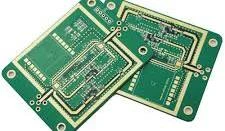
The demand for high-performance electronics has never been greater—especially in the rapidly evolving sectors of aerospace, defense, and telecommunications. In these industries, systems like radar arrays and satellite communication modules operate at extremely high frequencies and under severe environmental conditions. To meet such rigorous standards, engineers turn to advanced materials and technologies, and one such innovation leading the way is the Teflon PCB.
The Challenge of High-Frequency Systems Radar and satellite devices are fundamentally dependent on high-frequency signal transmission. Any disruption, distortion, or loss in these signals can result in significant degradation of performance, accuracy, or even total system failure. In radar systems, clarity and range depend on the system’s ability to transmit and receive ultra-high frequency signals without distortion. Similarly, in satellite devices, particularly those used in communication and navigation, stability and low latency are essential.
Traditional printed circuit board (PCB) materials such as FR-4 fall short when it comes to these types of applications. Their dielectric properties are not optimized for gigahertz-level frequencies, and they tend to absorb and attenuate signals over longer distances. This is where high-performance, low-loss substrates like PTFE (Polytetrafluoroethylene)—commercially known as Teflon—come into play.
Why Teflon-Based PCBs Excel in Aerospace and Defense Teflon is a synthetic fluoropolymer that offers excellent electrical and mechanical properties. It exhibits a very low dielectric constant and minimal dissipation factor, both critical for signal integrity in high-frequency applications. Unlike standard materials, Teflon enables consistent impedance, superior thermal stability, and reduced signal loss—all while withstanding harsh operating conditions such as extreme heat, vibration, and radiation exposure.
These properties make Teflon-based PCBs a natural choice for:
Radar receivers and transmitters
Satellite communication systems
Phased array antennas
Electronic warfare devices
High-speed RF and microwave circuits
Key Advantages of Teflon PCBs in Satellite and Radar Applications Exceptional Signal Integrity Teflon’s low dielectric constant ensures fast signal propagation, which is crucial in radar systems where speed and accuracy dictate performance. It also minimizes signal delay and reflection, helping reduce data loss and electromagnetic interference.
High Thermal Stability Satellite components operate under fluctuating and often extreme temperatures. Teflon can maintain performance across a wide temperature range, ensuring reliability during satellite launches and while orbiting in space.
Superior Resistance to Environmental Stress In both defense and aerospace fields, components are exposed to mechanical shock, vibration, and humidity. Teflon PCBs offer excellent resistance to such environmental factors, providing consistent performance over time.
Excellent Chemical Inertness For military and space-grade applications, long-term chemical stability is a must. Teflon is virtually inert to most chemicals, reducing the risk of corrosion or material degradation over the lifespan of the system.
Lightweight and Compact Spacecraft and satellites are heavily weight-sensitive. Teflon-based boards can be designed with high-density interconnections without increasing the form factor or weight, offering a critical advantage in aerospace design.
Challenges in Manufacturing Teflon PCBs Despite their many advantages, Teflon PCBs come with unique fabrication challenges. PTFE is softer and more elastic than traditional materials, making it more difficult to drill and laminate. Specialized processes and tools are required to maintain tight tolerances and to ensure proper adhesion of copper layers.
Moreover, due to the material’s flexibility and thermal expansion, multilayer boards must be carefully designed to prevent warping or delamination. Manufacturers with experience in RF and microwave PCB fabrication typically have the knowledge, machinery, and cleanroom conditions needed to meet these requirements.
Applications in Real-World Satellite and Radar Systems In satellite payloads, Teflon PCB materials are commonly used in transponders, frequency converters, and onboard antennas. Their low signal loss and resistance to space radiation are critical for long-term orbital reliability.
In military and defense systems, radar technologies—such as Synthetic Aperture Radar (SAR), Airborne Early Warning (AEW), and Ground Penetrating Radar (GPR)—all rely on the high-frequency transmission paths provided by Teflon-based boards.
These applications demand not only performance but also longevity and minimal maintenance—criteria that Teflon PCBs consistently fulfill.
Future Outlook: Paving the Way for Next-Gen Communication As the global shift toward 5G, Low Earth Orbit (LEO) satellites, and AI-enhanced defense systems continues, the need for ultra-reliable, high-speed, and lightweight PCB solutions will only grow. Teflon’s unique material properties position it to be a critical enabler of the next generation of communication and detection systems.
Moreover, as materials science and fabrication technologies improve, it’s expected that the cost and accessibility of Teflon PCBs will become more manageable, making them viable for an even wider range of high-performance applications.
Final Thoughts
In the world of radar and satellite communications, performance is everything. Even the smallest gains in signal clarity, speed, or reliability can lead to monumental advancements. The Teflon PCB stands out as a material that empowers engineers and designers to push the boundaries of what's possible in high-frequency electronic design.
By unlocking the full potential of this technology, aerospace and defense sectors can achieve more reliable systems, faster communication links, and safer operations—both on Earth and in orbit.