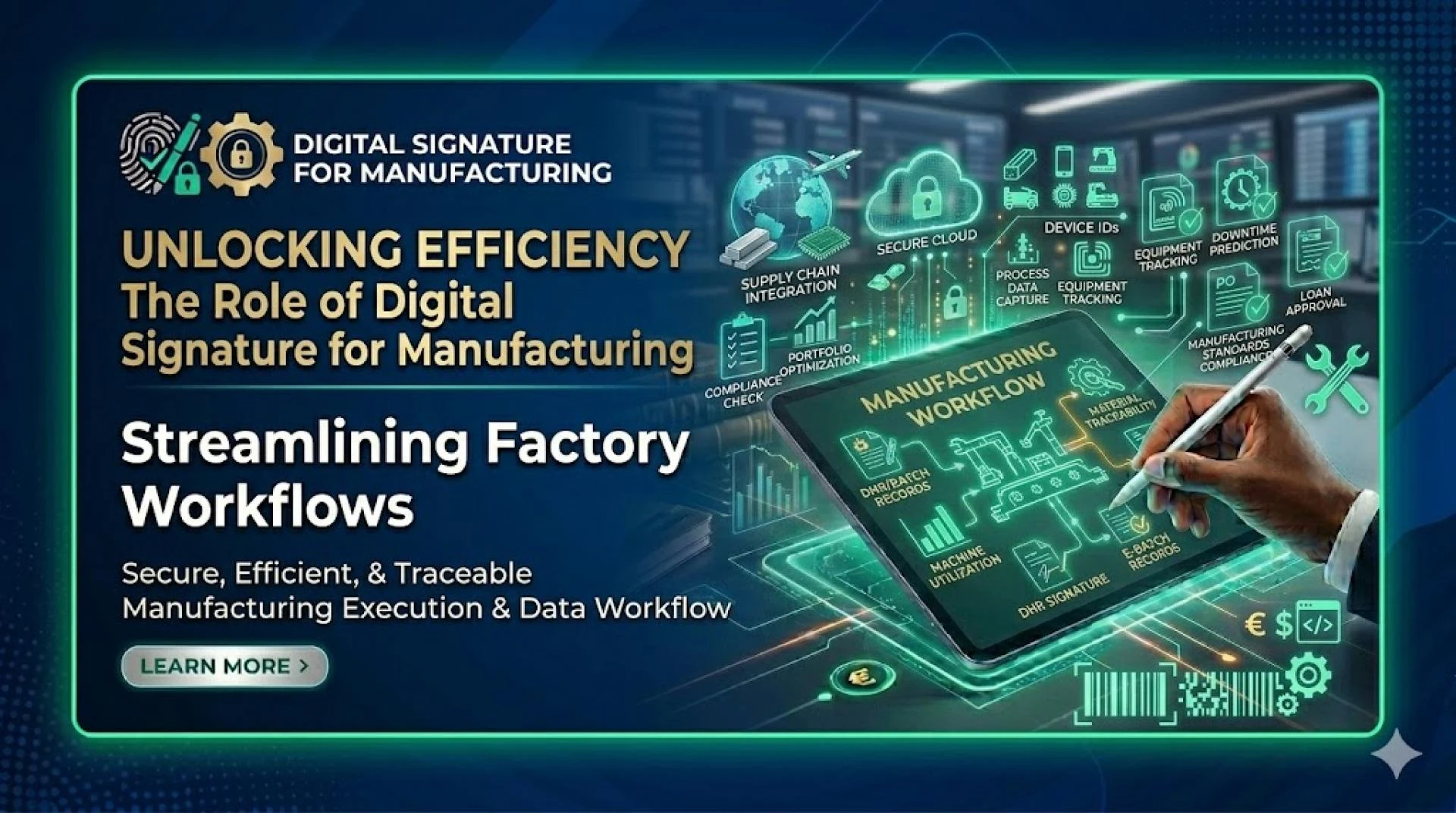
In an era where digital transformation is reshaping industries, manufacturing stands at the forefront of innovation. From supply chain coordination to quality assurance, manufacturers must ensure speed, accuracy, and security across all processes. One powerful tool driving this transformation is the use of digital signatures — and more specifically, Digital Signature for manufacturing.
Digital signatures are no longer a “nice‑to‑have” technology. They’re becoming essential for manufacturers looking to reduce operational friction, enhance compliance, and accelerate workflows.
What Are Digital Signatures?
Digital signatures are encrypted electronic credentials that authenticate the signer’s identity and ensure the integrity of a document. Unlike traditional handwritten signatures, digital signatures provide a secure, legally recognized way to sign documents online. Using advanced cryptographic algorithms, these signatures help businesses verify that a document hasn’t been tampered with and confirm who signed it.
Why Manufacturing Needs Digital Signature Solutions
The manufacturing industry handles a vast array of documentation — from purchase orders and supplier agreements to compliance certificates and quality records. Traditionally, these have been paper‑based processes that are slow, vulnerable to errors, and hard to track.
Digital Signature for manufacturing streamlines these processes by enabling electronic signing, eliminating paperwork, and simplifying document workflows. Here’s how:
1. Accelerated Approvals Across Departments
Manufacturing involves collaboration across functions — procurement, operations, quality control, and logistics. Digital signatures allow stakeholders to sign and approve documents instantly, reducing bottlenecks and shortening cycle times.
2. Better Supplier and Vendor Collaboration
Suppliers and vendors play a critical role in manufacturing. With digital signatures, contracts, NDAs, and purchase orders can be signed quickly and securely, improving communication and reducing delays in the supply chain.
3. Enhanced Compliance and Traceability
Regulatory compliance is critical in manufacturing industries such as automotive, aerospace, and healthcare. Digital signatures provide tamper‑proof records and audit trails that support compliance with standards like ISO, FDA, and other industry regulations.
4. Cost and Time Savings
By removing the need for printing, scanning, and physical storage, manufacturers can reduce operational costs significantly. Digital signatures speed up document exchange and reduce labor-intensive manual tasks.
5. Secure Quality Control Documentation
Quality management requires strict oversight and validation of reports, checklists, and certifications. Digital signatures help ensure that these documents are authentic and unaltered, safeguarding product quality and accountability.
Key Use Cases of Digital Signature for Manufacturing
Purchase Orders and Sales Contracts
Digital signatures make it easy to finalize agreements with clients and suppliers, ensuring that contracts are legally binding and traceable.
Engineering Change Orders (ECO)
In manufacturing, changes to product specifications must be carefully approved. Digital signatures streamline this approval process while maintaining a reliable record of each revision.
Compliance and Audit Documentation
Manufacturers must retain precise documentation for compliance audits. Digital signatures preserve an immutable audit trail, supporting regulatory and internal audit requirements.
Employee and Safety Documentation
From onboarding forms to safety protocols, digital signatures help manage employee documentation efficiently and securely.
Security Benefits of Digital Signatures
Manufacturers deal with sensitive data — from intellectual property to contractual terms and compliance records. Digital signatures employ:
- Encryption to protect document content
- Authentication to verify signer identity
- Audit trails for complete transparency
These security features help reduce the risk of fraud, data tampering, and unauthorized access.
The Competitive Advantage
Implementing Digital Signature for manufacturing gives businesses a competitive edge by improving operational efficiency and responsiveness. Manufacturers can:
- Speed up decision‑making
- Eliminate manual errors
- Improve supplier relationships
- Maintain better control over document workflows
In today’s global market, these advantages translate into faster product cycles, lower costs, and a stronger reputation for reliability.
Moving Toward a Digitally Enabled Manufacturing Future
Digital transformation in manufacturing isn’t just about automation on the production floor — it’s also about digitalizing back‑office processes. Digital signatures play a pivotal role in building a fully connected and efficient enterprise ecosystem.
By adopting digital signature technology, manufacturers not only save time and money but also create a foundation for smarter, more reliable operations.
Conclusion
The adoption of Digital Signature for manufacturing represents a strategic step toward operational excellence. From document security and compliance to faster approvals and supplier collaboration, digital signatures empower manufacturers to streamline workflows and drive growth.
In an industry where accuracy and speed are mission‑critical, digital signatures are transforming the way manufacturing businesses operate — making them more agile, secure, and ready for the digital future.