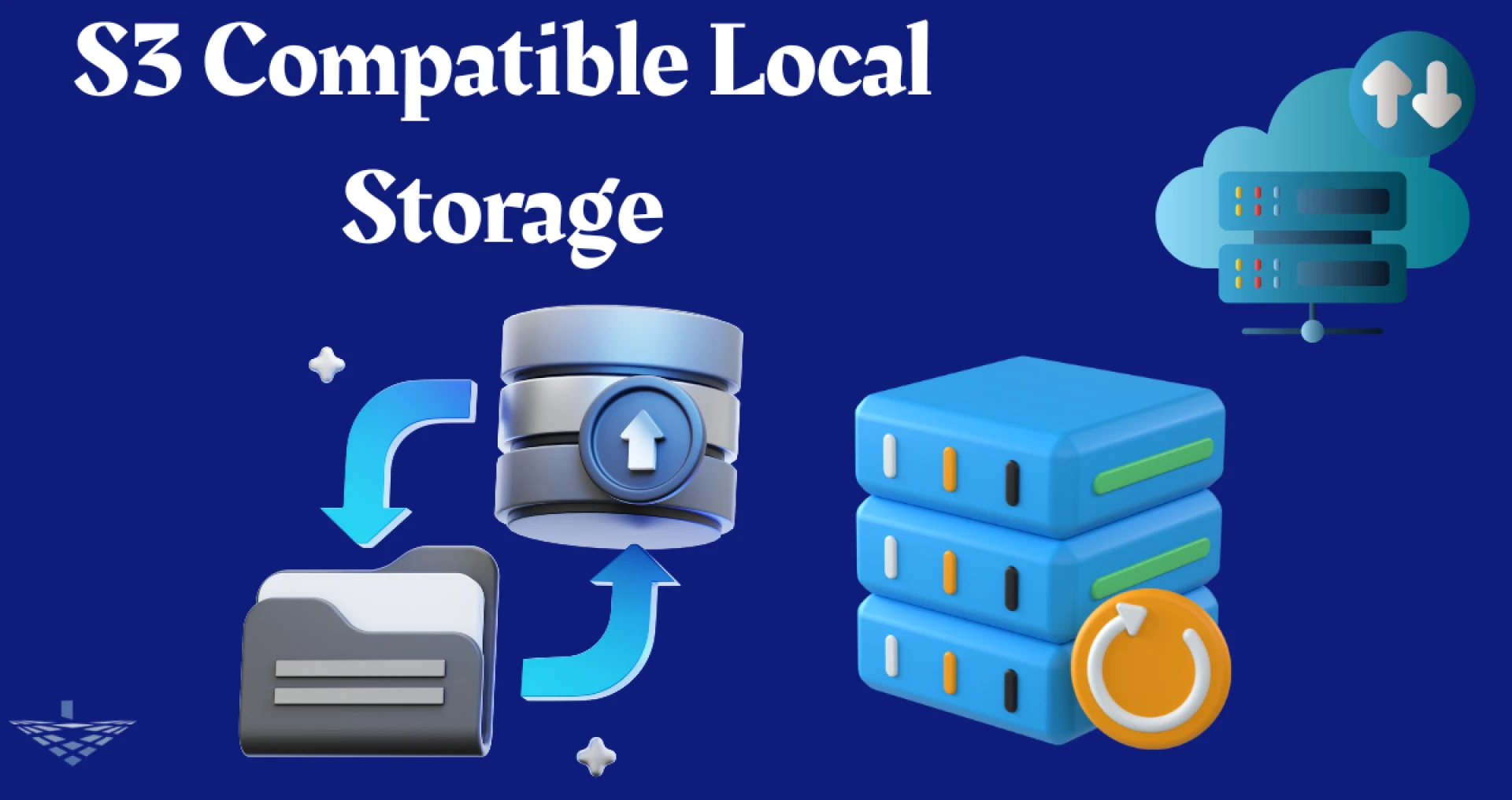
Organizations today face a constant deluge of unstructured data, from multimedia files to IoT sensor logs. Managing this growth efficiently while maintaining control and security presents a significant challenge. Many are discovering the power of deploying S3 Local Compatible Storage to build a robust, scalable, and secure data foundation right within their own data centers. This approach combines the flexibility and powerful API of cloud object storage with the security and performance benefits of an on-premise solution.
The Rise of Private Cloud Storage
As data volumes explode, traditional storage methods like Network Attached Storage (NAS) and Storage Area Networks (SAN) are showing their limitations. They can be complex to manage at scale and often come with high costs for expansion. This has led many businesses to seek alternatives that provide greater agility and cost-effectiveness without sacrificing control over their critical data assets.
Object storage has emerged as the modern standard for handling massive amounts of unstructured data. Instead of a complex file hierarchy, it uses a flat address space. Data is stored as objects, each bundled with its metadata and a unique identifier. This simple structure allows for immense scalability and simplified data management.
Why Bring Object Storage In-House?
While public cloud services offer convenience, they aren't always the right fit. Concerns over data sovereignty, compliance with regulations like GDPR or HIPAA, and unpredictable data egress fees can make public cloud a non-starter for certain workloads. An on-premise object storage solution provides a compelling alternative, offering several key advantages.
- Complete Data Control: Your data stays within your physical or virtual infrastructure, giving you full control over its security and governance. This is crucial for industries with strict regulatory requirements or those handling sensitive intellectual property.
- Enhanced Performance: By locating storage closer to the applications and users that need it, you can significantly reduce latency. This is vital for performance-sensitive applications like data analytics, machine learning, and high-resolution media workflows.
- Predictable Costs: With an on-premise solution, you avoid the variable and often surprising costs associated with moving data out of a public cloud provider's network (egress fees). Your costs are predictable, based on your infrastructure investment rather than your data access patterns.
Leveraging the Power of a Familiar API
One of the most significant developments in object storage is the widespread adoption of the S3 API. It has become the de facto standard for object storage interaction, meaning a vast ecosystem of applications and tools is built to "speak" this language. When you deploy an S3 Local Compatible Storage system, you tap into this extensive ecosystem without sending your data off-site.
Seamless Application Integration
Your development and DevOps teams can continue using the tools and SDKs they are already familiar with. There's no need for extensive retraining or rewriting application code. This compatibility allows for a smooth transition and enables a hybrid cloud strategy where workloads can be developed and tested against a common API, whether they are ultimately deployed on-premise or in a public cloud.
Building a Future-Proof Data Strategy
Choosing a solution with S3 API compatibility ensures your storage infrastructure is not a dead end. You gain the flexibility to adopt new applications, analytics platforms, and data protection tools as they become available. This prevents vendor lock-in and future-proofs your investment, allowing your storage platform to evolve alongside your business needs. For organizations looking to modernize their data centers, S3 Local Compatible Storage offers the perfect blend of control, performance, and modern application compatibility.
Conclusion
The need for scalable, secure, and cost-effective data storage is not going away. For organizations that require sovereignty over their data and predictable performance, bringing object storage in-house is a powerful strategy. By choosing a platform that is compatible with the industry-standard S3 API, businesses can build a private cloud that offers the best of both worlds: the agility and flexibility of modern storage with the security and control of an on-premise deployment. This approach empowers organizations to unlock the full value of their data while building a resilient and future-ready infrastructure.
FAQs
1. What is the main difference between object storage and traditional file storage?
Object storage manages data as distinct units called objects, stored in a flat address space, making it highly scalable for unstructured data. File storage organizes data in a hierarchical folder structure, which can become complex and inefficient at a very large scale.
2. Can I use my existing cloud applications with this type of on-premise storage?
Yes, if the on-premise solution is compatible with the S3 API, any application designed to work with that API can connect to your local storage system with minimal to no changes in configuration.
3. How does on-premise object storage help with data security and compliance?
It keeps your data within your own physical or virtual infrastructure, giving you complete control over security protocols, access management, and data placement. This makes it easier to comply with data sovereignty laws and industry-specific regulations.
4. Is it difficult to scale an on-premise object storage system?
No, these systems are designed for scale. You can typically start with a small deployment and easily add more storage nodes as your data grows, without disrupting ongoing operations.
5. Does using an on-premise solution mean I can't use public cloud services?
Not at all. An API-compatible on-premise system is a key enabler for a hybrid cloud strategy. You can use it for your primary, sensitive data while using the public cloud for less critical workloads, disaster recovery, or bursting capacity, all managed through a consistent set of tools.