Today, fuses and fuse holders are a vital part of ensuring electrical safety across all industries, including residential and commercial buildings and manufacturing plants, and are often one of the least visible components in electrical safety products.
Fuses and their holders are used to protect electrical circuits and equipment from the damaging effects of excessive currents or temperatures by breaking the circuit during abnormal conditions. This blog explains everything you need to know about fuses and holders, including their types, uses, and applications in the workplace, so that you can make educated decisions regarding electrical safety.
What Is a Fuse and Why Is It Important?
A fuse is an electrical safety device designed to protect circuits from overcurrent conditions such as short circuits or overloads. It consists of a metal element that melts when the current exceeds a specified limit, thereby breaking the circuit and stopping the flow of electricity.
The importance of fuses lies in their simplicity and reliability. Unlike complex electronic protection systems, a fuse responds instantly to excessive current, minimizing damage to cables, appliances, and connected equipment. Once a fuse operates (or “blows”), it must be replaced, ensuring a visible and unmistakable sign of a fault.
Understanding Fuse Holders and Fuse Carriers
A fuse alone cannot function effectively without a proper mounting mechanism. This is where fuse holders and fuse carriers come into play.
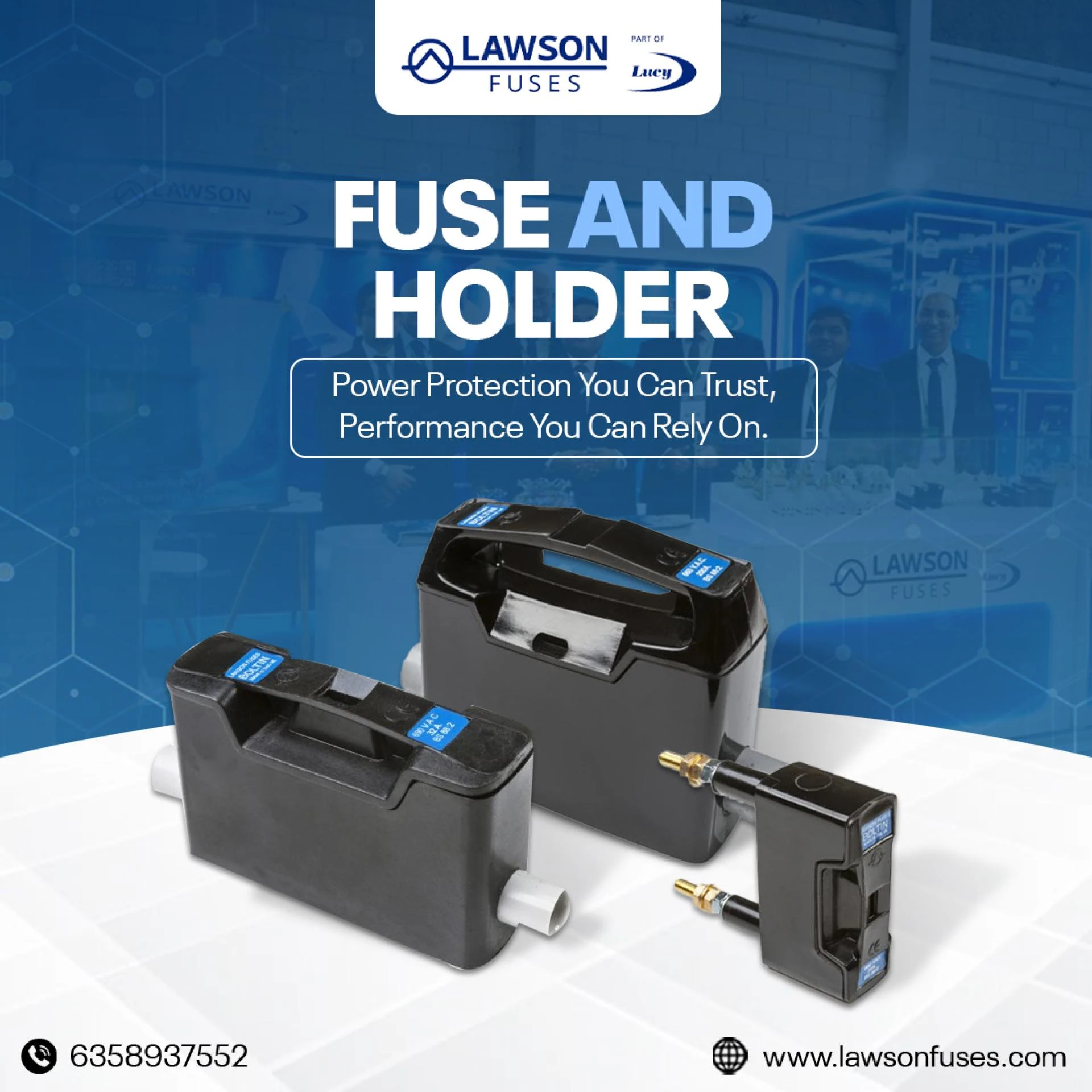
A Fuse Carrier is the removable part that holds the fuse element itself. It allows safe insertion and removal of the fuse without direct contact with live components. Fuse carriers are especially common in industrial and distribution panels where maintenance and quick replacement are critical.
Fuse holders, on the other hand, provide mechanical support, electrical insulation, and secure connectivity. Together, the fuse holder and fuse carrier ensure that the fuse operates safely and reliably under both normal and fault conditions.
Key Functions of Fuses and Holders
The primary functions of fuses and holders include:
- Overcurrent Protection:Preventing damage due to excessive current flow
- Short Circuit Protection:Interrupting high fault currents quickly
- Equipment Safety: Protecting sensitive electrical and electronic devices
- Fire Prevention:Reducing the risk of overheating and electrical fires
- System Reliability: Ensuring stable and safe operation of power systems
Different applications require different fuse characteristics, which has led to the development of various fuse types.
Types of Fuses
1. HRC Fuse (High Rupturing Capacity Fuse)
An HRC Fuse is designed to safely interrupt very high fault currents without causing damage to the surrounding equipment. These fuses are constructed with high-quality ceramic bodies and filled with arc-quenching materials such as quartz powder.
Key features of HRC fuses include:
- High breaking capacity
- Consistent and reliable performance
- Excellent current-limiting characteristics
- Long service life
HRC fuses are widely used in industrial panels, transformers, motor protection circuits, and power distribution systems where fault levels are extremely high.
2. Cylindrical Fuse
A Cylindrical Fuse is one of the most commonly used fuse types in both residential and commercial applications. As the name suggests, it has a cylindrical shape with metal end caps.
Advantages of cylindrical fuses:
- Compact and standardized design
- Easy replacement
- Suitable for low to medium voltage applications
- Available in fast-acting and time-delay variants
Cylindrical fuses are frequently used in control circuits, lighting systems, household distribution boards, and small machinery.
3. Semiconductor Fuse
A Semiconductor Fuse is specifically designed to protect sensitive power electronic devices such as diodes, thyristors, IGBTs, and rectifiers. These components are extremely vulnerable to short circuits and require ultra-fast protection.
Characteristics of semiconductor fuses:
- Very fast operation
- Low let-through energy (I²t value)
- High current-limiting capability
- Precise protection for electronic components
Semiconductor fuses are commonly found in variable frequency drives (VFDs), UPS systems, inverters, solar power systems, and industrial automation equipment.
4. Other Common Fuse Types
In addition to the above, several other fuse types are used depending on application requirements:
- Rewireable fuses
- Blade fuses (automotive)
- Cartridge fuses
- Thermal fuses
Each type offers different levels of protection, response time, and application suitability.
Types of Fuse Holders and Carriers
Fuse holders are as important as the fuse itself. Selecting the correct holder ensures proper contact, cooling, and safety.
Panel-Mounted Fuse Holders
These are fixed to control panels and distribution boards, providing easy access for maintenance.
DIN-Rail Fuse Holders
Common in industrial control systems, DIN-rail holders offer modular installation and neat wiring arrangements.
In-Line Fuse Holders
Used in automotive and low-voltage applications, these holders are installed directly into wiring harnesses.
Industrial Fuse Carriers
Heavy-duty fuse carriers are designed for high-current applications, particularly with HRC fuses, offering safe isolation and robust mechanical strength.
Applications of Fuses and Holders
Fuses and holders are used across nearly every electrical sector:
- Residential Buildings:Protection of lighting circuits, appliances, and wiring
- Commercial Facilities:Power distribution boards, HVAC systems, elevators
- Industrial Plants:Motors, transformers, switchgear, and automation systems
- Renewable Energy:Solar inverters, battery storage systems, wind turbines
- Electronics and Semiconductors: Protection of sensitive power devices
- Automotive and Transportation:Vehicle wiring and auxiliary systems
Choosing the right combination of fuse type and holder ensures compliance with safety standards and enhances system reliability.
How to Choose the Right Fuse and Holder
When selecting a fuse and fuse carrier, consider the following factors:
- Rated current and voltage
- Breaking capacity
- Application type (motor, semiconductor, general load)
- Environmental conditions
- Standards and certifications
Incorrect selection can lead to nuisance tripping or, worse, inadequate protection.
Wrapping It Up!
Although fuses and holders might seem like small & straightforward devices, they are an essential part of electrical systems and play an important role in keeping us safe whilst using electrical systems properly and ensuring that they meet all aspects of performance.
There are various types of fuses that serve very different purposes within electrical systems, from heavy-duty HRC fuses, which protect industrial power supplies, to precisely rated Semiconductor fuses, which protect sensitive electronic devices. A properly paired fuse holder and fuse carrier are used with each type of fuse to provide the safe operation of that device or equipment, minimise downtime, and protect precious equipment.
Knowledge of the different types of fuses, their functionality, and their application will empower electrical engineers, facilities managers, and electricians to design electrical systems that are not only safer but also more reliable. As electrical load trees continue to increase throughout society, the proper selection of fuses and fuse holders will become even more critical for the continued safety and reliability of our electrical systems.