
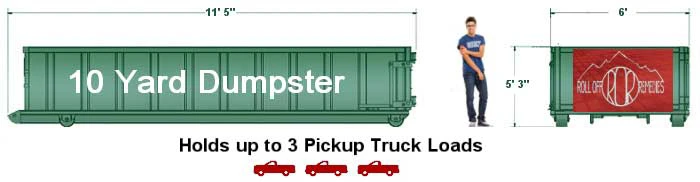
A 10 yard dumpster is widely regarded as one of the most compact and versatile waste containers available for residential and light commercial projects. It is commonly selected for small-scale cleanouts, minor renovations, and landscaping work where space is limited but efficiency is still required. Understanding exactly how large a 10 yard dumpster is helps ensure the right choice is made before starting any project, avoiding unnecessary costs or logistical challenges.
This guide provides a detailed explanation of dimensions, capacity, comparisons, and practical usage scenarios, helping readers visualize the size and suitability of a 10 yard dumpster with clarity and confidence.
What Does “10 Yard Dumpster” Mean?
Dumpster Volume Explained
The term “10 yard” refers to the internal volume of the container, measured in cubic yards. One cubic yard equals a space measuring three feet long, three feet wide, and three feet high.
A 10 yard dumpster therefore holds approximately:
- 10 cubic yards of debris
- 270 cubic feet of material
This measurement focuses on volume rather than weight, which is an important distinction when estimating how much waste can be loaded safely.
Why Cubic Yards Matter
Cubic yard measurements allow users to estimate capacity based on the physical space debris will occupy. Bulky but lightweight materials may fill the dumpster quickly, while dense materials may reach weight limits before filling the container completely. Volume determines how much fits, while weight determines how much is allowed.
Standard Dimensions of a 10 Yard Dumpster
Typical Measurements in Feet
Although dimensions may vary slightly depending on design, a standard 10 yard dumpster generally measures:
- Length: 10–12 feet
- Width: 7–8 feet
- Height: 3.5–4 feet
These proportions make it one of the shortest dumpsters available, allowing placement in driveways, small yards, or tight work areas.
Visualizing the Size
To better understand the footprint of a 10 yard dumpster:
- It is roughly the length of a small car
- It occupies about the same ground space as a standard parking spot
- The height is similar to a kitchen countertop
This compact footprint is a key reason why 10 yard dumpsters are popular for residential use.
Capacity: How Much Can a 10 Yard Dumpster Hold?
Pickup Truck Load Comparison
A common way to estimate dumpster capacity is by comparing it to pickup truck loads. On average, a 10 yard dumpster can hold:
- 3 to 5 pickup truck loads of debris
This estimate assumes standard truck beds filled level with mixed household or construction waste.
Common Items That Fit Inside
A 10 yard dumpster can typically accommodate:
- Furniture from a small room
- Yard waste from a moderate landscaping project
- Debris from a small bathroom renovation
- Drywall from one or two rooms
- Flooring materials from a limited area
It is best suited for projects that generate steady but manageable amounts of waste.
Weight Limits and Load Considerations
Typical Weight Allowance
While volume defines size, weight limits define safety and transport requirements. A 10 yard dumpster usually allows:
- 1 to 2 tons of material (2,000–4,000 pounds)
Exact limits depend on local regulations and disposal standards, but this range is considered typical.
Materials That Add Weight Quickly
Certain materials can reach weight limits faster than expected, even if the dumpster is not full:
- Concrete and bricks
- Soil and sand
- Roofing shingles
- Tile and stone
Heavy materials should be loaded carefully and evenly to avoid exceeding limits.
Common Uses for a 10 Yard Dumpster
Residential Cleanouts
A 10 yard dumpster is ideal for:
- Garage cleanouts
- Attic or basement decluttering
- Small estate cleanups
Its manageable height allows easy loading without special equipment.
Small Renovation Projects
This size is often chosen for:
- Bathroom remodels
- Small kitchen updates
- Flooring replacement in one or two rooms
Debris volume from these projects typically aligns well with a 10 yard capacity.
Landscaping and Yard Projects
Outdoor projects that benefit from a 10 yard dumpster include:
- Tree trimming debris
- Shrub and hedge removal
- Sod or soil replacement
The container can handle bulky organic waste without overwhelming the space.
Comparing a 10 Yard Dumpster to Other Sizes
Dumpster Size Comparison Table
Dumpster SizeApproximate Dimensions (ft)Typical CapacityBest For10 Yard10–12 L x 7–8 W x 3.5–4 H3–5 truck loadsSmall cleanouts, minor renovations20 Yard20–22 L x 7–8 W x 4–4.5 H6–8 truck loadsMedium renovations, roofing30 Yard22 L x 7–8 W x 6 H9–12 truck loadsLarge remodels40 Yard22 L x 7–8 W x 8 H12–15 truck loadsMajor construction
The 10 yard dumpster stands out as the most compact and accessible option in this lineup.
Key Differences to Note
- Shorter height makes loading easier
- Smaller footprint requires less space
- Lower capacity reduces the risk of over-ordering
These characteristics make it a practical entry-level choice for first-time renters.
Space Requirements for Placement
Driveway and Property Considerations
A 10 yard dumpster typically requires:
- A flat surface approximately 12 feet long and 8 feet wide
- Vertical clearance of at least 10 feet for delivery
It fits comfortably in most residential driveways without blocking access.
Accessibility Advantages
Because of its size:
- It can be placed closer to work areas
- It is easier to load by hand
- It causes minimal disruption to surrounding space
This convenience is a major factor in its popularity.
Benefits of Choosing a 10 Yard Dumpster
Cost Efficiency
Smaller dumpsters generally involve:
- Lower rental costs
- Reduced disposal fees
- Less risk of unused space
For small projects, this translates to better value.
Ease of Use
A 10 yard dumpster offers:
- Lower walls for easy lifting
- Compact size for quick filling
- Simple waste management for short-term projects
These benefits reduce physical strain and improve workflow.
When a 10 Yard Dumpster May Be Too Small
Projects That Exceed Capacity
A 10 yard dumpster may not be suitable for:
- Whole-house cleanouts
- Large deck demolitions
- Multi-room renovations
- Heavy construction debris
In such cases, choosing a larger size prevents delays and additional hauling.
Signs a Larger Dumpster Is Needed
- Waste volume is uncertain or expanding
- Materials are heavy and dense
- Project duration is long
When in doubt, sizing up can prevent overfilling and extra costs.
Estimating Whether a 10 Yard Dumpster Is Right
Practical Estimation Tips
To decide if this size is appropriate:
- Measure the area being cleared
- List the types of materials involved
- Estimate pickup truck equivalents
- Consider weight, not just volume
Careful planning ensures the dumpster meets project demands.
Professional Insight
Industry professionals often recommend a 10 yard dumpster as a starting point for small projects because it balances capacity, affordability, and convenience. It is often better to slightly underestimate size for compact projects than to overestimate and pay for unused space.
Key Takeaways About a 10 Yard Dumpster
- Holds 10 cubic yards or about 270 cubic feet
- Measures roughly 10–12 feet long, 7–8 feet wide, and 3.5–4 feet high
- Fits 3–5 pickup truck loads
- Ideal for small cleanouts, minor renovations, and landscaping
- Compact, accessible, and cost-effective
A 10 yard dumpster is best described as small in size but highly practical in application.
Final Overview
Understanding how large a 10 yard dumpster is goes beyond knowing its dimensions. It involves recognizing its capacity, weight limitations, placement requirements, and ideal use cases. This size offers a balanced solution for projects that generate a moderate amount of waste without requiring excessive space or cost.