
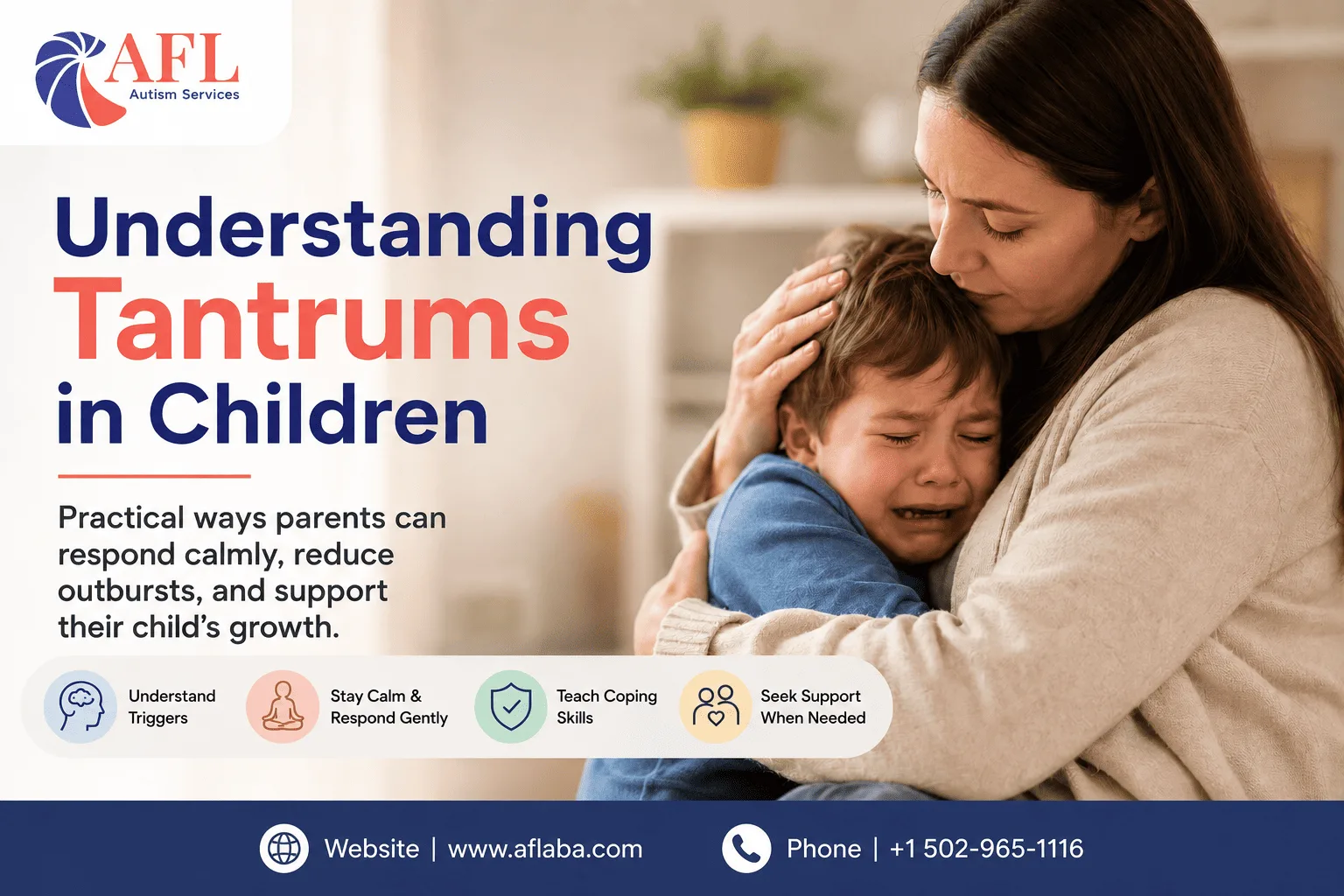
Few parenting challenges feel as overwhelming as a child having a tantrum in public or at home. One moment everything seems fine, and the next, your child is crying, yelling, or refusing to cooperate. While these situations can be stressful, tantrums are a normal part of childhood development.
Young children are still learning how to manage emotions, communicate their needs, and cope with frustration. Understanding why tantrums happen and how to respond effectively can help reduce their frequency and intensity over time. At Adapt For Life - AFL Autism Services, families are often encouraged to view tantrums as opportunities to teach emotional regulation rather than simply moments of challenging behavior.
Why Do Children Have Tantrums?
Tantrums often occur because children lack the emotional skills needed to express strong feelings appropriately. Frustration, disappointment, hunger, fatigue, overstimulation, and changes in routine can all contribute to emotional outbursts.
For toddlers and preschoolers, a tantrum is often the fastest way to communicate that something feels overwhelming. Rather than viewing the behavior as intentional misbehavior, it can be helpful to see it as a sign that a child needs support and guidance.
How to Stay Calm During a Tantrum
One of the most effective strategies is managing your own reaction first. Children often mirror the emotions of the adults around them. If a parent becomes angry or raises their voice, the situation can escalate quickly.
Consider these simple approaches:
- Speak in a calm, steady voice.
- Take a deep breath before responding.
- Move to a quieter environment if possible.
- Acknowledge your child's feelings.
- Avoid lengthy explanations during the height of the outburst.
Once children feel safe and understood, they are often able to regain control more quickly.
Recognizing Common Triggers
Many tantrums follow predictable patterns. Some children become upset when routines change unexpectedly. Others struggle with transitions between activities or environments.
Parents can often reduce tantrums by identifying recurring triggers such as:
- Hunger or thirst
- Lack of sleep
- Sensory overload
- Waiting too long for preferred activities
- Difficulty communicating wants and needs
Keeping notes about when tantrums occur can reveal patterns that help prevent future incidents.
Effective Strategies for Reducing Tantrums
Offer Simple Choices
Children often feel frustrated when they have no control over a situation. Providing two acceptable options can help them feel empowered.
For example, instead of saying, "Put on your shoes," try asking, "Would you like to wear the blue shoes or the red shoes?"
Create Predictable Routines
Children thrive on consistency. Daily routines help reduce uncertainty and make transitions easier. Visual schedules, timers, and reminders can be especially helpful for younger children.
Teach Emotional Vocabulary
Many children experience strong emotions but lack the words to describe them. Helping children identify feelings such as sadness, frustration, disappointment, or anger can improve communication and reduce behavioral outbursts.
Reinforce Positive Behavior
Praise children when they express emotions appropriately, follow directions, or recover from frustration calmly. Positive reinforcement encourages the behaviors parents want to see more often.
Tantrums Versus Sensory Overload
Not all emotional outbursts are the same. Some children experience sensory overload, which can look similar to a tantrum but has different underlying causes.
Bright lights, loud sounds, crowded environments, or unexpected changes may overwhelm a child's nervous system. In these situations, children often need a quiet, supportive environment to regain regulation rather than discipline or consequences.
Understanding the difference can help parents respond more effectively and compassionately. Professionals at Adapt For Life - AFL Autism Services often help families identify whether a child is experiencing a typical tantrum or a sensory-related meltdown so that the most appropriate support strategies can be used.
When Should Parents Seek Additional Support?
While occasional tantrums are a normal part of development, some situations may benefit from professional guidance. Consider speaking with a qualified professional if:
- Tantrums occur very frequently.
- Episodes last for extended periods.
- A child becomes aggressive toward themselves or others.
- Emotional regulation challenges interfere with daily activities.
- Communication difficulties contribute to ongoing frustration.
Early support can help children develop healthier coping skills and improve family well-being. Organizations such as Adapt For Life - AFL Autism Services provide evidence-based support that helps children strengthen communication, emotional regulation, and coping skills in everyday situations.
Final Thoughts
Tantrums can be challenging, but they are often a sign that children need help navigating emotions they do not yet fully understand. Responding with patience, consistency, and empathy can strengthen the parent-child relationship while teaching valuable self-regulation skills.
Over time, children learn healthier ways to communicate their needs, manage frustration, and navigate difficult situations. With the right support and strategies, families can move through these moments with greater confidence and less stress. For parents seeking additional guidance, Adapt For Life - AFL Autism Services offers resources and professional support designed to help children and families thrive.