Ensuring that a medicine works as intended involves more than just identifying the right active pharmaceutical ingredient (API). The body needs to be able to absorb that API effectively, and for tablets, this process often begins with dissolution. Tablet dissolution testing plays a crucial role in understanding how a solid oral dosage form, like a tablet, releases its active ingredient into a liquid medium, mimicking the conditions within the human body. This information is vital for predicting the drug's bioavailability – the rate and extent to which the API is absorbed into the bloodstream and becomes available at the site of action.
The Significance of Dissolution Testing in Pharmaceutical Development
Dissolution testing is not merely a regulatory requirement; it is an indispensable tool throughout the lifecycle of a pharmaceutical product. From early formulation development to quality control of marketed products, dissolution studies provide critical insights.
- Formulation Optimization: During the development phase, scientists use dissolution testing to compare different formulations, excipients (inactive ingredients), and manufacturing processes. This helps in selecting the formulation that provides the desired drug release profile for optimal therapeutic effect.
- Predicting Bioavailability: While in vitro dissolution does not perfectly replicate the complex in vivo environment, it serves as a valuable surrogate marker for predicting how the drug will behave in the body. A well-designed dissolution test can often correlate with bioavailability studies, reducing the need for extensive and costly human trials.
- Quality Control: As a batch-release test, dissolution ensures the consistency of drug product quality. Each batch of tablets must meet predefined dissolution specifications, guaranteeing that patients receive a product that will perform as expected.
- Post-Approval Changes: When manufacturers make changes to the formulation or manufacturing process after a drug has been approved, dissolution testing is crucial for demonstrating bioequivalence, showing that the modified product releases the drug at the same rate and extent as the original product. This helps avoid the need for new clinical trials.
- Troubleshooting Product Performance: If a marketed product exhibits unexpected clinical performance, dissolution testing can help identify potential issues related to drug release.
Key Parameters and Apparatus in Tablet Dissolution Testing
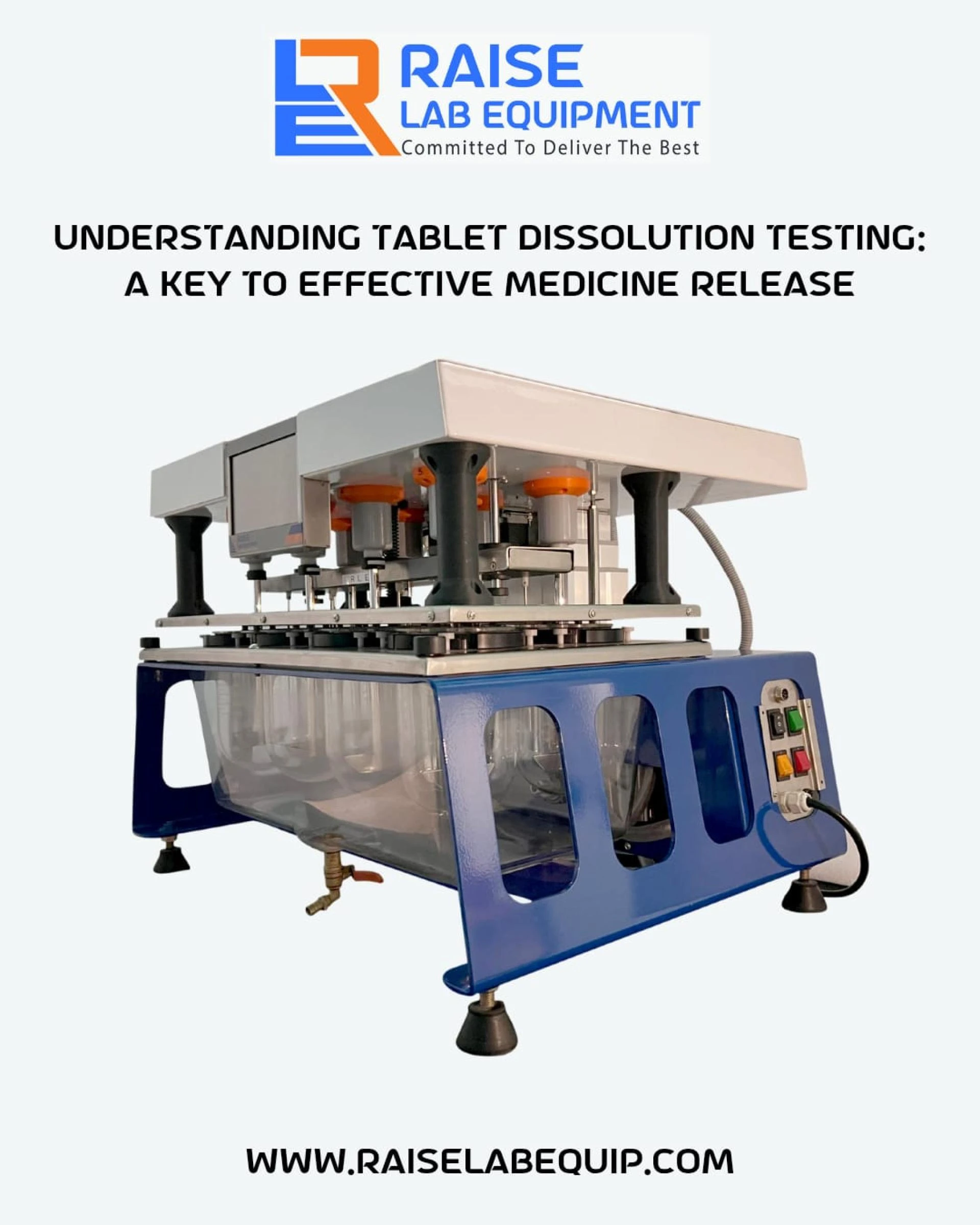
Conducting a meaningful tablet dissolution test requires careful consideration of several parameters and the use of standardized apparatus. The United States Pharmacopeia (USP) and other pharmacopoeias define several apparatus types, with Apparatus 1 (Basket) and Apparatus 2 (Paddle) being the most commonly used.
- Apparatus:
- Apparatus 1 (Basket): The tablet is placed in a mesh basket that rotates in the dissolution medium. This method is often used for floating dosage forms or those that tend to stick.
- Apparatus 2 (Paddle): The tablet is placed at the bottom of the vessel, and a paddle stirs the dissolution medium. This is a widely applicable method for immediate-release solid oral dosage forms.
- Other apparatus, such as Apparatus 3 (Reciprocating Cylinder), Apparatus 4 (Flow-Through Cell), Apparatus 5 (Paddle over Disk), Apparatus 6 (Cylinder), and Apparatus 7 (Reciprocating Holder), 1 are used for specific dosage forms or research purposes.
- Dissolution Medium: The choice of dissolution medium is critical as it should mimic the physiological conditions of the gastrointestinal tract where the tablet will dissolve. Common media include:
- Aqueous buffers: Solutions with controlled pH values (e.g., pH 1.2, 4.5, 6.8) to simulate the varying pH environments of the stomach and intestines.
- Water: Used for highly soluble drugs.
- Surfactant-containing media: Added to improve the solubility of poorly water-soluble drugs.
- Enzyme-containing media: Used to study the impact of enzymes on drug release.
- Agitation Rate: The speed at which the basket or paddle rotates affects the hydrodynamics within the dissolution vessel and thus the rate of drug release. The agitation rate is specified in the test procedure.
- Temperature: Dissolution testing is typically conducted at 37±0.5∘C to simulate body temperature.
- Sampling Time Points: Samples of the dissolution medium are withdrawn at predetermined time intervals to measure the amount of drug that has dissolved. The frequency and duration of sampling depend on the drug product and the objectives of the test.
Analyzing Dissolution Data and Interpreting Results
The data generated from dissolution testing is typically presented as a dissolution profile, which plots the percentage of drug dissolved over time. Analyzing these profiles helps in understanding the drug release characteristics of the formulation.
- Dissolution Rate: This refers to the amount of drug that dissolves per unit time under specified conditions. A faster dissolution rate generally leads to quicker absorption.
- Percentage Dissolved at Specific Time Points: Regulatory guidelines often specify the minimum percentage of drug that must be dissolved at certain time points (e.g., Q value at 30 minutes).
- Dissolution Efficiency (DE): This parameter quantifies the area under the dissolution curve up to a certain time point, providing a measure of the overall drug release.
- Mean Dissolution Time (MDT): This represents the average time for the drug to dissolve.
Comparing dissolution profiles of different formulations or batches can reveal significant differences in drug release. Mathematical models can also be applied to describe and predict drug dissolution behavior.
Challenges and Advancements in Dissolution Method Development
Developing a robust and discriminatory dissolution method can be challenging, especially for poorly soluble drugs or complex dosage forms. Factors such as media selection, hydrodynamics, and potential interactions with excipients need careful consideration.
- Biorelevant Dissolution Testing: There is a growing emphasis on developing biorelevant dissolution methods that better reflect the in vivo conditions. This includes using more complex media that mimic gastrointestinal fluids and incorporating factors like lipolysis and permeability.
- Microfluidic Dissolution Systems: These miniaturized systems offer advantages in terms of sample and solvent usage and allow for more controlled and dynamic studies.
- Real-Time Monitoring: Advances in analytical techniques are enabling real-time monitoring of drug dissolution, providing a more continuous understanding of the release process.
Conclusion: The Indispensable Role of Dissolution Testing
In conclusion, tablet dissolution testing is a cornerstone of pharmaceutical development and quality control. It provides crucial information about the rate and extent of drug release from solid oral dosage forms, which is directly linked to bioavailability and therapeutic efficacy. By understanding the principles, parameters, and advancements in dissolution testing, pharmaceutical scientists can develop and ensure the quality of effective medicines that ultimately benefit patients.