Urban homes often appear solid and self-contained from the outside, but what happens beneath the roof surface plays a major role in how well the structure performs over time. Roof ventilation is one of those systems that rarely gets attention until something goes wrong. In city environments, where buildings are closely packed and airflow is limited, proper ventilation becomes even more important. It affects not only the lifespan of the roof but also indoor comfort, energy efficiency, and moisture control.
Why Roof Ventilation Matters in Urban Living
In dense neighborhoods like Brooklyn, homes are often attached or built with minimal spacing between structures. This limits natural airflow around the building and increases heat retention. Without proper ventilation, heat and moisture become trapped inside the attic or roof cavity.
During summer, trapped heat can raise attic temperatures significantly. This heat transfers to the roofing materials from below, accelerating wear and causing shingles or membranes to age faster. In winter, the issue shifts to moisture. Warm air from inside the home rises and condenses when it meets the cold roof surface, leading to damp insulation, mold growth, and weakened wooden structures.
How Roof Ventilation Systems Work
A well-designed ventilation system relies on balance. It includes intake vents and exhaust vents working together to create continuous airflow.
Intake Vents
Intake vents are usually installed along the lower edge of the roof, often in soffits. Their role is to allow fresh, cooler air to enter the attic space. This incoming air pushes warm air upward and prepares it for removal.
Exhaust Vents
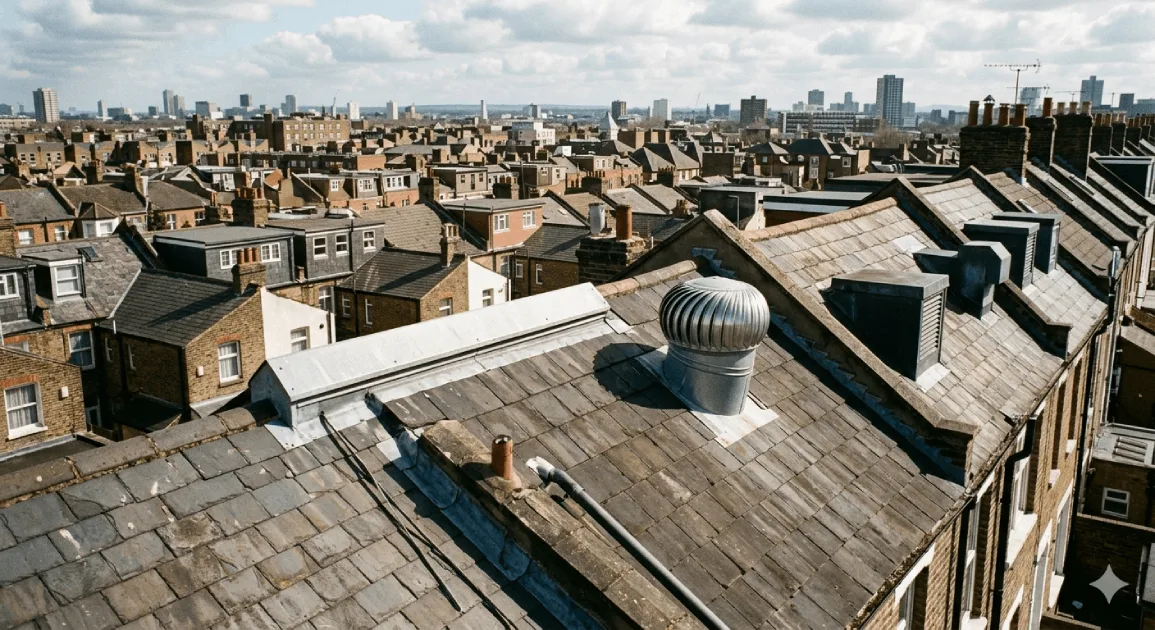
Exhaust vents are placed near the top of the roof. These vents release warm, moist air out of the attic. Common types include ridge vents, box vents, and turbine vents. When both intake and exhaust vents function properly, they create a natural airflow cycle that keeps the attic environment stable.
Common Types of Roof Ventilation Systems
City homes use different types of ventilation depending on roof structure and space availability.
Ridge and Soffit Vent Systems
This is one of the most effective systems for sloped roofs. Cool air enters through soffit vents and exits through ridge vents at the peak. This creates a steady upward flow of air without the need for mechanical assistance.
Box Vents and Static Vents
These are fixed vents installed on the roof surface. They allow hot air to escape but rely on natural airflow rather than active movement. They are commonly used when ridge vents are not suitable.
Turbine Vents
Turbine vents use wind to spin and pull hot air out of the attic. They are more active than static vents and can improve airflow in areas with consistent wind patterns.
Mechanical Ventilation Systems
In some urban properties where natural airflow is limited, powered attic fans may be used. These systems actively remove hot air, but they must be carefully balanced to avoid drawing conditioned air from the living space.
Challenges of Roof Ventilation in City Homes
Urban environments present specific challenges that make ventilation more complex.
Limited Space and Structural Design
Many city homes have compact attic spaces or flat roof systems. This limits where vents can be installed and how airflow is managed. Flat roofs, in particular, require specialized ventilation strategies to prevent moisture buildup.
Heat Retention from Surroundings
Buildings in close proximity reflect and trap heat. This increases the temperature around the roof and makes ventilation even more important. Without proper airflow, this heat can remain trapped inside the structure.
Older Construction Methods
Older homes may not have been built with modern ventilation standards. Retrofitting ventilation systems in these properties requires careful planning to avoid structural issues while improving airflow.
Signs of Poor Roof Ventilation
Homeowners often notice the effects of poor ventilation before they understand the cause.
Rising Energy Bills
If your home feels hotter in summer or harder to heat in winter, poor ventilation may be forcing your HVAC system to work harder.
Moisture and Mold Issues
Condensation inside the attic can lead to mold growth and damp insulation. This not only damages the structure but also affects indoor air quality.
Premature Roof Damage
Shingles that curl, crack, or lose granules quickly may be reacting to excessive heat buildup beneath them.
Ice Dams in Winter
Uneven roof temperatures can cause snow to melt and refreeze at the edges, leading to ice dams that trap water under roofing materials.
Improving Roof Ventilation
Upgrading or correcting a ventilation system does not always require a full roof replacement. In many cases, adjustments can significantly improve performance.
Ensuring Balanced Airflow
Adding more vents is not always the solution. The system must be balanced, meaning intake and exhaust vents work together in equal measure. Too much exhaust without intake can create negative pressure, while too much intake without exhaust traps hot air inside.
Clearing Obstructions
Blocked vents are a common issue. Insulation, debris, or improper installation can restrict airflow. Regular inspection ensures vents remain open and functional.
Professional Assessment
Because every home has a different structure, ventilation improvements should be based on a proper evaluation. Experienced roof ventilation experts in Brooklyn can assess airflow patterns, identify weak points, and recommend solutions that fit the building design.
Long-Term Benefits of Proper Ventilation
When ventilation is working correctly, the benefits extend beyond the roof itself. Roofing materials last longer because they are not exposed to extreme temperature fluctuations. Indoor comfort improves as temperature levels become more stable. Energy costs often decrease because heating and cooling systems operate more efficiently.
In urban settings, where environmental stress is constant, ventilation acts as a hidden support system that keeps the entire structure functioning smoothly. It protects the roof from within, ensuring that what lies beneath the surface is just as strong as what is visible from the outside.