Managing projects, organizing team activities, and improving workplace collaboration are essential for business success. As companies grow, they need reliable tools to manage tasks, track progress, and coordinate different departments. monday.com is a popular work management platform that helps businesses organize their operations through customizable boards, automation features, integrations, and project tracking tools.
However, before choosing this platform, businesses should understand its subscription options and available features. Selecting the right plan can help organizations manage their budgets while ensuring that employees have access to the tools they need.
What Makes monday.com a Popular Work Management Tool?
monday.com provides a centralized workspace where teams can plan projects, assign responsibilities, monitor deadlines, and communicate more effectively. Its visual interface makes it easier to understand project progress and identify tasks that require attention.
Businesses can customize their workflows according to their requirements. For example, marketing teams can use it to organize campaigns, sales departments can track potential customers, and project managers can monitor deadlines and employee responsibilities.
The platform also supports integrations with various business applications, helping organizations connect their existing tools and manage information more efficiently. These capabilities make it useful for startups, small businesses, and larger organizations looking to improve productivity.
Understanding the Different Subscription Options
One of the most important considerations before adopting any business software is understanding its subscription structure. monday.com offers different plans designed for individuals, growing teams, and large organizations.
The Free plan provides basic work management features for individuals and small teams. Paid plans offer additional capabilities, including advanced project views, automation, integrations, and collaboration options.
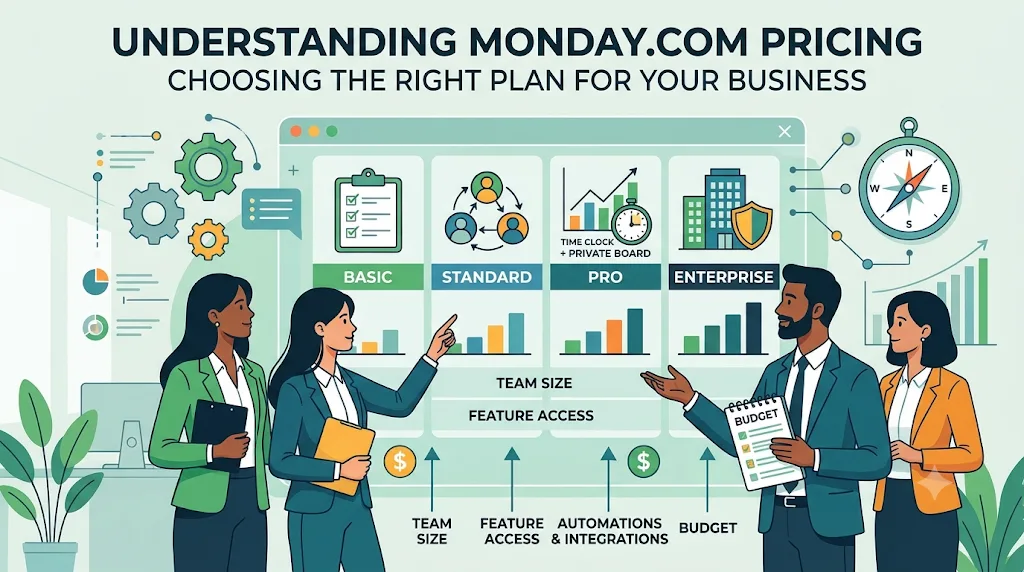
When comparing monday.com pricing, businesses should consider their team size, required features, and billing preferences. The Basic plan is suitable for teams that need essential task management capabilities, while the Standard plan provides additional collaboration tools, integrations, and automation features.
The Pro plan is designed for organizations that require more advanced reporting, private boards, time tracking, and higher automation limits. Enterprise plans offer customized solutions for organizations with more complex operational requirements.
How Much Should Businesses Budget for monday.com?
Subscription costs can vary depending on the selected plan, number of users, and billing frequency. Businesses should evaluate these factors before making a purchasing decision.
If you are wondering how much does monday.com cost, the answer depends on the features your organization needs and the number of seats included in the subscription. The platform offers different pricing levels, allowing businesses to select an option that matches their operational requirements.
Annual subscriptions can provide savings compared with monthly billing. However, companies should also consider their expected usage and long-term requirements before committing to a yearly subscription.
It is important to remember that monday.com uses seat-based pricing, with minimum seat requirements and pricing groups. Therefore, the final subscription amount may differ depending on the size of your team. Checking the official pricing page before purchasing is the best way to confirm current costs.
Factors to Consider Before Selecting a Plan
Choosing a subscription should involve more than comparing monthly prices. Businesses need to understand which features will provide the greatest value to their teams.
Here are some important factors to consider:
1. Team Size: Consider how many employees will actively use the platform. Selecting an appropriate seat allowance can help prevent unnecessary spending.
2. Required Features: Identify whether your business needs basic task management, advanced reporting, automation, or third-party integrations.
3. Automation Requirements: Teams managing repetitive activities may benefit from plans offering more automation actions and integration capabilities.
4. Budget Flexibility: Compare monthly and annual billing options to determine which payment structure works best for your organization.
5. Future Growth: Consider whether your selected plan can support additional employees, projects, and operational requirements as your business expands.
Benefits of Investing in the Right monday.com Plan
Choosing an appropriate subscription can improve workplace organization and make collaboration easier. Teams can manage their responsibilities from a centralized workspace instead of relying on scattered spreadsheets, emails, and disconnected applications.
Automation features can also reduce repetitive administrative work. Employees can receive automatic notifications, update project statuses, and manage recurring activities more efficiently.
Additionally, reporting and dashboard features help managers understand project performance and identify potential delays. Better visibility allows businesses to make informed decisions and allocate resources more effectively.
Conclusion
monday.com offers flexible work management solutions for businesses with different team sizes and operational requirements. Understanding its subscription options, available features, and billing structure can help organizations make better purchasing decisions.
Before selecting a plan, businesses should evaluate their budgets, collaboration needs, automation requirements, and future growth expectations. Choosing the right subscription can help teams improve productivity, simplify project management, and build more organized workflows.