Location is one of the most repeated terms in real estate. Everyone talks about it. But what actually defines a “good” location is not always clear. It’s not just about being central or well-known. There are layers to it. And those layers directly influence property demand.
In emerging cities, this becomes even more important. Because growth is uneven, some areas develop faster. Others take time. And this difference is usually driven by a location advantage.
A Real Estate Agent In Ranchi often explains this to buyers in practical terms. A location is not valuable by default. It becomes valuable when it supports daily life and long-term usability. That’s where demand begins.
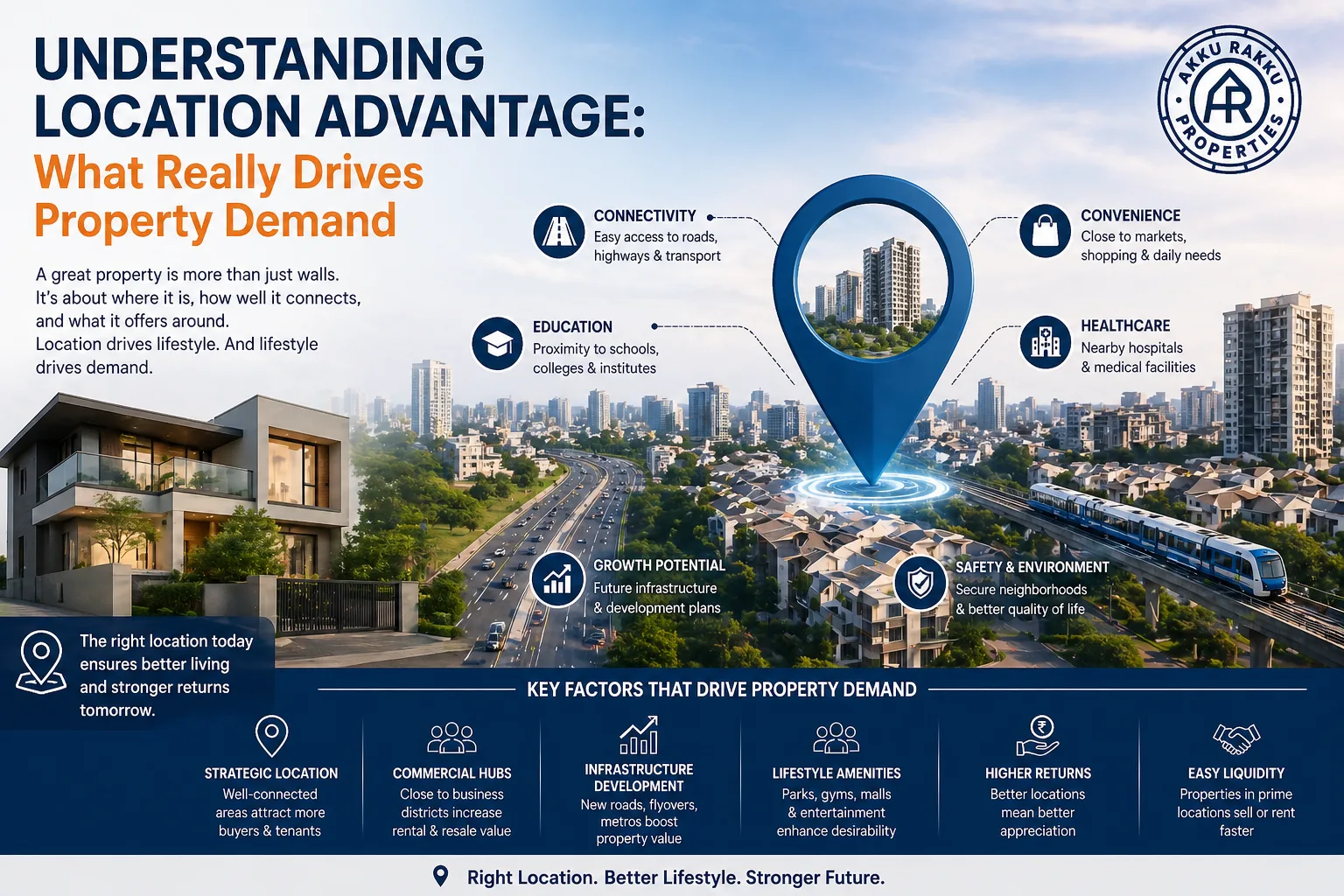
Let’s start with connectivity. It’s one of the strongest drivers. A location connected to main roads or highways naturally attracts more interest. Travel time reduces. Accessibility improves. For working professionals, this matters a lot. Long daily commutes reduce the appeal of even well-built properties.
But connectivity is not just about distance. It’s about ease. A shorter route with poor road conditions can feel longer than a slightly distant but smoother connection. These small differences affect buyer decisions.
Public transport adds another layer. Even if someone owns a vehicle, access to buses or shared transport increases flexibility. For tenants especially, this becomes a key factor. Areas with better transport options often see stronger rental demand.
Then comes social infrastructure. Schools, hospitals, local markets. These are part of everyday life. A property located near essential services reduces dependency on long travel. Families usually prioritize this. It may not be visible in property listings, but it strongly influences decisions.
Commercial activity also shapes location advantage. Areas with shops, offices, and small business hubs generate movement. This increases liveliness. And indirectly, safety. A location with regular activity feels more secure than isolated areas.
Infrastructure quality plays a major role too. Roads, drainage systems, water supply. These are basic, but critical. Poor infrastructure reduces usability. Even if the property itself is good, surrounding conditions affect overall experience.
Interestingly, demand often follows visible development. If an area shows ongoing construction, improved roads, or new projects, it builds confidence. Buyers feel that the location is growing. This perception influences demand significantly.
However, not all development is equal. Planned development creates sustainable growth. Unplanned expansion may lead to congestion and resource strain. Over time, this can impact property value.
Zoning and land use also matter. Residential areas near heavy industrial zones may face challenges like noise or traffic. On the other hand, mixed-use zones can offer convenience. Balance is important here.
Another factor is future potential. Locations with upcoming infrastructure projects—like new roads or commercial hubs—often attract early buyers. These areas may not look developed now, but they carry future promise. The challenge is timing. Growth may take years.
There’s also a psychological element. Buyers often prefer areas that are already popular. Even if alternatives offer better value. Familiarity creates comfort. This affects demand patterns.
Let’s take a simple example. Two locations offer similar properties. One is slightly developed, with basic infrastructure. The other is fully developed but more expensive. Some buyers choose the second for immediate comfort. Others choose the first for future growth. Both are valid decisions. It depends on priorities.
Safety is another important aspect. Street lighting, neighborhood activity, and general environment contribute to it. These are not always documented factors. But they influence buyer confidence.
For investors, location advantage is closely linked to appreciation potential. Areas with improving connectivity and infrastructure tend to perform better over time. Not instantly, but steadily.
Rental demand also depends on location. Properties near workplaces, educational institutions, or transport hubs attract more tenants. This improves occupancy rates.
Liquidity is influenced by location as well. Properties in well-connected and active areas are easier to sell. Because demand remains consistent.
Environmental factors are slowly gaining attention too. Water availability, drainage, and green spaces. These impact long-term livability. Buyers are becoming more aware, though not always fully.
Another subtle factor is noise and congestion. A location too close to busy roads may face constant disturbance. While complete isolation is also not ideal. Finding balance becomes important.
Location advantage is not fixed. It evolves. An underdeveloped area today may become a preferred zone tomorrow. This is common in growing cities.
But predicting this change requires observation. Not just announcements. Actual progress on ground matters more than future plans.
In many ways, location works like a foundation. It supports everything built on it. A good property in a weak location struggles. An average property in a strong location performs better.
This is why buyers are advised to spend more time evaluating location than the property itself. Because structure can be modified. Location cannot.
The idea is not to find the perfect location. That rarely exists. The goal is to find a location that aligns with purpose. Daily use or investment.
In the end, property demand is driven by how well a location supports life. Movement, access, convenience, and future growth. These factors work together.
Location is not just where a property exists. It’s how that property fits into the larger environment. And that’s what truly drives demand.