
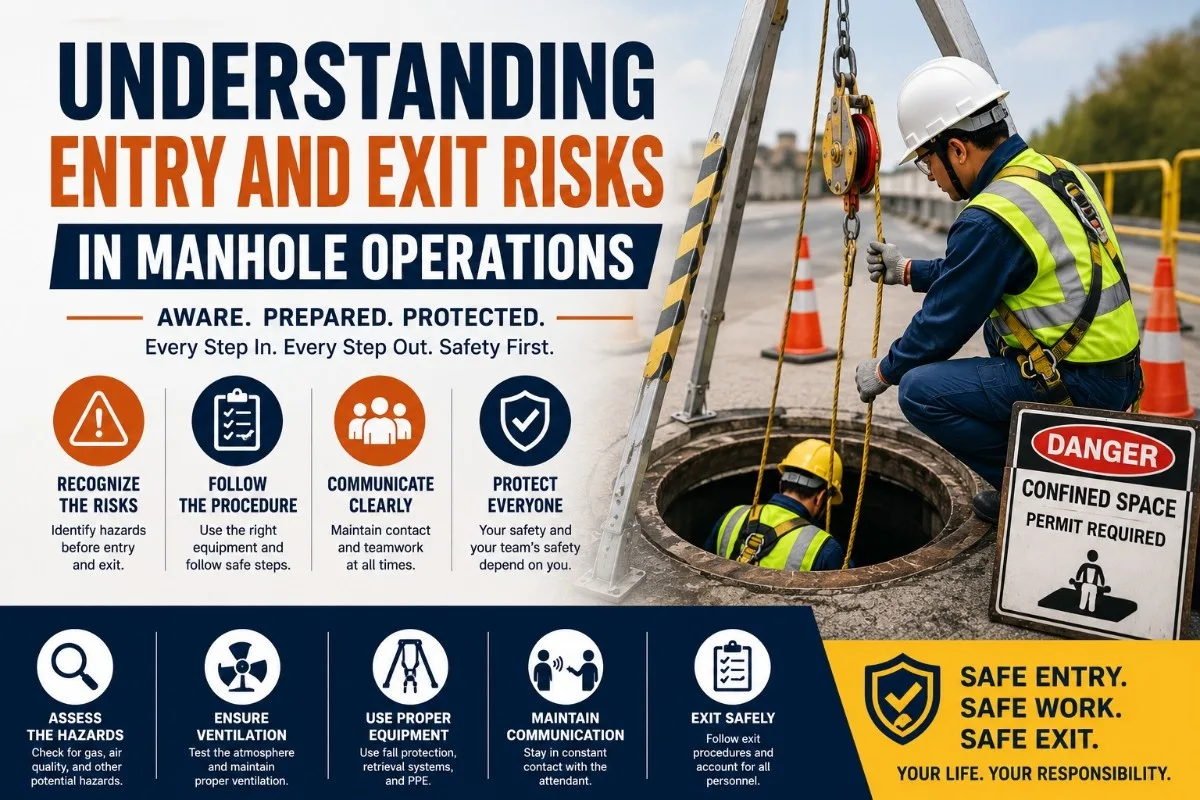
Manhole operations are an everyday occurrence for many workers in the utilities, construction, telecommunication, wastewater, and municipal industries. While the process of entering and exiting a manhole may seem simple, it can involve a variety of risks that need to be understood and addressed in order to ensure the highest level of worker safety.
Confined space incidents often occur during the entry and exit process due to the limited access, potential for hazardous atmosphere, poor visibility, and emergency evacuation procedures. Understanding the potential risks and hazards can help keep workers safe during confined space operations.
Why Manholes are Considered Confined Spaces
Manholes are considered confined spaces as they have limited means of entry and exit, are not designed for continuous occupancy, and may contain additional risks that are not readily apparent.
Some of the potential hazards associated with working in a manhole include:
• Oxygen-deficient atmosphere
• Toxic gases
• Flammable gases
• Water ingress
• Poor ventilation
• Limited working space
• Electrical hazards
It is important to understand these potential hazards in order to ensure the safety of those entering the confined space.
Hazards Associated with Manhole Entry
The entry process is one of the most crucial steps in any confined space entry. Prior to entry, it is important to understand and assess the potential risks and hazards associated with the manhole.
Hazardous AtmospheresOne of the most common hazards associated with manhole entry is the potential for a hazardous atmosphere. A confined space can contain a variety of atmospheric hazards such as oxygen deficiency, toxic gases, and flammable gases.
Atmospheric testing should always be carried out before entry and should continue throughout the duration of the work if there is a potential for atmospheric hazards.
Poor VentilationPoor ventilation can lead to the accumulation of hazardous gases within the confined space. It is important to ensure adequate ventilation within the manhole if there is a potential for atmospheric hazards.
Slips, Trips, and FallsThe process of entering and exiting a manhole can involve climbing ladders or other fixed access equipment. There is a potential for slips, trips, and falls during this process due to hazards such as wet surfaces and damaged ladder rungs.
It is important to carry out a risk assessment of the access equipment prior to entry and to always maintain three points of contact when climbing ladders.
Improper Use of Access EquipmentHazards such as damaged ladders or unstable covers can increase the risk of slips, trips, and falls during entry and exit. The following steps should be carried out to reduce the risk of injury:
Before entry:
• Check that ladders are in good working condition
• Ensure that access equipment is positioned correctly
• Check that the opening of the manhole is stable
• Ensure that the opening of the manhole is clear of obstructions
Hazards Associated with Working in a Manhole
Once inside the confined space, it is important to remain aware of potential hazards that may arise.
Some of the potential hazards that may occur while working in a manhole include:
• Release of hazardous gases
• Ingress of water
• Limited working space
• Heat stress
• Poor lighting
• Contact with underground services
• Fatigue
It is important to remain alert to these potential hazards while working in a confined space in order to reduce the risk of injury.
Hazards Associated with Exiting a Manhole
Exting a manhole can be just as dangerous as entering it. It is important to take extra precautions when exiting a manhole due to potential hazards such as fatigue, poor visibility, and wet or slippery ladder rungs.
It is important to ensure that tools and equipment are secured prior to exiting the confined space. It is also important to ensure that the ladder is positioned correctly and that the worker maintains three points of contact when climbing.
Confined space incidents can occur at any time and emergency planning should be carried out for all confined space operations. It is important to understand the emergency procedures for working in a confined space such as manhole entry and exit.
Some of the key components of an emergency plan for working in a confined space include:
• Rescue procedures
• Communication procedures
• Emergency contact details
• Availability of rescue equipment
• Roles and responsibilities of personnel
Workers should always be familiar with the emergency procedures for working in a confined space prior to entry.
Best Practices for Manhole Entry and Exit
It is important to follow best practices when entering and exiting a manhole in order to reduce the risk of injury. Some of the best practices for working in a confined space such as a manhole include:
• Conducting a risk assessment
• Testing the atmosphere before and during work
• Ventilating the confined space when necessary
• Checking ladders and other access equipment
• Wearing the appropriate PPE
• Maintaining communication with standby personnel
• Never working alone in a confined space
• Following the permit-to-work system
• Exiting the confined space if hazardous conditions arise
By following these best practices, workers can significantly reduce the risk of injury during manhole operations.
The Importance of Training
Understanding the potential hazards and best practices for working in a confined space such as a manhole requires proper training. It is important for workers to undergo professional safety training in order to understand the risks and develop the skills needed to work safely in a confined space.
Professional safety training can help workers understand:
• The hazards associated with working in a confined space
• The best practices for working in a confined space
• The requirements for atmospheric testing
• The use of PPE
• The emergency procedures for working in a confined space
Workers can undergo professional safety training such as the WSQ Perform Work in Confined Space Operations Safety Orientation Course for Manhole Workers (SOC-MH) in order to develop the skills needed to work safely in a confined space.
Final Thoughts
While the process of entering and exiting a manhole may seem simple, it is important to understand the potential risks and hazards in order to ensure the highest level of worker safety. By conducting a risk assessment, following the best practices for manhole entry and exit, and undergoing professional safety training, workers can significantly reduce the risk of injury during confined space operations.