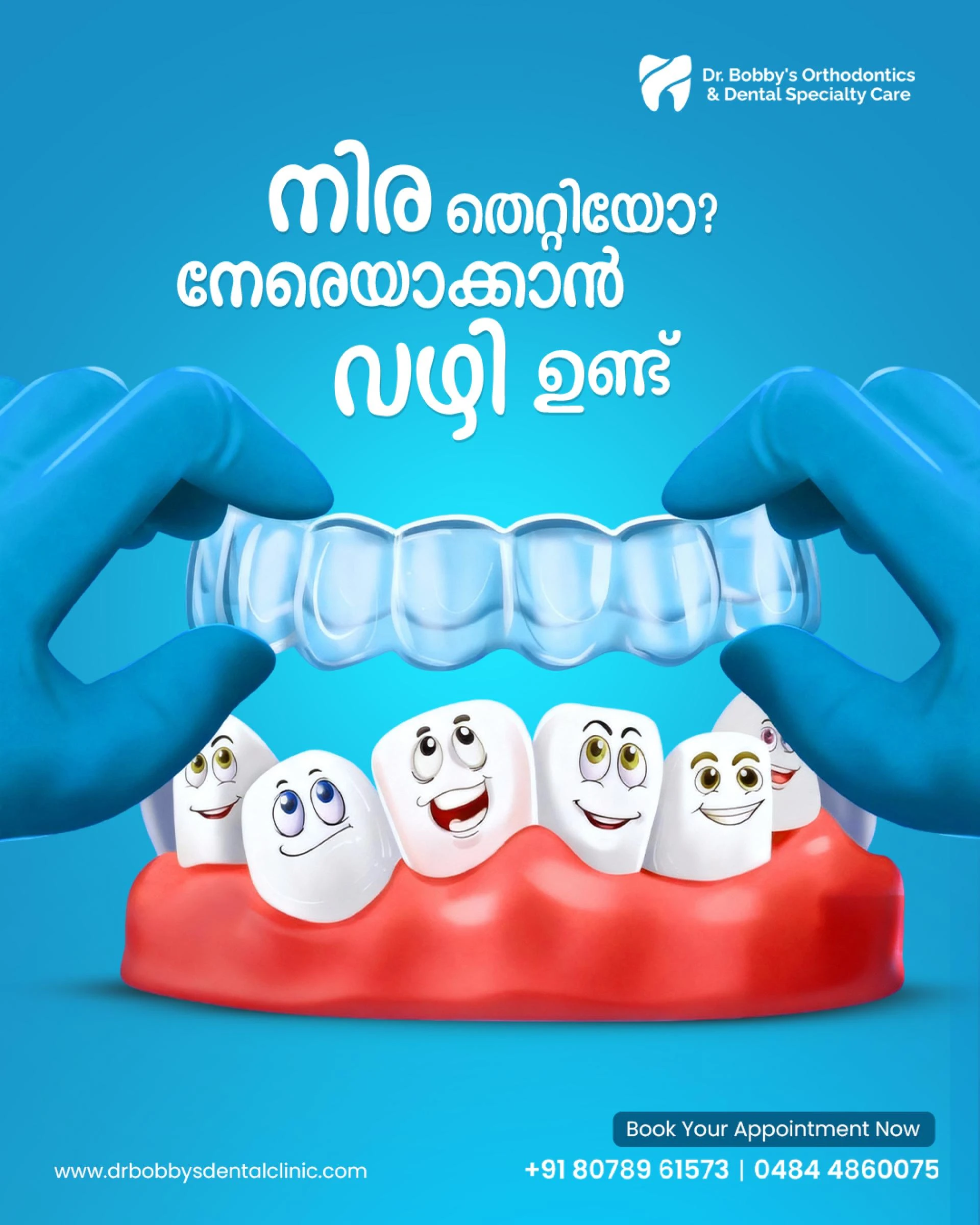
If you’ve ever considered straightening your teeth or correcting your bite, then braces might be the solution. At Dr Bobby’s Orthodontics in Kochi, the team explains clearly what braces are, how they work, and what options you have.
What Are Dental Braces?
Dental Braces are a type of dental appliance used in orthodontics to straighten teeth and correct their alignment and position. They also help with bite problems and jaw-alignment issues.
In essence, braces apply gentle, continuous pressure over time to move your teeth into a better position. This not only improves your smile, but also your oral health.
Why Get Braces?
Here are the key benefits:
- They help align crooked or mis-positioned teeth.
- They correct bite issues (overbite, underbite, crossbite) and jaw alignment.
- Better alignment leads to improved oral hygiene possibilities (since misaligned teeth can be harder to clean).
- They can enhance your facial aesthetics—properly aligned teeth and jaw structure often improve facial symmetry.
- In some cases, braces can even improve speech clarity, because when teeth or bite are misaligned, tongue placement and airflow may be affected.
What Happens During Treatment?
The typical process:
- Initial examination by an orthodontist to assess your teeth, bite, and jaw alignment.
- Based on your condition, a treatment plan is recommended — this may include tooth extractions in some cases.
- Brackets are attached to your teeth, arch-wires are inserted, and the system gradually shifts your teeth into the desired position.
- Regular check-ups and adjustments at the orthodontic clinic ensure progress is monitored and treatment stays on track.
Types of Braces — What Are Your Options?
There is no “one size fits all”. At Dr Bobby’s clinic, several options are available, and your orthodontist will guide you on what’s best given your condition, budget and preferences. Here’s a breakdown of common types:
- Metal braces: The traditional option — brackets and wires, effective for most cases, affordable, suitable for all age groups.
- Ceramic braces: Less visible than metal, better for moderate to severe misalignments, blend more with natural tooth colour.
- Lingual braces: Placed behind the teeth (on the tongue side), nearly invisible from the front — a good option if aesthetics is important.
- Clear aligners: Removable, virtually invisible and comfortable. Excellent for many cases where mild to moderate correction is needed.
- Self-ligating braces: Use special clips instead of elastic bands for securing the wire, making them easier to clean and maintain.
Your orthodontist will recommend the best fit for your dental condition and lifestyle.
Myths & Frequently Asked Questions
Some common concerns answered:
- Can braces improve speech? Yes — by correcting misaligned teeth or bite issues which may impact tongue placement and airflow, braces can improve speech clarity.
- What’s the difference between braces and aligners? Braces are fixed to the teeth and use metal brackets and wires to move teeth; aligners are removable, clear trays that gradually shift teeth. Braces are often better for complex cases, aligners more convenient/discreet.
- Will braces change my facial appearance? Yes — aligning jaws and teeth can change facial symmetry and appearance. Good orthodontic work considers not just teeth, but the overall dento-facial structure.
- How do braces affect eating and speaking? Initially there may be some discomfort; you may need to avoid hard, sticky or chewy foods and may experience slight speech changes which usually improve as you adjust.
- Fixed vs removable braces — what’s the difference? Fixed braces are attached to teeth (brackets + wires) and can handle more complex movements; removable braces/trays (like aligners) are taken out by the patient, often used for simpler corrections.
Why Choose a Specialist Clinic?
According to Dr Bobby’s clinic:
- They emphasize expertise in orthodontics — delivering high-quality treatment, personalized plans, and excellent results with minimal discomfort.
- They employ the latest orthodontic tools & techniques, increasing accuracy, effectiveness and comfort.
- They cater to all age groups — braces aren’t just for teenagers; adult orthodontics is increasingly common.
- They offer multiple treatment options so the patient can be guided to the best fit.
Things to Keep in Mind Before Starting
- Consult an experienced orthodontist for a full assessment — what works best for someone else might not be ideal for you.
- Discuss your budget, time‐frame, lifestyle and aesthetic preferences — these factor into the choice of braces type.
- Understand the commitment — orthodontic treatment takes time, visits, care in eating and hygiene.
- Follow instructions (for example, cleaning around braces, avoiding certain foods) to maximise results and minimise complications.
- Ask about after-treatment retainers — once your braces are off, maintaining the new position is crucial.
Final Thoughts
Braces are more than just a cosmetic treatment — they improve oral health, function, and appearance. With the right guidance and treatment plan, you can enjoy a healthier, more confident smile. Choosing a clinic with specialist expertise, modern tools and multiple treatment options will help you get the best outcome.