

When property access becomes unclear due to easements, it can cause stress and confusion. You might not know where your rights begin or end. This article explains how a commercial real estate lawyer in Long Island helps you understand, fix, and protect your property access with confidence and clarity.

What Are Easements?
Simply put, an easement means the right to use someone else’s land for a specific purpose—like using a shared driveway or utility path. It doesn’t mean ownership; it’s just legal permission.
For example, if your shop is behind another building, you might have the right to use a lane through that property to reach the road. However, when that right isn’t clearly written or registered, problems can start.
Types of Easements You Should Know About
When you deal with property access, it helps to know the main types of easements. Each one works differently and affects your rights in unique ways.
Right-of-Way Easement
This allows someone to travel across another person’s land to reach their own. For example, if your building is behind another, you might have a right-of-way through their driveway.
Utility Easement
This lets utility companies place power lines, water pipes, or communication cables on private land. These are common in both residential and commercial areas.
Private Easement
These are created between two property owners, often for driveways, shared walls, or drainage. They must be clearly written in legal documents to avoid confusion.
Easement by Necessity
This occurs when a property has no direct access to a public road. The law ensures that the owner can still reach their land, even through another’s property.
Why Easements Become Confusing
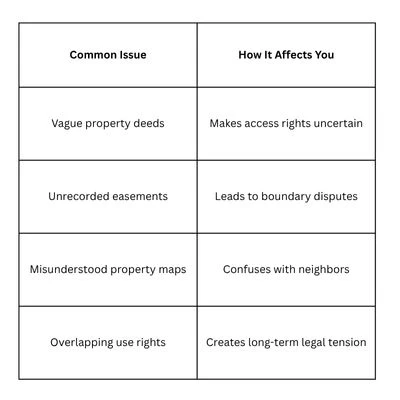
Easement problems usually appear when documents are old or unclear.
Understanding Easement Laws in Long Island
 Easement Rights Are Protected by State Law: In Long Island, easements are governed by local State Property Law, which defines how access rights are created, used, and protected.
 Recorded Easements Hold Stronger Legal Power: When an easement is properly recorded with the county clerk, it becomes legally binding and easy to prove in case of disputes.
 Unrecorded Easements Can Still Exist: Even if not officially recorded, long-term and continuous use of land may still create valid access rights under “prescriptive easements.”
 Clarity in Documents Prevents Future Disputes: Clear written descriptions of the easement area, purpose, and duration help avoid confusion between neighboring property owners.
 Local Zoning Rules Also Matter: Long Island zoning laws can affect easements related to driveways, utility access, or commercial property development, so legal review is essential.
 Legal Help Simplifies the Process: A commercial real estate lawyer in Long Island can interpret these state and local laws for you, ensuring your property rights remain safe and clear.
How Easement Issues Affect You
- Delays in Property Sales: Buyers often hesitate when access rights are unclear, slowing down the sale process.
- Reduced Property Value: Unclear easements can lower your property’s market value since investors avoid risky assets.
- Conflicts with Neighbors: Disagreements over shared driveways or boundaries can damage relationships and lead to legal action.
- Unexpected Legal Costs: Resolving easement disputes through court can become expensive and time-consuming.
- Business Disruptions: If you run a commercial property, blocked access can interrupt deliveries, parking, or customer entry.
How a Commercial Real Estate Lawyer Helps You
Reviews Your Property Documents
A lawyer carefully checks your property deeds, maps, and titles to spot any unclear or missing easement details. This helps you understand your exact legal rights before problems grow. They make sure every document supports your access clearly.
Clarifies Legal Boundaries and Rights
They interpret complicated legal terms and boundaries in simple language. This ensures you know where your property ends and someone else’s begins. With their help, you can confidently use your property without stepping into disputes.
Negotiates with Other Property Owners
Sometimes, easement issues involve neighbors or nearby businesses. Your lawyer acts as your voice, communicating clearly to reach fair solutions. This avoids unnecessary conflict while protecting your access rights.
Prepares and Files Legal Documents
They draft new or updated easement agreements and file them with the right county or city office. Proper documentation ensures your property rights are recorded officially and can’t be easily challenged later.
Represents You in Disputes
If matters go to court or mediation, your lawyer stands by you every step of the way. They present evidence, explain the law, and fight for your rightful access, helping you reach the best possible outcome.
Why You Shouldn’t Delay
- Memories Fade Over Time: People forget important details about agreements or property boundaries, which can weaken your case later.
- Property Records May Change: Documents and ownership details can be updated or lost, making it harder to prove your rights later on.
- Court Cases Become Costly: When disputes drag into court, legal fees and time commitments increase, causing unnecessary stress and expenses.
- Early Action Saves You Trouble: Addressing issues quickly helps you protect your rights, save money, and avoid long-term legal battles.
FAQs: Commercial Real Estate Lawyer
What is an easement, and why is it important?
An easement is a legal right to use someone else’s land for a specific purpose. It ensures property access, prevents disputes, and protects your rights, especially for commercial properties where access affects operations, deliveries, and property value.
When should I hire a commercial real estate lawyer?
You should hire a lawyer when easement access is unclear, blocked, or disputed. Early consultation helps protect your property rights, clarify legal boundaries, and resolve conflicts before costly litigation or operational delays occur.
Can unrecorded easements still be legally valid?
Yes, unrecorded easements may exist under “prescriptive” or implied rights. Continuous use or historical agreements can create valid legal claims, but proper documentation and legal verification are essential to avoid future disputes.
How can a lawyer prevent future easement problems?
A lawyer reviews property deeds, drafts clear agreements, files proper documents, and advises on local zoning. This proactive approach secures your access rights, prevents disputes, and ensures smooth property transactions in the future.
Other Common Easement Problems You Might Face
- Driveway or parking access is suddenly blocked.
- Neighbor disputes over fences or boundaries.
- Utility lines crossing through private land.
- Shared paths or service roads are unclear in ownership.
However, a commercial real estate lawyer in Long Island can help you understand what applies to your case and fix it without unnecessary conflict.
The Long-Term Benefits of Legal Clarity
When you clarify your easements early, you gain more than just peace of mind.
- Better property value: Buyers trust clean legal records.
- Smoother sales or leases: No hidden disputes block your deals.
- Improved relationships: Neighbors or business partners respect clearly defined rights.
- Less stress: You enjoy your property confidently, knowing your rights are secure.
Securing Your Property Access with Expert Legal Guidance
So, when unclear easements block your access, don’t wait until things escalate. A commercial real estate lawyer in Long Island can make complex laws simple for you, protect your property rights, and secure your peace of mind.
If you need help understanding your property rights or resolving an easement dispute, contact Alhorn Law. They specialize in commercial real estate, providing reliable, client-focused solutions in Long Island. Secure your property access—contact them for expert commercial real estate legal guidance today!