Jaisalmer rises out of the Thar Desert like a golden mirage, earning its famous moniker as the Golden City of India. Every sandstone wall, carved balcony, and sweeping dune tells a story of ancient trade routes, royal heritage, and resilient desert hospitality. Planning a trip to this western frontier of Rajasthan requires balancing heritage exploration inside the bustling city with serene, authentic experiences out in the open desert. Based on our direct on-ground hospitality experience hosting thousands of travelers at Magra Desert Camp, we have crafted this practical, time-tested travel itinerary to help you experience the very best of Jaisalmer without rushing or falling into common tourist traps.
Day 1: Exploring the Living Citadel and Royal Havelis
Morning: Jaisalmer Fort (Sonar Quila)
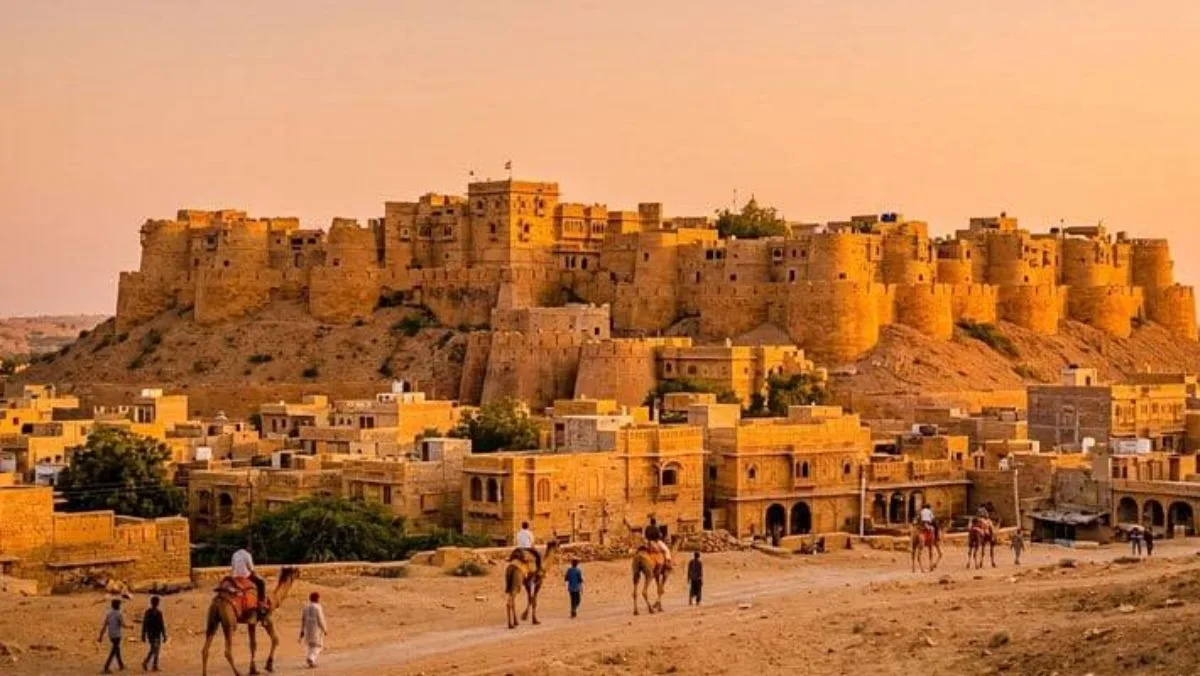
Begin your journey early at around 8:30 AM at Jaisalmer Fort before the desert sun reaches its peak and tour groups crowd the narrow lanes. Unlike most forts in India that stand as empty monuments, Sonar Quila is a living fort where nearly a quarter of the old city's population still resides. Walk through the massive fortified gates—Akhai Pol, Ganesh Pol, Suraj Pol, and Hawa Pol—to reach the main courtyard. Inside, explore the intricately carved 15th-century Jain Temples dedicated to Rikhabdevji and Sambhavnathji, and tour the Fort Palace Museum to see royal artifacts and panoramic views over the sandstone rooftops.
Afternoon: Patwon Ki Haveli, Nathmal Ki Haveli, and Salim Singh Ki Haveli
After enjoying a traditional Rajasthani lunch featuring ker sangri and bajra roti, head down into the old city lanes to admire Jaisalmer's architectural masterpieces. Start at Patwon Ki Haveli, a cluster of five interconnected mansions built by a wealthy brocade merchant family. Examine the delicate yellow sandstone latticework (jharokhas) that looks almost like woven lace. Continue to Nathmal Ki Haveli, famous for the two elephants carved out of solid stone guarding its entrance, and conclude your architectural walk at Salim Singh Ki Haveli, instantly recognizable by its distinctive peacock-shaped arched roof.
Evening: Sunset Boat Ride at Gadisar Lake
Wrap up your first day at Gadisar Lake, a historic rainwater conservation reservoir built in the 14th century. Arrive by 5:00 PM to take a peaceful paddleboat ride across the calm water surrounded by carved chhatris (cenotaphs), temples, and shrines. As the sun dips below the horizon, the golden sandstone pavilions reflect vividly on the water, offering one of the best photography spots in the city.
Day 2: Abandoned Heritage Villages and the Thar Desert Experience
Morning: Bada Bagh and Kuldhara Ghost Village
Check out of your city hotel after breakfast and drive westward toward the Thar Desert. Your first stop, located about six kilometers north of Jaisalmer, is Bada Bagh—a serene garden complex housing the royal cenotaphs of the Maharajas of Jaisalmer. From there, continue along the desert highway to Kuldhara, an abandoned 13th-century village of the Paliwal Brahmins. Walking through the silent, roofless stone houses offers a fascinating glimpse into desert history and local folklore before you venture deeper into the dunes.
Afternoon: Arriving at Sam Sand Dunes
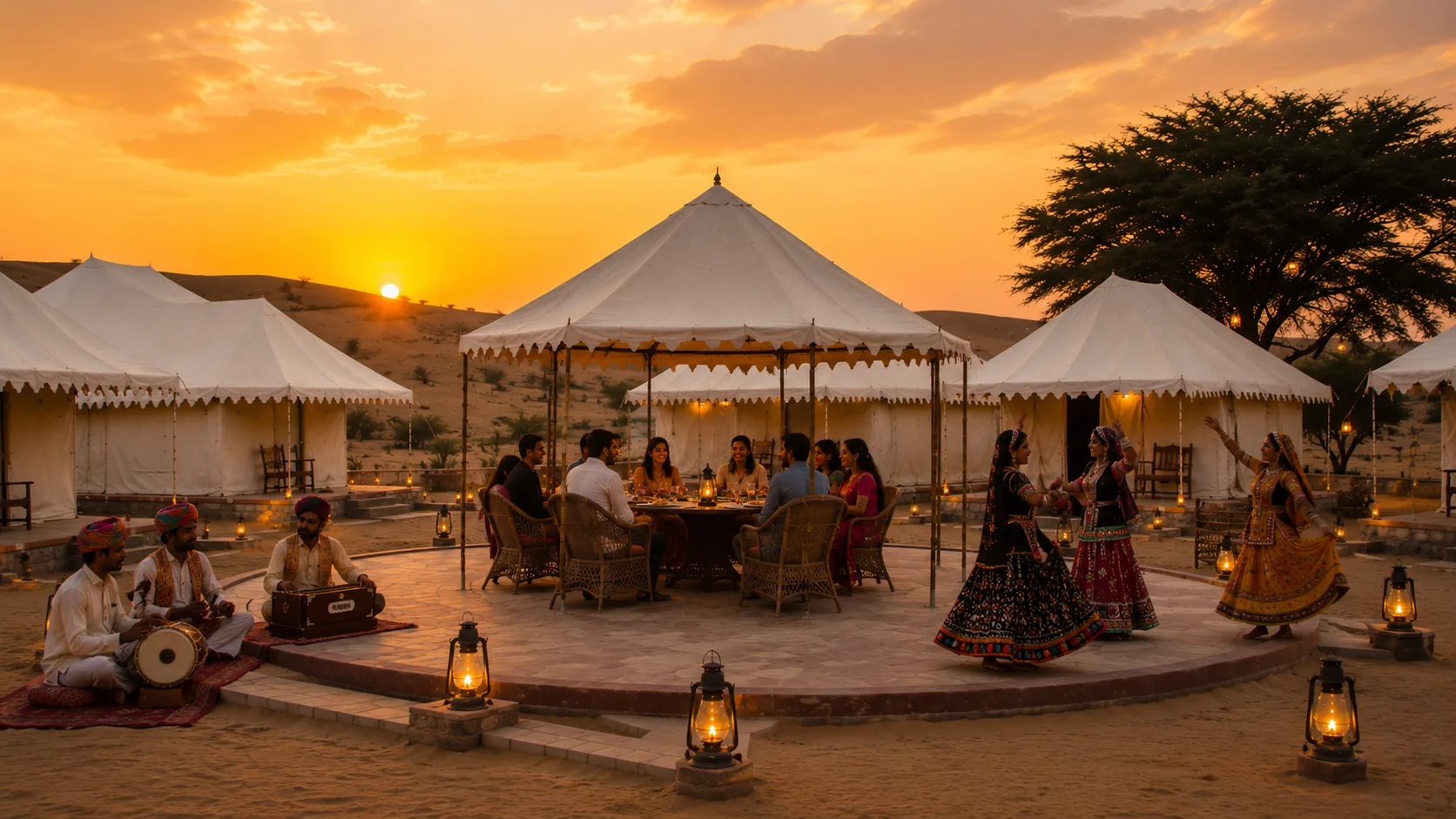
By mid-afternoon, you will reach the vast, wind-sculpted ridges of Sam, located roughly 40 kilometers from the city center. Choosing a reputable desert camp in sam sand duens ensures you enjoy effortless access to the tallest sand ridges while staying tucked away from noisy roadside crowds. Upon arriving at Magra Desert Camp in Kanoi, our hospitality team welcomes you with traditional refreshments and helps you settle into your accommodation. Booking a spacious swiss tent in Jaisalmer gives you the authentic charm of canvas desert living paired with essential modern comforts, including comfortable bedding, clean attached bathrooms, and reliable hot water after a dusty afternoon.
Evening: Camel Safari, Cultural Performances, and Stargazing
Around 4:30 PM, head out into the rolling dunes via a traditional camel ride or an exhilarating 4x4 jeep safari to witness the desert sunset. As twilight settles and the desert temperature drops rapidly, return to camp to gather around a warm bonfire night on dunes in Jaisalmer. Local Manganiyar folk musicians and Kalbelia dancers bring the evening to life with soulful melodies and swirling traditional performances. Following a freshly prepared Rajasthani buffet dinner featuring dal baati churma, take time to look upward—far from city light pollution, the Thar sky reveals brilliant constellations and the Milky Way.
Day 3: Desert Sunrise and Departure
Morning: Quiet Sunrise Walk and Local Markets
Wake up early on your final morning to walk barefoot across the cool, undisturbed sand ripples as the first rays of sunlight turn the dunes pale gold. After a hearty breakfast at the camp, drive back toward Jaisalmer city. Before heading to the railway station or airport, spend an hour browsing Sadar Bazaar and Pansari Bazaar for authentic souvenirs, including hand-woven camel wool shawls, mirror-work textiles, and handcrafted leather mojari footwear.
Essential Travel Tips for Visiting Jaisalmer
- Best Time to Visit: Plan your trip between October and March, when daytime temperatures stay pleasant between 20°C and 28°C and desert nights are crisp and comfortable.
- Smart Packing Essentials: Carry breathable cotton clothing for daytime sightseeing, a warm jacket or shawl for chilly desert evenings, high-SPF sunscreen, sunglasses, and comfortable closed-toe shoes for walking on warm sand.
- Verify Camp Inclusions: Before finalizing your desert stay, always confirm whether your package includes evening folk entertainment, buffet dinner, breakfast, camel or jeep safaris, and applicable taxes so there are no surprises upon arrival.
- Respect Local Heritage: Jaisalmer Fort and nearby desert villages rely on fragile ecosystems and centuries-old sandstone structures—carry a reusable water bottle, avoid single-use plastics in the dunes, and always ask permission before photographing local residents.