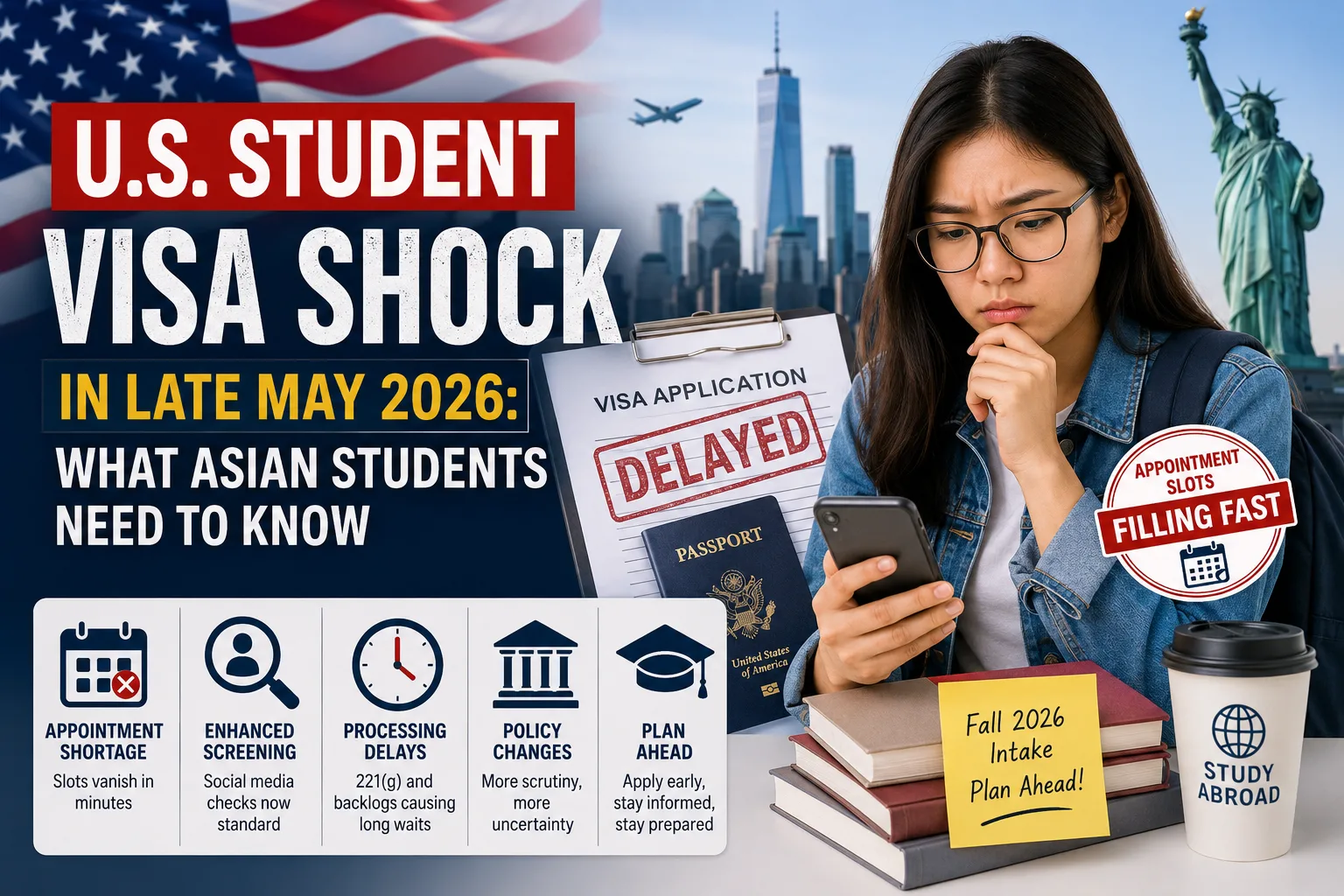
The dream of studying in the United States remains strong across Asia, but the path to getting there has become far more complicated. In late May 2026, thousands of students found themselves facing a difficult reality: visa appointments were available again, yet securing one felt almost impossible. Interview slots disappeared within minutes, administrative processing delays increased, and enhanced screening measures added new layers of uncertainty.
For many students, the challenge is no longer getting accepted into a university. The bigger obstacle is navigating a visa system that has become slower, more competitive, and less predictable. This shift is changing how students plan their education, finances, and even their choice of study destination.
The Perfect Storm Behind the 2026 Visa Crunch
Several developments have collided to create the current situation.
Demand for U.S. education remains high, particularly among students from India, China, Nepal, Bangladesh, and other Asian nations. At the same time, consulates are dealing with expanded security reviews, staffing pressures, and processing backlogs that began building months earlier. The result is a system struggling to keep pace with demand.
The biggest operational change has been the expansion of social media and online presence screening. What was once reserved for selected cases has become a routine part of student visa adjudication. Consular officers may review years of online activity as part of the application process, increasing the time required for each case.
Think of it like adding another checkpoint to an already crowded highway. Even if traffic volume stays the same, every extra inspection slows movement for everyone behind it.
Why Appointment Slots Are Vanishing So Fast
Many students assumed that once visa services resumed, the worst would be over. Instead, a new problem emerged.
During April and May 2026, U.S. missions resumed broader visa operations, but appointment slots were released in limited batches. Students reported that available F-1 interview dates for June and July disappeared almost immediately after becoming available. Those months are critical because they align with preparation for the Fall 2026 intake.
The rush has created a stressful environment where applicants repeatedly refresh booking portals hoping to secure a slot. Some students spend weeks monitoring availability with little success. For first-generation international students, the process can feel overwhelming because they often lack access to experienced advisors or professional guidance. Even after obtaining an appointment, uncertainty remains. Administrative processing reviews have become more common and can delay visa issuance for weeks or months. Missing an academic start date can create financial and academic consequences that extend far beyond a single semester.
Asian Students Face the Greatest Impact
Not all regions are affected equally.
South Asian countries generate enormous demand for U.S. student visas. India alone accounts for a significant share of international enrollment, meaning any disruption quickly affects thousands of applicants. When appointment systems slow down, the backlog grows rapidly because so many students are competing for the same limited capacity.
Many students from the region also depend on scholarships, family financing plans, and fixed enrollment schedules. Delays can mean losing housing arrangements, scholarship opportunities, or preferred course registration windows. Students in East and Southeast Asia face similar policy changes, but many have stronger alternative options in destinations such as Japan, Singapore, and Australia. As uncertainty around U.S. visa processing grows, some are beginning to reconsider where they pursue higher education.
The Rising Importance of Digital Footprints
One of the most significant changes in the visa process is the increased attention given to applicants' online activity.
Social media profiles, public posts, professional networks, and digital histories are increasingly viewed as part of an applicant's overall profile. Consular officers may compare online information with statements made in applications and interviews to identify inconsistencies.
This means students should think about their online presence long before their interview date. Public information should align with academic goals, employment history, and future plans described in official documents.
At the same time, applicants should avoid relying on social media for visa advice. Rumors spread quickly, and outdated information often circulates long after policies have changed. Universities and immigration professionals consistently recommend verifying information through official embassy websites and trusted institutional channels.
Students seeking support while managing admission requirements, academic planning, and study-abroad preparation often turn to platforms like Expertsmind.com that connect students with verified tutors and academic experts, particularly when visa uncertainty creates additional pressure during the university application process.
How Students Can Improve Their Chances
Preparation has become more important than ever.
Students should begin visa planning as soon as they receive admission offers rather than waiting until deadlines approach. Early completion of financial documents, DS-160 forms, and interview preparation can provide a critical advantage when appointment opportunities appear.
Financial documentation also deserves special attention. Consular officers increasingly expect clear evidence of funding sources, sponsor support, and genuine study intentions. Well-organized records help applicants answer questions confidently and reduce the likelihood of additional scrutiny. Strong interview preparation matters as well. Students should be able to clearly explain why they selected a specific university, how they will finance their studies, and what they hope to achieve after graduation. Clear and consistent answers often make a significant difference.
A New Reality for International Education
The late-May 2026 visa disruption reflects a broader shift in international education. Visa approval is no longer simply a procedural step after university admission. It has become a process that demands planning, flexibility, documentation, and constant attention to changing requirements.
Students who adapt to this new reality will have the best chance of success. Those who prepare early, verify information through reliable sources, maintain a professional digital presence, and stay connected with their universities can still achieve their goal of studying in the United States. The difference is that in 2026, preparation is no longer an advantage—it is a necessity.