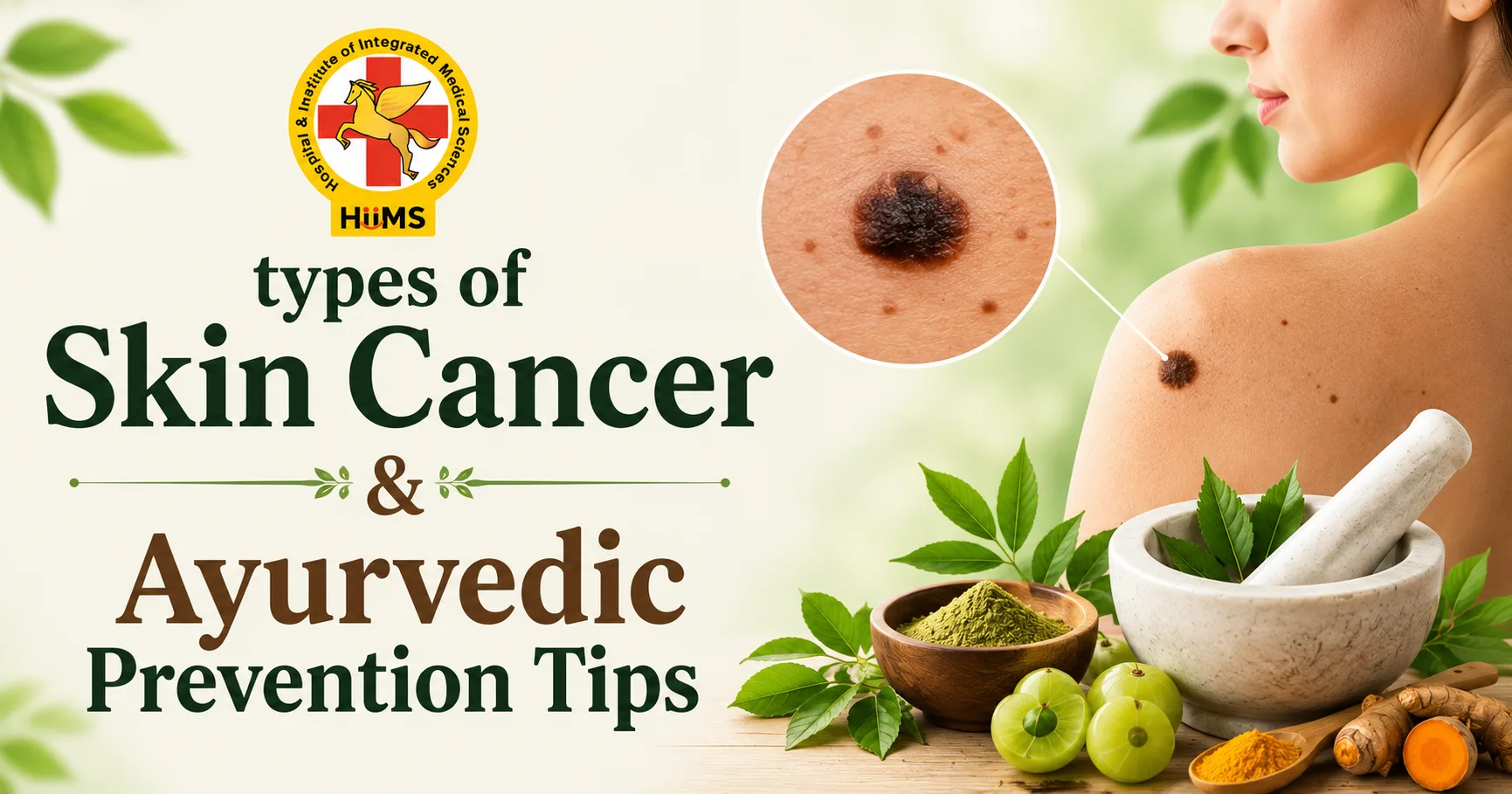
Skin cancer is one of the most common types of cancer worldwide. It develops when skin cells grow abnormally, often due to excessive exposure to ultraviolet (UV) radiation from the sun or tanning devices. Understanding the types of skin cancer is important because early detection and timely management can improve outcomes and quality of life.
While conventional treatment remains the primary approach for skin cancer, many individuals explore complementary therapies to support overall health and well-being. Ayurveda, the ancient system of natural healing, focuses on balancing the body, supporting immunity, and promoting holistic wellness.
In this article, we'll explore the major types of skin cancer, their symptoms, risk factors, and how Ayurveda may help support overall health during the healing journey.
What Is Skin Cancer?
Skin cancer occurs when abnormal cells in the skin grow uncontrollably. It most commonly develops in areas frequently exposed to sunlight, such as the face, neck, scalp, arms, and hands.
Early diagnosis is crucial because some types of skin cancer are highly treatable when detected in their initial stages.
What Are the Main Types of Skin Cancer?
Understanding the different types of skin cancer can help individuals recognize warning signs and seek timely medical advice.
1. Basal Cell Carcinoma (BCC)
Basal cell carcinoma is the most common among all types of skin cancer.
Common Symptoms:- A pearly or waxy bump on the skin
- Flat, flesh-colored lesions
- Sores that heal and reappear
- Bleeding or crusting skin patches
- Long-term sun exposure
- Fair skin
- Increasing age
- Family history of skin cancer
BCC usually grows slowly and rarely spreads to other parts of the body, but early treatment is still important.
2. Squamous Cell Carcinoma (SCC)
Squamous cell carcinoma is the second most common of the major types of skin cancer.
Common Symptoms:- Firm red nodules
- Scaly patches
- Persistent sores
- Rough skin growths
- Chronic sun exposure
- Weakened immune system
- Previous skin damage
- Exposure to certain chemicals
Unlike basal cell carcinoma, SCC has a greater potential to spread if left untreated.
3. Melanoma
Melanoma is considered one of the most serious types of skin cancer because it can spread rapidly to other organs.
Warning Signs (ABCDE Rule):- Asymmetry
- Border irregularity
- Color variations
- Diameter larger than 6 mm
- Evolving appearance
- New moles
- Changes in existing moles
- Dark lesions
- Itching or bleeding moles
Melanoma requires immediate medical attention.
4. Merkel Cell Carcinoma
Merkel cell carcinoma is a rare but aggressive form among the types of skin cancer.
Common Symptoms:- Fast-growing skin nodules
- Painless lumps
- Red, pink, or purple skin growths
This cancer often appears on sun-exposed areas of the body.
5. Cutaneous T-Cell Lymphoma
This uncommon skin cancer affects immune cells within the skin.
Symptoms:- Persistent rash
- Itchy patches
- Thickened skin plaques
- Skin discoloration
Because symptoms can resemble eczema or psoriasis, diagnosis may sometimes be delayed.
What Causes Skin Cancer?
Several factors can increase the risk of developing different types of skin cancer, including:
- Excessive sun exposure
- UV radiation from tanning beds
- Fair skin
- Family history
- Weakened immune system
- Previous skin injuries
- Exposure to environmental toxins
Protecting your skin from UV radiation remains one of the most effective preventive measures.
How Does Ayurveda View Skin Disorders?
In Ayurveda, skin health is closely connected to the balance of the body's doshas—Vata, Pitta, and Kapha.
Many chronic skin disorders are associated with:
- Pitta imbalance
- Accumulation of Ama (toxins)
- Impaired digestion (Agnimandya)
- Blood impurities (Rakta Dushti)
Ayurveda focuses on improving overall health rather than targeting a disease alone.
How Ayurveda Can Help Support Skin Cancer Management
It is important to understand that Ayurveda should not be viewed as a replacement for conventional cancer treatment. However, Ayurvedic practices may help support overall well-being and quality of life.
1. Supporting Digestive Health
Ayurveda considers strong digestion essential for overall health.
Common approaches may include:
- Easily digestible foods
- Seasonal fruits and vegetables
- Herbal support under professional guidance
2. Promoting Healthy Lifestyle Habits
Lifestyle practices may include:
- Regular sleep patterns
- Stress management
- Meditation
- Gentle yoga
- Daily physical activity
These habits can contribute to overall wellness.
3. Supporting Immune Function
Many Ayurvedic herbs have traditionally been used to support general health and immune function.
Examples include:
- Turmeric
- Guduchi
- Ashwagandha
- Neem
- Amla
These herbs should only be used under the supervision of qualified healthcare professionals.
4. Detoxification and Balance
Ayurveda emphasizes reducing factors that may contribute to imbalance through:
- Healthy eating habits
- Proper hydration
- Mind-body practices
- Personalized wellness plans
Can Ayurveda Cure Skin Cancer?
No. There is currently no scientific evidence proving that Ayurveda alone can cure skin cancer.
Conventional medical treatment remains the standard approach for diagnosing and treating all types of skin cancer. However, Ayurvedic practices may help support overall health, emotional well-being, and quality of life when used alongside appropriate medical care.
Conclusion
Understanding the different types of skin cancer is essential for early detection and timely treatment. Basal cell carcinoma, squamous cell carcinoma, melanoma, Merkel cell carcinoma, and cutaneous T-cell lymphoma each have unique characteristics and risks.
While conventional treatment remains the cornerstone of skin cancer management, Ayurveda offers a holistic approach that focuses on supporting digestion, lifestyle balance, immunity, and overall well-being. When combined with proper medical guidance, these practices may help individuals maintain a healthier and more balanced life throughout their healthcare journey.
Frequently Asked Questions (FAQs)
1. What are the different types of skin cancer?
The main types of skin cancer include Basal Cell Carcinoma (BCC), Squamous Cell Carcinoma (SCC), Melanoma, Merkel Cell Carcinoma, and Cutaneous T-Cell Lymphoma. Each type differs in its appearance, growth pattern, and potential to spread.
2. Which of the types of skin cancer is the most dangerous?
Among the various types of skin cancer, melanoma is considered the most dangerous because it can spread quickly to other parts of the body if not detected and treated early.
3. What are the early warning signs of skin cancer?
Common warning signs of the types of skin cancer include new skin growths, changes in existing moles, non-healing sores, scaly patches, unusual pigmentation, itching, bleeding, or changes in the size, shape, or color of a mole.
4. What causes different types of skin cancer?
The most common cause of many types of skin cancer is prolonged exposure to ultraviolet (UV) radiation from sunlight or tanning beds. Other risk factors include fair skin, family history, weakened immunity, and exposure to certain chemicals.
5. Can Ayurveda help manage different types of skin cancer?
While Ayurveda is not a replacement for conventional cancer treatment, it may help support overall well-being, digestion, immunity, and quality of life. Ayurvedic practices are often used as complementary approaches alongside medical care for individuals dealing with different types of skin cancer.
6. How does Ayurveda view skin cancer?
Ayurveda associates chronic skin disorders with imbalances in the doshas, particularly Pitta dosha, along with the accumulation of Ama (toxins) and Rakta Dushti (blood impurities). Ayurvedic management focuses on restoring balance and supporting the body's natural healing processes.
7. Can lifestyle changes reduce the risk of certain types of skin cancer?
Yes. Protecting the skin from excessive sun exposure, using sunscreen, avoiding tanning beds, maintaining a healthy diet, and regularly examining the skin for unusual changes may help reduce the risk of some types of skin cancer.
8. Is melanoma different from other types of skin cancer?
Yes. Melanoma develops in melanocytes, the cells responsible for skin pigmentation. Compared to other types of skin cancer, melanoma has a higher risk of spreading to distant organs and requires prompt medical attention.
9. Which Ayurvedic herbs are commonly used to support skin health?
Ayurvedic practitioners may recommend herbs such as Neem, Turmeric, Guduchi, Manjistha, Ashwagandha, and Amla to support overall skin health and wellness. These should only be used under professional guidance.
10. Can all types of skin cancer be treated if detected early?
Many types of skin cancer have a better prognosis when diagnosed and treated in their early stages. Regular skin examinations and timely medical consultation play an important role in early detection.