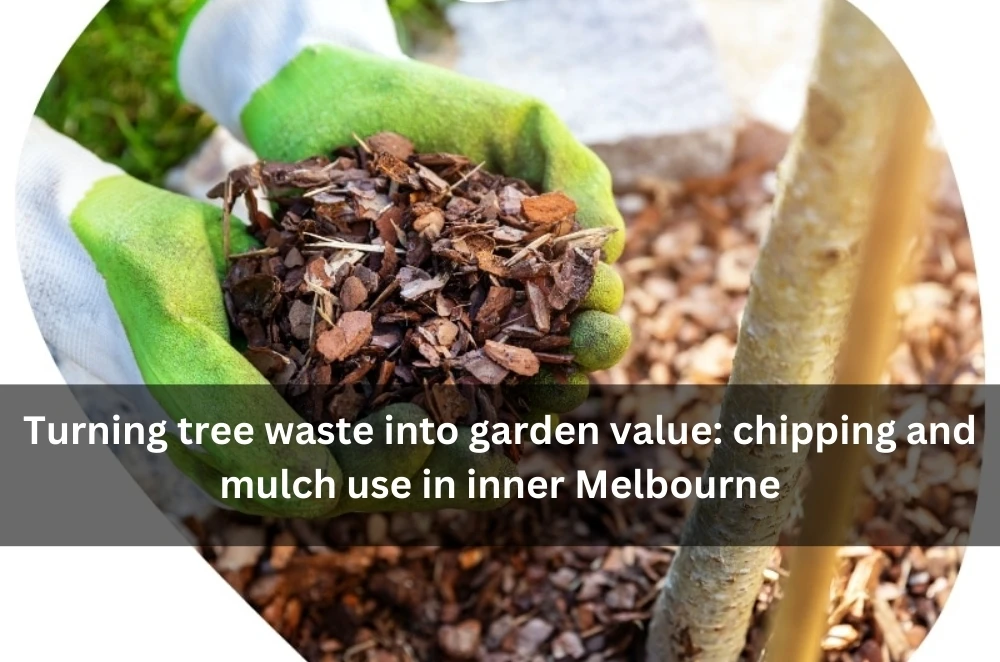
Tree work in inner Melbourne often ends the same way: a pile of branches, leaves, and offcuts that’s too bulky for the green bin and too awkward to ignore. On tight blocks—where driveways are narrow, access is limited, and neighbours are close—cleaning up after pruning or removal can be as challenging as the cutting itself.
That’s where chipping and mulching comes in. Turning woody material into mulch can reduce waste volume dramatically and, when used well, improve soil health and moisture retention in gardens that battle heat, hard surfaces, and compacted ground. But mulch isn’t automatically “good”, and chipping isn’t a one-size-fits-all answer. The type of mulch, where it’s placed, and how thick it’s spread can make the difference between a thriving bed and a pest or rot problem.
This guide explains how tree chipping typically works, when mulch spreading is genuinely useful, what to watch out for in inner-suburb settings, and how to get a result that’s tidy, safe, and garden-friendly.
Why chipping matters on inner-suburb blocks
Tree branches are mostly air. Even a modest prune can produce a surprisingly large volume of material—long, springy limbs that are hard to stack and hard to transport. Chipping addresses three practical problems at once:
- Volume reduction: chipped material is far more compact than branches, making site clean-up and removal simpler.
- Handling: Mulch can be moved in barrows or buckets rather than dragged as awkward limbs.
- Re-use: where appropriate, mulch can be applied on-site to garden beds and around trees, reducing the need to buy mulch separately.
For many inner Melbourne properties, the big benefit is logistical: less mess, less time with piles sitting around, and fewer trips in and out of narrow access points.
What “tree chipping” usually produces
Not all mulch is the same. Chipped tree material typically contains a mix of wood, bark, leaves, and small twigs. The final product can vary based on:
- Species: some woods chip cleaner; others are stringier.
- Freshness: green material behaves differently from dry, dead wood.
- Chip size: some chippers produce a finer output; others are chunkier.
- Leaf content: leafy loads can create a wetter mulch that compacts more easily.
This matters because mulch texture affects how it behaves once spread—how quickly it breaks down, whether it mats, and how well it lets water move through.
When mulch is useful (and when it’s not)
Mulch is often recommended because it can help with moisture, temperature, and weeds. But the details matter, especially on small, intensively managed gardens.
Mulch is usually helpful when you want to:
- reduce evaporation in garden beds during hot spells
- buffer soil temperature, protecting roots from heat and cold swings
- suppress weeds by blocking light at the soil surface
- improve soil structure over time as it breaks down
Mulch can be a problem when:
- it’s spread too thick and holds excess moisture against stems or trunks
- it’s placed in areas that already struggle with poor drainage
- it’s piled against fences or timber features and encourages rot or pests
- it’s used as a substitute for fixing underlying issues like compaction, grading, or irrigation problems
A simple rule: mulch supports a healthy system; it doesn’t replace one.
Mulch depth and placement: the most common mistakes
Inner Melbourne gardens often have small beds bordered by paving, retaining edges, and narrow side paths—exactly the places where mulch can get dumped too thickly.
Aim for a sensible depth
A moderate layer is typically more effective than an overly thick one. Too thick and mulch can mat down, shed water, or become a damp layer that encourages fungal growth and pests. Too thin and it doesn’t do much.
Keep mulch off trunks and stems
Mulch piled against tree trunks or plant stems can trap moisture where it shouldn’t be. Leaving a small gap around the base helps reduce rot risk and discourages pests.
Don’t bury drip lines and irrigation points
If you’re mulching over irrigation, ensure emitters aren’t clogged or buried so deeply that water distribution becomes uneven.
Watch for “mulch creep” onto paving
Mulch pushed onto paths and hard surfaces becomes a slip hazard and ends up back in the garden bed anyway—often in drains. Edging and tidy spread lines make maintenance easier.
Safety and access: what’s different in inner Melbourne
Chipping and mulch spreading in tight suburbs has practical constraints that don’t always exist on larger blocks.
Narrow access and shared spaces
Side passages, laneways, and small courtyards mean equipment movement and material handling must be planned. It’s not just about “can it be done?”—it’s about doing it without damaging fences, pavers, garden beds, or neighbouring property.
Noise and timing
Chippers are loud. In dense areas, timing matters, and so does clear communication—especially where access requires entering shared driveways or passing close to neighbours.
Keeping footpaths and driveways safe
If work is near a public path or a tight driveway, debris control matters. A good clean-up isn’t cosmetic; it reduces slips, punctures, and stray sticks that become trip hazards.
Understanding the garden trade-offs of fresh chip mulch
Fresh chipped mulch can be excellent, but it behaves differently than aged, screened mulch from a landscape yard.
Nitrogen tie-up: what it really means
As woody mulch breaks down, microbes use nitrogen. This can temporarily reduce available nitrogen near the soil surface, particularly if mulch is mixed into the soil rather than left on top. In most home gardens, the simplest approach is: keep mulch on the surface, and if plants show pale growth, consider a soil-appropriate fertiliser strategy rather than digging mulch in.
Heat and moisture behaviour
Fresh chips can hold moisture well, but if they compact, they can also reduce airflow. That’s why depth and texture matter—and why a chunky mulch often performs better than a fine, leafy one in damp corners.
Pest considerations
Mulch placed against structures, timber, or fences can create habitat for pests. Good placement and sensible thickness reduce that risk.
When it makes sense to remove the mulch instead
Sometimes the best outcome is chipping for removal, not spreading:
- the garden beds are already full or heavily planted
- drainage is poor and extra moisture retention isn’t welcome
- you’re preparing for landscaping works and want a clean slate
- the chipped output is overly leafy or wet and likely to mat down
- the property is strata or shared space where mulch storage isn’t practical
In these cases, chipping still helps by reducing volume and making material easier to transport off-site.
What to decide before you ask for chipping and mulch spreading
If you want the job to end with the result you actually want, decide these upfront:
- Do you want the mulch kept, removed, or split (some kept, some removed)?
- Where should mulch go (and where should it not go)?
- How tidy does the finish need to be (beds only vs full yard clean-up)?
- Are there access constraints (narrow gates, steps, shared driveways)?
- Are there sensitive areas (new plants, irrigation lines, drainage points)?
Clear answers prevent the common “mulch ended up everywhere” problem.
A quick checklist for a tidy, useful finish
After mulching, you should generally see:
- beds covered evenly, not piled into heaps
- mulch kept away from trunks, stems, and timber edges
- paths and paved areas cleared
- drains and grates not buried
- the site left stable and easy to maintain
If you’re using mulch for weed suppression, remember it works best paired with good garden habits—hand weeding of established weeds, edge control, and not letting mulch thin out to bare patches.
Where tree chipping and mulch spread service across inner Melbourne fits
If you’re placing this into your post and want the exact phrase ready for linking later, here it is exactly as requested: tree chipping and mulch spread service across inner Melbourne.
In real terms, that phrase sits at the intersection of two needs inner-suburb homeowners face all the time: reducing the mess and volume after tree work, and making smart use of organic material to support gardens that sit in hot, hardscaped environments.
The bottom line: treat mulch as part of a plan, not just a by-product
Chipping and mulch spreading can be a clean, efficient way to deal with tree waste and improve garden conditions—especially on small inner Melbourne blocks where disposal is a hassle and beds dry out quickly. But mulch works best when it’s applied thoughtfully: the right depth, the right placement, and the right expectations about how it behaves over time.
If you’re unsure whether to keep the mulch, where to put it, or how much to spread, it’s often better to take a staged approach—keep a portion for the beds that need it most, and remove the rest—rather than overloading the garden and creating new maintenance issues.
Key Takeaways
- Chipping reduces green waste volume and makes clean-up easier on tight inner-suburb blocks.
- Fresh chip mulch can be beneficial, but texture, depth, and placement matter.
- Avoid piling mulch against trunks, stems, fences, and timber features.
- Consider removing some or all mulch if drainage is poor or beds can’t absorb the volume.
A good finish is even, tidy, and leaves paths, drains, and edges clear for easy maintenance.