Music streaming has become one of the most competitive digital markets in the United States. From on-demand platforms to live radio and podcast hybrids, listeners expect seamless playback, personalized recommendations, and instant access across every device they own. For businesses looking to enter this space, the right development partner can mean the difference between a forgettable app and a platform people actually stick with.
Why Music App Development Services in USA Matter
The U.S. audio streaming market isn't just large - it's saturated with high user expectations. American listeners are used to the polish of Spotify, Apple Music, and Amazon Music, which means any new entrant has to compete on speed, design, and intelligence from day one, not after a few update cycles.
This is where working with a specialized music app development company makes a real difference. Building a music platform involves far more than streaming audio files. It requires handling licensing complexities, optimizing for low-latency playback, managing large media libraries, and building recommendation systems that keep users engaged over time. General-purpose app developers can build a functional player, but turning that player into a habit-forming product requires domain-specific experience.
The USA Market Has Its Own Demands
Location matters more than many founders realize. A platform built for U.S. audiences needs to account for regional licensing agreements, region-specific payment gateways, and infrastructure that can handle peak-hour streaming loads across time zones from New York to Los Angeles. A development partner familiar with the United States market understands these operational realities upfront, rather than discovering them after launch.
What Actually Makes a Music App Succeed
Personalization Is No Longer Optional
Static playlists don't hold attention anymore. Modern listeners expect recommendations that adapt to mood, time of day, and listening history. AI-driven discovery - surfacing new artists, generating mood-based playlists, and refining suggestions in real time - has shifted from a "nice-to-have" feature to a baseline expectation.
Performance Under Real Conditions
An app that works well in testing but stutters during peak traffic loses users fast. Scalable backend architecture, efficient caching, and offline playback options are what separate apps that retain users from ones that get uninstalled within a week.
Design That Doesn't Get in the Way
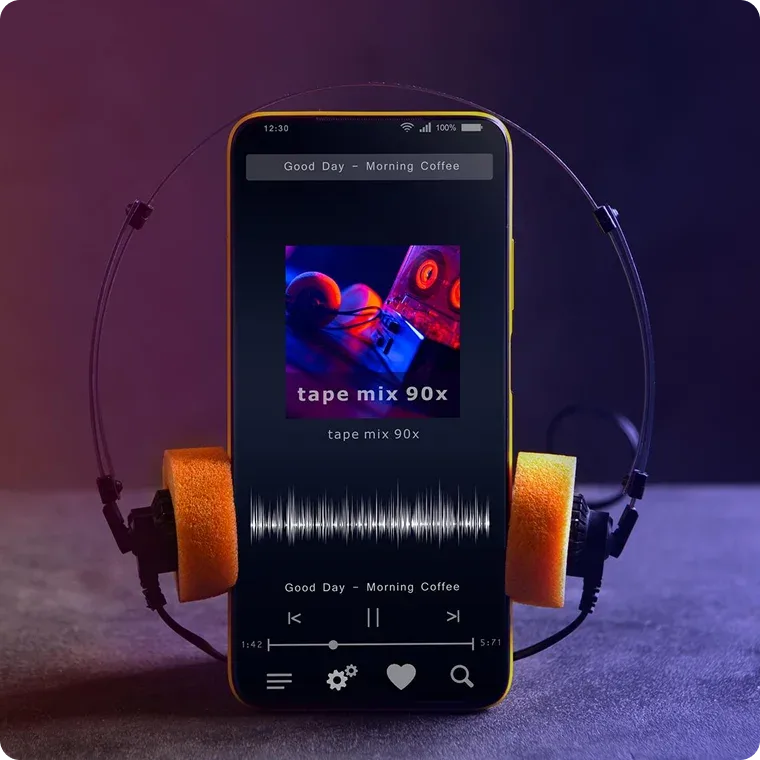
The best music apps are almost invisible in their interface - smooth transitions, intuitive search, and playback controls that never interrupt the listening experience. Overdesigned interfaces are one of the fastest ways to lose casual users.
Choosing the Right Development Partner
Not every software vendor understands the nuances of streaming technology, audio compression, and content licensing. When evaluating a potential partner, a few questions help separate genuinely capable teams from generalists:
- Have they built and shipped audio-heavy applications before, not just standard mobile apps?
- Do they have experience integrating third-party music APIs, payment systems, and analytics tools?
- Can they support the app post-launch as user expectations and platform requirements evolve?
This is where a company like 75way Technologies has built a track record. Rather than treating music apps as a generic app-development category, teams with focused audio and streaming experience understand how playback architecture, recommendation engines, and licensing constraints interact - details that are easy to underestimate until they cause problems in production.
Beyond Streaming: The Bigger Opportunity
Music apps today extend well past simple playback. Sheet music platforms for musicians, live radio and DJ streaming apps, social music-sharing tools, and creator-focused apps modeled after SoundCloud all represent growing niches within the broader industry. A capable music app development company should be able to support this range - not just build another generic streaming clone, but help identify which model actually fits a business's audience and goals.
For companies exploring this space in the United States, the opportunity is real but competitive. The market is projected to keep growing steadily over the next decade, and the businesses that succeed will be the ones that treat music apps as a specialized product category rather than a standard mobile build.
Final Thoughts
Launching a music app in today's market isn't about ticking off a feature list - it's about understanding listener behavior, technical performance, and the specific demands of the U.S. streaming landscape. Partnering with a music app development company that has genuine experience in this space, such as 75way Technologies, gives businesses a stronger foundation to compete rather than starting from scratch on lessons others have already learned. For founders serious about entering the music streaming space, that specialized experience is often the difference between a platform that launches and one that lasts.