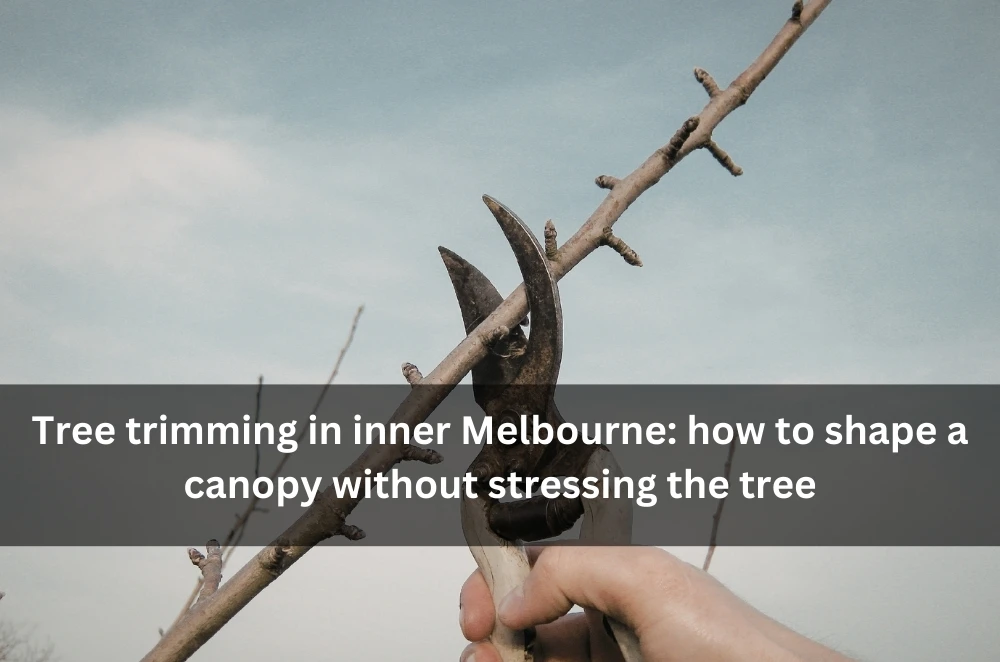
In inner Melbourne, trees do a lot of work in tight spaces. They provide shade on small blocks, soften hard surfaces, and create privacy where neighbours are close. But once a canopy starts pushing into rooflines, laneways, or adjoining yards, “just trim it back” can turn into a surprisingly complex decision. The wrong cut in the wrong place can trigger weak regrowth, increase storm risk, and leave you with a tree that needs more intervention—not less.
Tree trimming and shaping can be a smart, preventative way to manage growth, maintain clearances, and keep a tree looking balanced. The key is understanding what shaping is meant to achieve, what techniques are appropriate, and where the line sits between thoughtful canopy management and stress-inducing overcutting.
This guide explains how trimming and shaping decisions are typically made for inner Melbourne properties, what to ask before work begins, and how to set expectations that protect both the tree and the people living around it.
Trimming, shaping, pruning: what’s the difference?
People often use these terms interchangeably, but the intent matters.
- Trimming usually refers to light-to-moderate cutting to manage growth: clearance from structures, tidying edges, reducing minor overhang, and keeping a canopy in bounds.
- Shaping is trimming with a specific visual and structural outcome in mind: maintaining a balanced form, preventing lopsided growth, and guiding the canopy so it sits well in the space.
- Pruning is a broader term that can include trimming, but often implies more selective, purpose-led cuts to improve structure, safety, or long-term health.
In practice, a “trim” that’s done thoughtfully looks a lot like good pruning—selective cuts, clear reasoning, and respect for the tree’s natural structure. A “trim” that’s rushed can become an indiscriminate removal that causes long-term problems.
Start with the real goal: what are you trying to fix?
Shaping is easiest (and safest) when you can name the goal clearly. Common inner-suburb goals include:
Clearance from structures
Rooflines, gutters, awnings, and upper-storey windows are frequent pressure points. Trimming for clearance is often about creating space rather than shrinking the whole tree.
Managing overhang and neighbour impacts
Boundary lines matter more on small blocks. The best approach is typically targeted reduction where it’s needed, rather than cutting the whole canopy uniformly.
Maintaining light without “scalping” the tree
People often want more light in courtyards and gardens. That can sometimes be achieved through careful selective thinning, rather than heavy cutting that triggers aggressive regrowth.
Keeping the tree balanced
A canopy can become uneven after storms, past cuts, or growth patterns that favour one direction. Shaping aims to correct imbalance while preserving strength.
Once the goal is clear, it becomes easier to choose an approach that solves the actual problem instead of creating a new one.
What good shaping looks like (and what to avoid)
Good shaping is selective, not symmetrical
Trees aren’t hedges. A canopy can look neat without being “even all around”. Good shaping usually involves strategic cuts to growth points and branch structure, so the tree holds a natural form.
Avoid topping and stub cuts
One of the biggest mistakes is cutting major limbs back to stubs or “topping” the crown to reduce height quickly. It can look tidy for a short time, but often leads to fast regrowth with weak attachments—exactly what you don’t want over a roofline or driveway.
Don’t remove too much at once
Heavy canopy removal can stress the tree, especially in hot, dry periods. It can also expose previously shaded limbs to sun, increasing the risk of bark damage. A staged approach is often safer when significant reduction is needed.
Cuts should have a purpose
If the answer to “why remove this branch?” is “because it’s there,” the plan probably needs tightening. Each cut should link to the goal: clearance, safety, structure, or balance.
Inner Melbourne constraints that change the job
Tree work in inner suburbs isn’t the same as tree work on a wide suburban block. Common constraints include:
Tight access and rigging needs
Laneways, narrow side passages, overhead services, and limited drop zones affect how material is lowered and removed. This influences both safety planning and how much can be done in a single visit.
Shared fences and close neighbours
Shaping isn’t just about the tree—it’s also about noise windows, access permissions, and keeping debris controlled. Planning and communication matter more when properties are close.
Heritage and council considerations
Some streets and areas have overlays, protected vegetation rules, or permit triggers for certain works. Even when you’re “just trimming,” it’s worth being conscious that rules can apply depending on species, size, and location.
Timing: when trimming is easier on the tree (and on you)
There isn’t one universal “best time” because species and conditions vary, but timing can affect:
- Recovery and stress: Heatwaves and drought-like conditions can make heavy trimming harder on trees.
- Storm readiness: Risk-focused trimming is often most valuable before periods of high winds and seasonal storms.
- Flowering/fruiting: If you care about seasonal display or fruit, timing can preserve more of what you value.
- Neighbour impact: In dense areas, timing around work-from-home patterns and access needs can be as practical as plant biology.
A reasonable approach is to align timing with the goal: clearance and hazard reduction when needed; aesthetic shaping when conditions support better recovery.
Common scenarios and what they usually point to
“It’s brushing the roof and filling the gutters”
This is typically a clearance issue. The aim is often to create separation from the roofline and remove problematic overhang, not shrink the entire canopy.
“It looks lopsided after last year’s storm”
This is a shaping and structural balance issue. The best fix is usually selective correction to restore a stable form, rather than cutting the “big side” back harshly.
“We want more light in the courtyard”
This can sometimes be helped through careful selective thinning or targeted reduction away from key light paths, rather than big, blunt cuts that trigger thick regrowth.
“The neighbour wants it cut back”
Boundary concerns are common. Focusing on defined outcomes—clearance from boundary, reduced overhang where appropriate, and a stable canopy shape—helps keep the discussion practical.
What to ask before anyone trims a tree
A short conversation upfront can prevent most disappointment.
- What will you cut, specifically, and why? Ask which limbs/sections and the reason tied to your goal.
- What will it look like afterwards? A plain-language description (or quick sketch) avoids surprises.
- How much will be removed? If the plan sounds like a “big haircut,” ask about stress, regrowth, and whether staging is safer.
- How will safety and clean-up be managed? Especially important with tight access, footpaths, and shared boundaries.
- What should we expect next? Good shaping often includes a note on likely regrowth and when a follow-up trim may be useful.
If you’re comparing providers, use those questions as your filter. You’re looking for clarity and reasoning, not vague assurances.
Where tree trimming and shaping in inner Melbourne fits
If you’re searching for a service and want an easy way to locate the exact phrase later in your draft for linking, here it is exactly as requested: tree trimming and shaping in inner Melbourne.
In practical terms, the best outcomes usually come from treating trimming and shaping as a planning task: define the goal, choose the technique that matches it, and make cuts that the tree can respond to well—especially in inner-suburb conditions where mistakes have higher consequences.
The bottom line: shape for stability, not just for looks
Trimming and shaping can keep trees healthy, safe, and appropriate for inner Melbourne blocks
—but only when it’s done with a clear purpose and a respect for structure. The most reliable approach is selective: create the clearance you need, correct imbalance, remove hazards, and avoid heavy cuts that cause weak regrowth.
If you’re unsure how much to remove, it’s often safer to stage the work and reassess after regrowth rather than forcing a dramatic change in one hit.
Key Takeaways
- Trimming and shaping should start with a clear goal: clearance, balance, light, safety, or aesthetics.
- Good shaping is selective; avoid topping and stub cuts that lead to weak regrowth.
- Inner Melbourne constraints (tight access, neighbours, services) make planning and safety more important.
- Timing can affect recovery, stress, and neighbour impact—match the schedule to the purpose.
- Ask for a specific scope, expected finish, and likely regrowth before work begins.