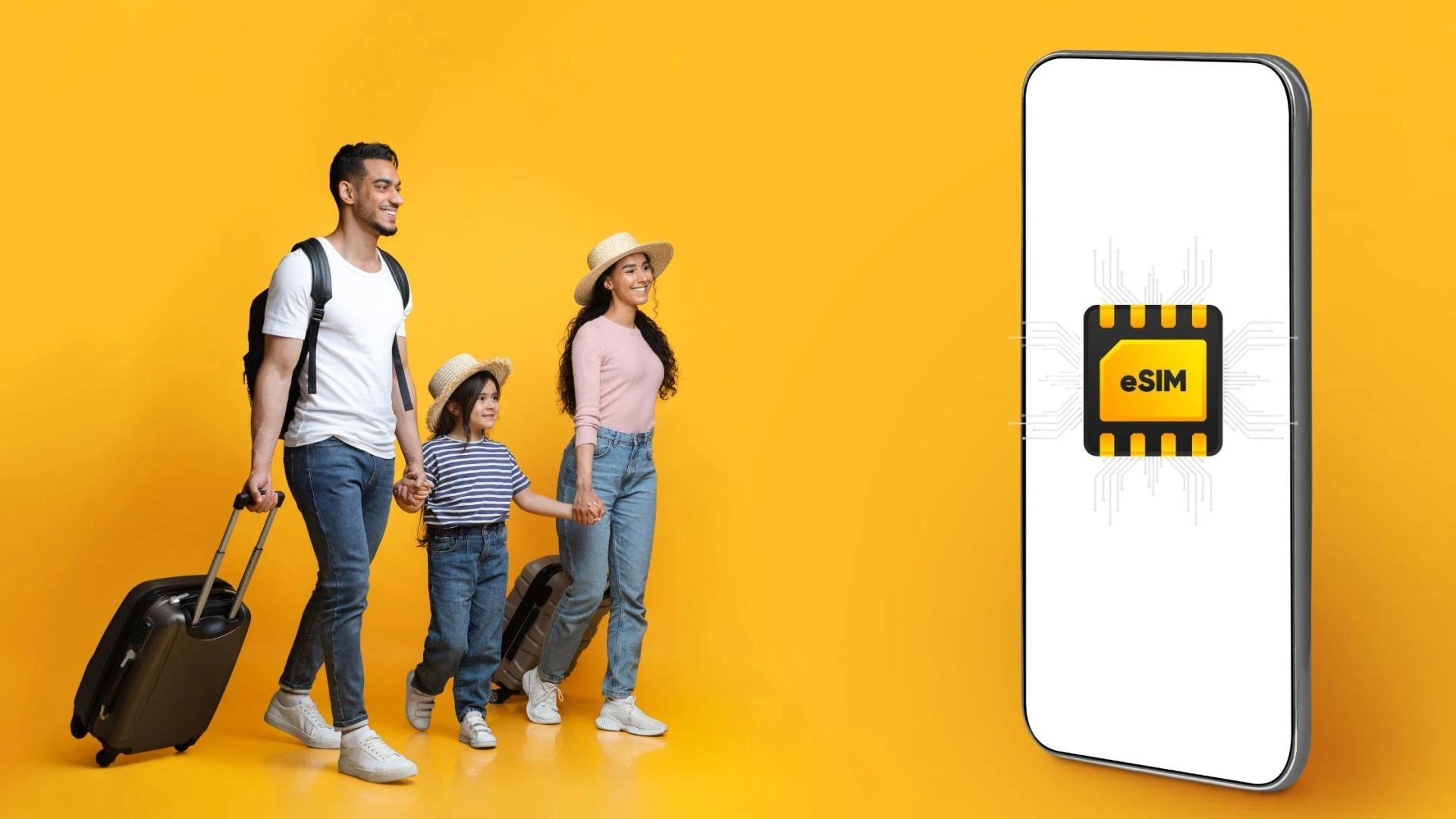
Japan is a dream destination for many families. Whether it's exploring Tokyo Disneyland, marveling at Kyoto’s historic temples, or soaking in an onsen in Hakone, traveling in Japan with family promises unforgettable memories. But amidst all the excitement, staying connected while navigating trains, translating signs, or finding child-friendly restaurants becomes crucial—especially when traveling with kids.
This is where the eSIM for Japan can significantly enhance your trip. In this article, we’ll explore how eSIMs work, why they’re a smart choice for family travelers, and what you need to know to get started.
What is an eSIM?
An eSIM, or embedded SIM, is a digital SIM card built directly into your smartphone or tablet. Unlike traditional physical SIM cards, eSIMs don’t need to be inserted or removed. Instead, you download a data plan onto your device, making setup and switching plans incredibly convenient.
Many modern smartphones—including the latest models from Apple, Google, and Samsung—support eSIM technology. Before traveling, you can install a Japanese eSIM plan without even stepping into a store.
Why Connectivity Is Essential When Traveling with Family in Japan
Japan is a safe and efficient country, but it’s still a foreign environment for many travelers. When you're with family—especially kids or elderly relatives—you want everything to go smoothly. Reliable internet access becomes less of a luxury and more of a necessity. Here's why:
- Navigation and Transportation: Japanese train systems are famous for being punctual and extensive, but they're also complex. With multiple companies, overlapping lines, and Japanese signage, using apps like Google Maps or HyperDia is essential for stress-free commuting.
- Translation Needs: While major cities like Tokyo and Osaka are relatively English-friendly, many areas aren’t. Apps like Google Translate help bridge the language gap, especially when ordering food or reading instructions.
- Booking and Reservations: Many restaurants, attractions, and accommodations require online booking. Having connectivity on the go ensures you can make or change plans as needed.
- Emergency Situations: Whether it’s a child wandering off or a health-related concern, being able to reach local services or use GPS tracking offers peace of mind.
Benefits of Using an eSIM for Japan When Traveling with Family
Let’s explore how an eSIM can simplify your trip and make it more enjoyable for everyone involved.
1. Easy Setup Before You Land
With an eSIM, you can set up your data plan before you even leave home. No more queuing at the airport for a SIM card or struggling with vending machines that only accept Japanese instructions. For families landing with tired kids in tow, this means one less thing to worry about.
You can buy an eSIM online, scan a QR code, and activate it instantly—ready to connect as soon as your plane touches down.
2. Stay Connected Across Multiple Devices
Some eSIM providers offer data sharing or family plans, which allow multiple devices to connect using the same data allowance. This is particularly useful if:
- Your children use tablets or smartphones.
- You and your partner want to stay connected simultaneously.
- You’re carrying a Wi-Fi-enabled camera or GPS device.
Instead of buying multiple SIM cards, you can manage data use centrally and keep everyone connected.
3. No Physical Swapping or Risk of Losing SIMs
When traveling internationally, swapping physical SIM cards can be a hassle. There’s always a risk of misplacing your original SIM, especially when managing multiple devices.
An eSIM for Japan eliminates this issue. Your home SIM remains in the phone (if it's a dual-SIM device), and your Japanese data plan lives alongside it digitally. Switching back when you return home is just a tap away.
4. Budget-Friendly and Transparent Costs
Family travel can get expensive quickly. Fortunately, eSIMs often offer more affordable data options than roaming with your home carrier.
Most eSIM providers clearly outline what you’re paying for—whether it’s unlimited data for a set number of days or a fixed amount of data valid for a longer period. There are no hidden charges or unexpected roaming fees, giving you better control over your travel budget.
5. Flexibility to Top-Up or Extend Plans
Traveling plans don’t always go as expected. Maybe you stay an extra few days in Tokyo or take an unplanned trip to Hokkaido. With traditional SIMs, this might mean hunting down a store to buy more data.
With an eSIM for Japan, you can usually top-up your data plan online or extend it without visiting a store or speaking Japanese. That’s flexibility your whole family can appreciate.
Use Cases: Real-Life Scenarios of Family Travel Made Easier with eSIM
Let’s dive into a few real-world examples to illustrate the convenience of using an eSIM while traveling in Japan with family.
1. Navigating Public Transportation in Tokyo
You’re in Tokyo with your spouse and two kids, trying to get to Ueno Zoo from Shinjuku. The train map looks like a tangle of spaghetti. With mobile data via eSIM, you open your preferred train app, get step-by-step directions, and check which platform to use—all while keeping your kids entertained with YouTube on another device.
2. Finding Restaurants and Menus That Suit Your Kids
One of the joys of Japan is the food. But picky eaters and dietary needs can complicate things. With your eSIM, you can search for kid-friendly restaurants, check reviews, and even view translated menus before you arrive. Apps like Google Lens can scan Japanese menus on the spot to show you what’s on offer.
3. Staying in Touch on Separate Activities
Perhaps one parent takes the older kids to a museum, while the other takes the younger ones to a nearby park. With data connectivity on both phones, staying in touch via messaging apps is seamless. No more setting specific meeting times or dealing with payphones.
4. Emergency Needs
Your child suddenly has a fever late at night. You need to find the nearest pharmacy that’s open 24/7. With an eSIM providing internet access, you can quickly search nearby clinics, call ahead, and even get directions via taxi apps or maps.
How to Get an eSIM for Japan: A Step-by-Step Guide
Here’s how you can get started with an eSIM for Japan:
Step 1: Check Device Compatibility
Not all phones support eSIMs. Ensure your device is unlocked and eSIM-compatible. Most newer iPhones (XS and above), Google Pixels, and Samsung Galaxy phones support eSIM.
Step 2: Choose an eSIM Provider
Several companies offer eSIM plans for Japan, including:
- BazTel
- Nomad
- Holafly
- Japan Wireless
Compare plans based on:
- Data volume
- Validity duration
- Whether it includes voice/SMS
- Customer support availability
Step 3: Purchase and Activate
After selecting your provider, purchase the plan and follow instructions to install the eSIM. This usually involves:
- Scanning a QR code
- Manually entering activation details
- Switching your phone to use the new eSIM for mobile data
Step 4: Test Before You Travel
Whenever possible, activate the eSIM while still at home and test it with your device settings. Some providers allow you to install it in advance and activate it only upon landing.
Step 5: Monitor Usage
Keep track of data usage through the provider’s app or your phone’s settings. Consider using Wi-Fi in hotels or public areas to conserve data if you're on a limited plan.
Tips for Using eSIM in Japan with Your Family
- Download Maps Offline: Even with reliable data, downloading offline maps for cities you'll visit can be helpful in emergencies or low-signal areas.
- Use Messaging Apps: Stick with WhatsApp, LINE, or Messenger for calls and texts, especially if your plan doesn’t include voice services.
- Set Data Limits for Kids: If your kids have their own devices, use parental controls to avoid draining your data plan too quickly.
- Keep Your Home SIM Safe: Even if you're not using it, store your physical SIM securely in case your phone isn’t dual-SIM.
Are There Any Downsides?
While eSIMs offer many advantages, a few limitations to consider include:
- No Japanese phone number (unless your plan includes one): Some reservations or services in Japan might ask for a local number.
- Limited compatibility: Older or budget phones might not support eSIMs.
- One-time use: Most eSIMs cannot be reused after deletion, so don’t remove it until you're done using it.
However, for the majority of travelers—especially families—these are minor trade-offs compared to the overall convenience.
Conclusion: A Smarter Way to Travel Japan with Loved Ones
Japan is a unique blend of tradition, innovation, and adventure, making it a fantastic destination for family travel. But as every parent knows, smoother logistics lead to better memories. A reliable and flexible eSIM for Japan ensures that your family can focus on the fun—without worrying about connectivity issues.
From navigating bullet trains to capturing Instagram-worthy moments at Mount Fuji, staying connected is a game-changer. An eSIM makes that happen effortlessly.
So, before packing those suitcases and double-checking your passports, consider setting up an eSIM—it might just be the most valuable item you bring on your trip.