
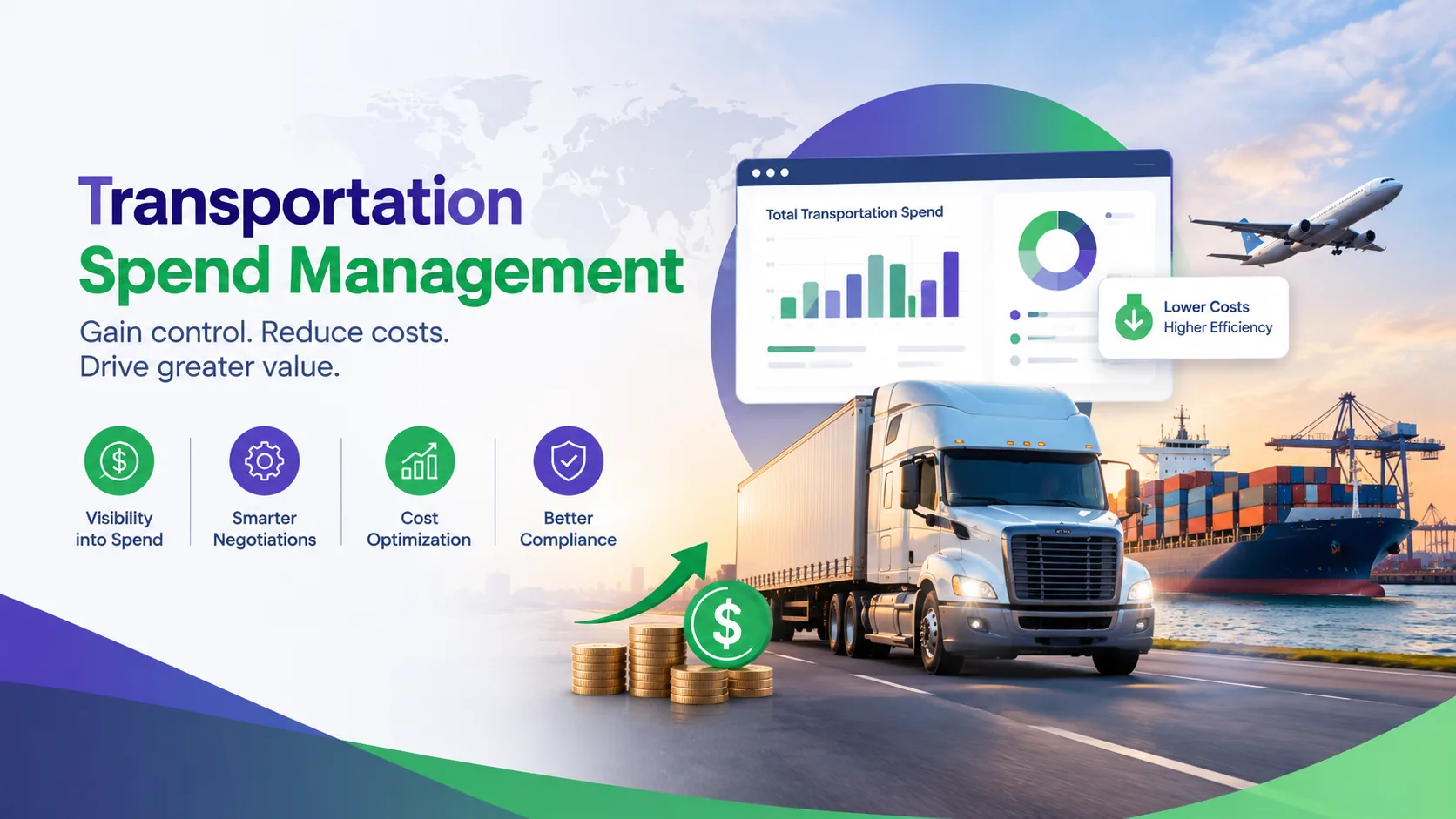
Transportation spend management is the practice of tracking and controlling every cost tied to moving freight, from carrier rates to accessorial fees and invoice accuracy. The direct answer for logistics teams is to follow a repeatable checklist covering cost visibility, contract compliance, invoice validation, and carrier performance, reviewed on a steady schedule. Done well, freight stops being a fixed overhead and becomes a lever you can pull.
Why Does Freight Spend Drift Out of Control?
Freight costs rarely jump because of one bad decision. They drift. A fuel surcharge stops matching the agreed formula, a late plan forces a rush booking, and a detention charge gets approved because nobody held proof to dispute it. Each leak looks minor, yet together they reshape the budget before anyone notices.
What Should the Checklist Include?
Start with data. Bring shipment records, carrier invoices, contracted rates, and service results into one view so patterns appear by lane, mode, and carrier. Then compare quoted charges with billed charges and confirm loads went to the carrier your routing guide intended. Review accessorials last, since they grow faster than base rates and get far less attention.
Each area carries its own risk. Skipping rate compliance allows silent overcharges. Ignoring routing adherence raises spot market exposure. Approving fees without proof inflates detention and fuel charges. Missing duplicate detection means paying twice for the same move. Without carrier scorecards, weak service goes unnoticed until customers complain.
How to Reduce Freight Costs Without Hurting Service
Many teams assume how to reduce freight costs always means tougher rate talks. Often the cheaper wins sit inside operations. Consolidating regional shipments trims handling and line haul spend, better dock scheduling cuts detention, and firmer order cutoffs reduce expedited moves. When you know how to reduce freight cost at the lane level, you negotiate with evidence instead of instinct.
Try a simple calculation. Take the gap between contracted and billed rate on a lane, multiply it by quarterly volume on that lane, and repeat across your busiest lanes. The total frequently explains where margin went.
What Does the Freight Audit Process Involve?
The freight audit process confirms every invoice deserves payment. Each invoice is matched against the shipment record, contracted rate, and proof of delivery. Exceptions such as wrong weight classes, unapproved surcharges, or mismatched origins are flagged, disputed with the carrier, and recorded so the error does not return. The real value is the feedback loop, because findings should shape carrier conversations and routing decisions instead of sitting in a report nobody reads.
Where Do Freight Audit Savings Come From?
Freight audit savings come from invoice corrections, such as rate errors and duplicate bills, and from behavior change, since carriers bill more carefully when they know invoices are checked.
Consider an anonymized distributor of consumer goods whose freight line grew faster than shipment volume. A review found several lanes billed at expired rates and detention approved without gate timestamps. Fixing both recovered money already spent and changed how the warehouse recorded carrier arrivals. No magic was involved, only a basic question asked of every invoice: does this match what we agreed?
How Often Should You Run It?
Treat the checklist as a living routine. Review invoices continuously, scorecards monthly, and contract compliance quarterly or whenever market conditions shift. Assign owners and document exceptions so knowledge stays when people leave.
Frequently Asked Questions
What is transportation spend management?It is the practice of monitoring every cost linked to moving freight so spend stays aligned with contracts and business goals.How does a freight audit reduce costs?
It checks each invoice against contracts and shipment records, catching overcharges and duplicates before payment.Can small teams use this checklist?
Yes. Start with rate compliance and accessorial review on your busiest lanes, then expand as processes mature.
Take the Next Step Toward Smarter Freight Control
nVision Global helps logistics teams strengthen transportation spend management through detailed freight audit support, clear reporting, and practical recommendations that turn data into savings. If your freight budget grows harder to explain each quarter, act now. Contact nVision Global today to request a freight spend review and turn hidden costs into measurable savings.