How Video Collaboration Tools Are Enhancing Patient Care, Remote Consultations, and Medical Training
Transforming Patient Care with Smart Video Collaboration in Healthcare
Modern healthcare is undergoing a digital revolution, with video collaboration tools playing a crucial role in reshaping patient care, doctor-patient communication, and hospital workflows. PeopleLink offers an innovative suite of healthcare collaboration solutions that are designed to meet the evolving needs of the medical sector. Here's how these technologies are creating real impact.
Key Benefits and Features of PeopleLink Healthcare Solutions:
1. Remote Consultations Made Easy
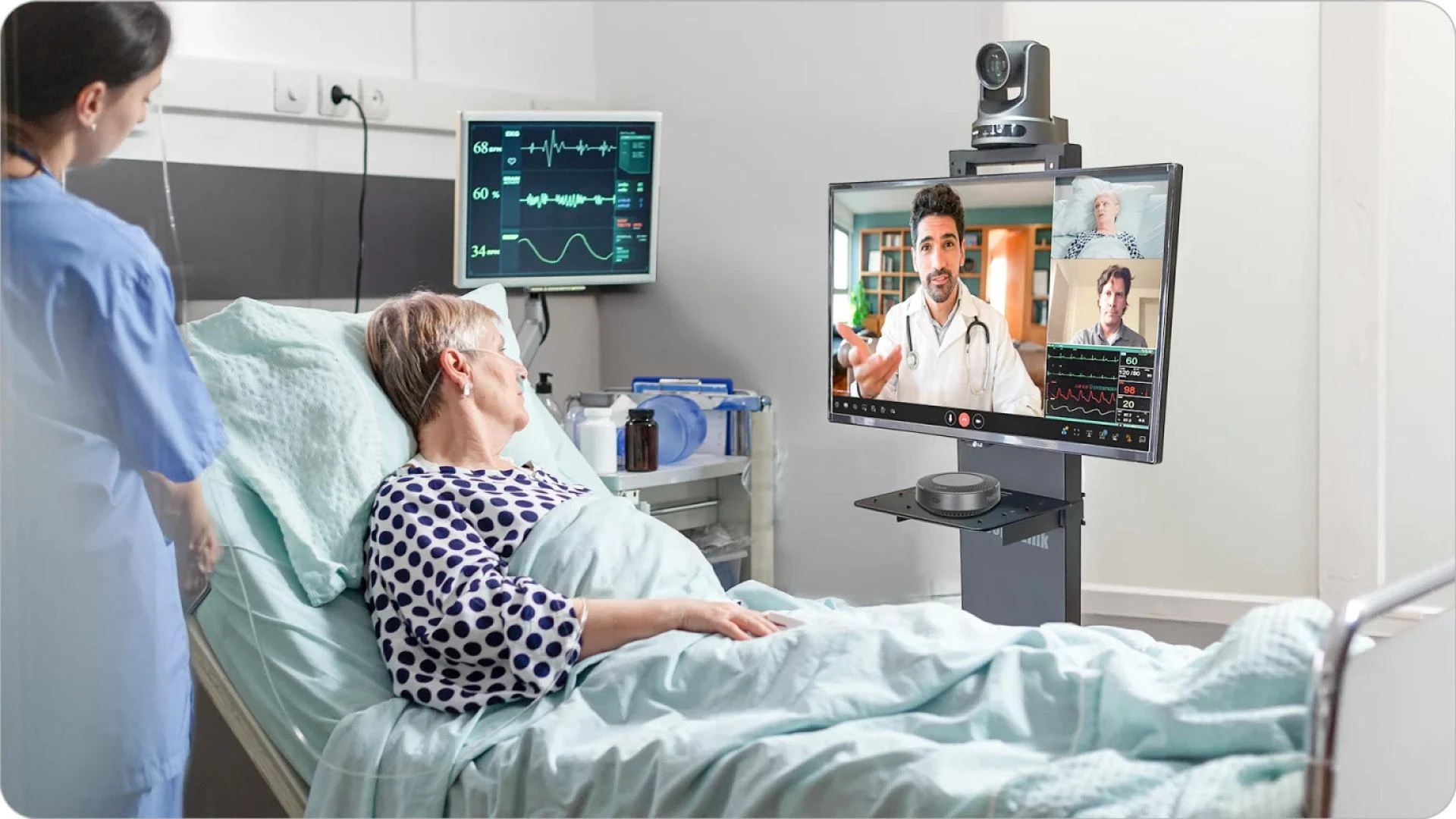
- High-Quality Virtual Consultations: Doctors can connect with patients remotely using HD-quality video, ensuring accurate diagnoses even from a distance.
- Accessible Care in Rural Areas: Telemedicine bridges the gap between patients in remote locations and specialized healthcare professionals.
- Time and Cost Efficient: Reduces unnecessary hospital visits and saves time for both doctors and patients.
2. Emergency Response & Critical Care
- Quick Access to Experts: In critical situations, emergency responders can connect instantly with senior medical specialists via PeopleLink’s video systems.
- Real-Time Visual Support: Allows paramedics or junior staff to get immediate instructions during emergency procedures.
- Life-Saving Decision Making: Faster and more informed decisions lead to better patient outcomes in trauma or emergency cases.
3. ICU Monitoring and Management
- Remote ICU Monitoring: Allows specialists to monitor ICU patients from remote locations with real-time video feeds.
- Reduced Exposure to Infections: Minimizes physical contact while ensuring 24x7 monitoring.
- Centralized Supervision: Enables centralized control rooms to monitor multiple ICUs across different hospitals.
4. Medical Education & Training
- Live Surgical Broadcasts: Enables live streaming of surgeries for medical students and practitioners.
- Interactive Training: Trainees can ask questions in real-time, making learning more practical and immersive.
- Wider Reach: Facilitates training sessions across geographies without the need for physical presence.
5. Hospital Administration & Internal Communication
- Efficient Staff Coordination: Video conferencing streamlines communication among departments and hospital staff.
- Secure and Encrypted Communication: Maintains patient confidentiality and complies with healthcare data regulations.
- Virtual Meetings and Board Discussions: Enables regular administrative updates and strategic planning, even from remote locations.
6. Patient Engagement & Follow-Up
- Virtual Follow-Ups: Patients can interact with their doctors for post-treatment care without revisiting hospitals.
- Increased Patient Satisfaction: More flexibility and convenience for patients translates into higher trust and satisfaction levels.
- Better Adherence to Treatment Plans: Regular follow-ups help in monitoring patient compliance and health improvements.
Why Choose PeopleLink for Healthcare Collaboration?
- User-Friendly Interface: Intuitive systems that require minimal training.
- Scalable Solutions: From small clinics to large hospitals, scalable infrastructure to suit all needs.
- Seamless Integration: Compatible with existing hospital systems like EMR and HIS.
- End-to-End Support: From installation to post-deployment assistance, PeopleLink offers full lifecycle support.
Conclusion
In a time where patient safety, quick response, and effective communication are paramount, PeopleLink’s healthcare collaboration solutions stand out as essential tools. By enabling secure, real-time interactions and improving operational efficiency, these technologies are setting new standards in modern medical care.