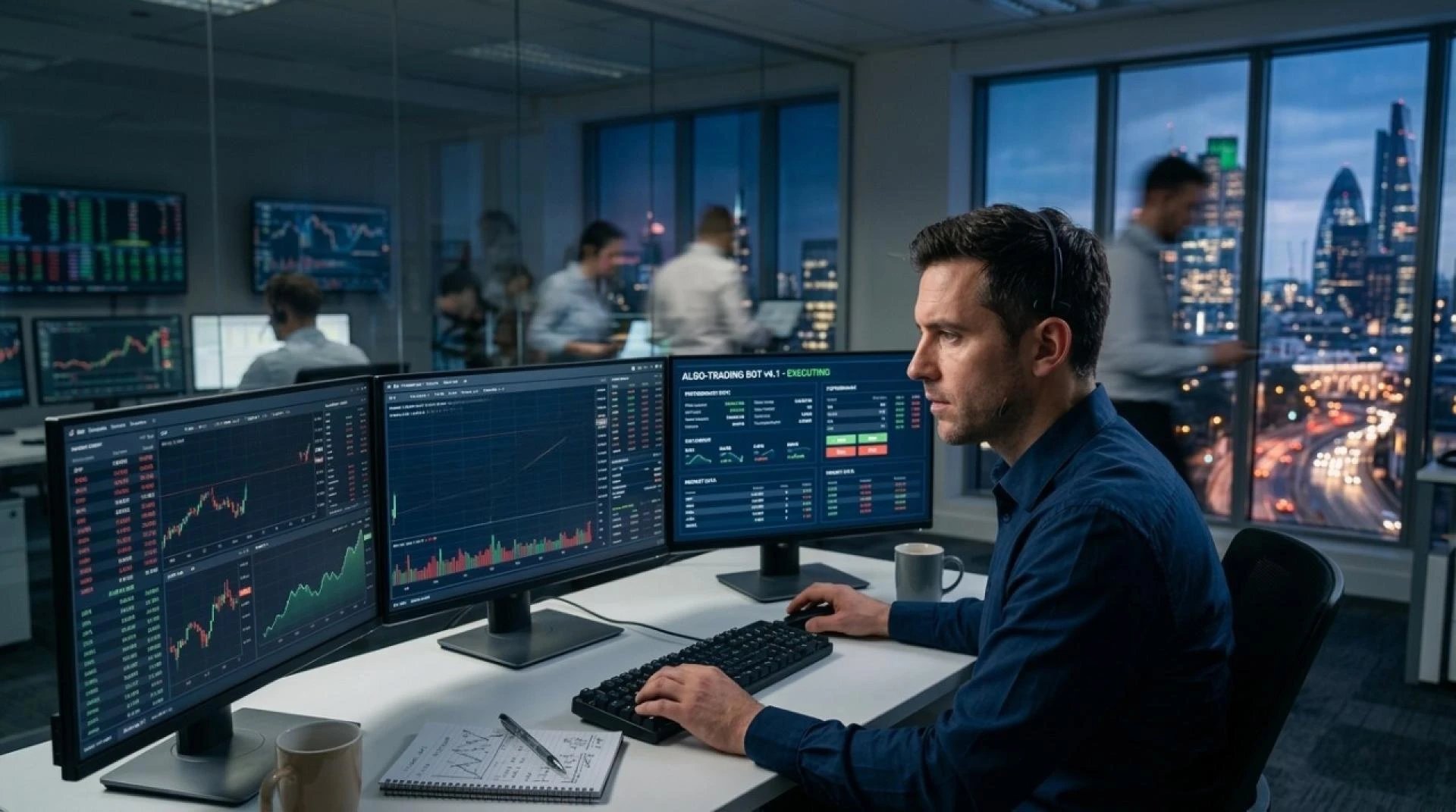
The landscape of modern finance has been permanently altered by the integration of high-level automation. At PFH Markets, we have seen firsthand how the shift from manual execution to rule-based systems has leveled the playing field for retail traders, providing them with tools once reserved for elite institutional desks. Algorithmic trading often referred to as "algo trading" is no longer a futuristic concept; it is the standard for those seeking consistency in 2026.
The Power of Predefined Execution
At its core, an algorithmic strategy is a set of coded instructions that execute trades based on specific variables such as timing, price, and volume. By removing the "human element," traders can bypass the psychological pitfalls of fear and greed, ensuring that every position is entered and exited with clinical precision.
Popular Strategies for Today’s Markets
Different market conditions require different mathematical approaches. Some of the most
effective strategies currently utilized include:
- Trend-Following: These algorithms use moving averages and channel breakouts to identify momentum, ensuring you stay on the right side of a major market move.
- Arbitrage: These bots scan multiple exchanges simultaneously to profit from tiny price discrepancies of the same asset.
- Mean Reversion: Based on the theory that prices eventually return to their average, these strategies buy when an asset is overextended and sell when it reaches its mean.
Consistency Through Rigorous Testing
One of the most significant advantages of automation is the ability to prove a concept before risking capital. By utilizing historical data, traders can determine how a strategy would have performed during previous periods of high volatility. This process, known as backtesting, is essential for identifying potential drawdowns.
To gain a deeper understanding of how these systems function in real-world scenarios, you can explore our detailed breakdown of PFH Markets algorithmic trading strategies, which covers everything from simple moving average crossovers to complex machine-learning models.
Risk Management in the Automated Era
While algorithms offer incredible speed, they are not a "set-and-forget" solution. Robust risk management remains the most critical component of any automated system. At PFH Markets, we recommend implementing "hard" stops within your code and regularly monitoring for technical glitches or connectivity issues that could disrupt execution.
By combining the raw power of computer processing with human strategic oversight, you can transform your trading from a game of chance into a disciplined, data-driven business.